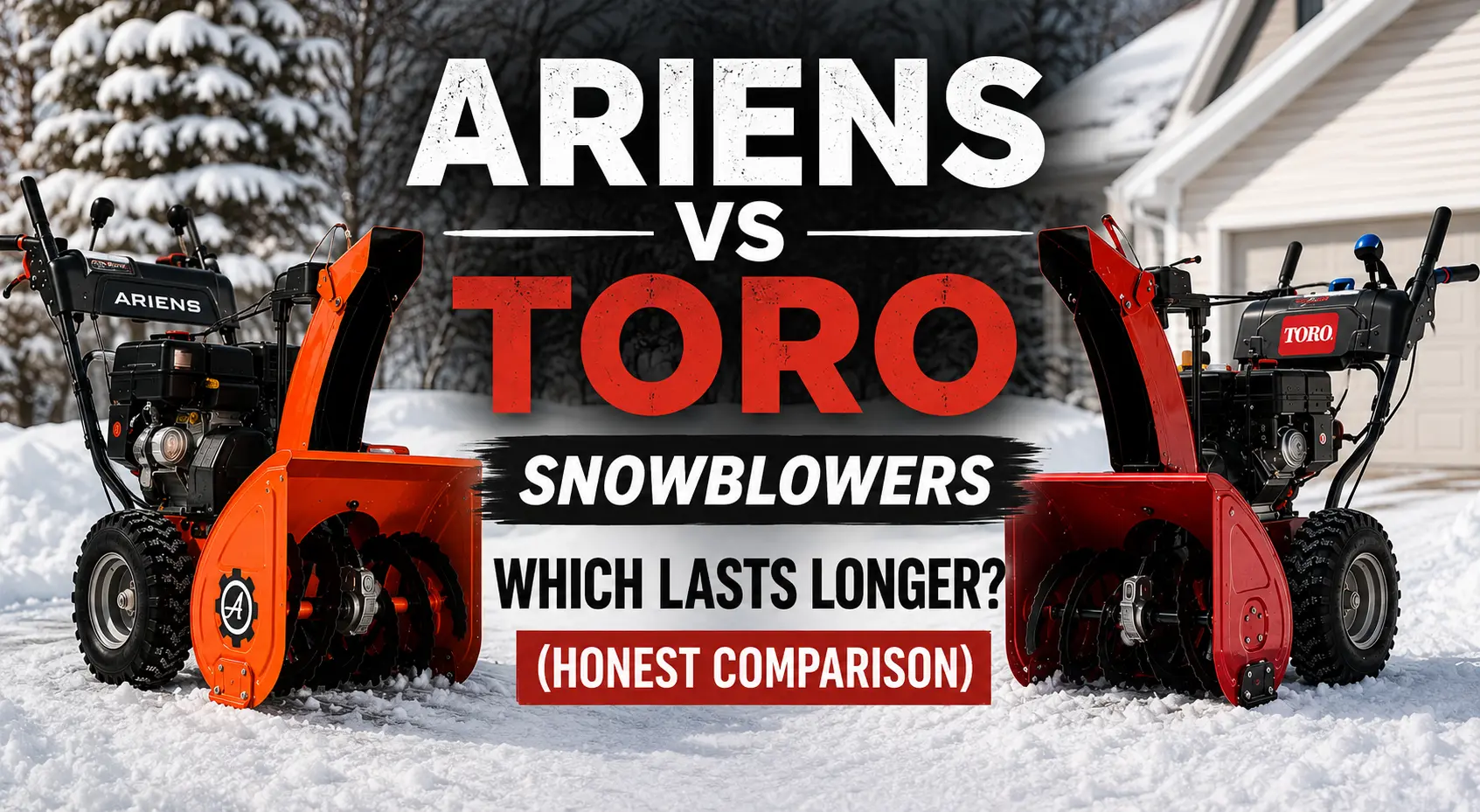
Ariens vs Toro Snowblowers: Which Lasts Longer? (Honest Comparison)
Ariens and Toro are the two most common snowblower brands in U.S. driveways. Both have loyal followings, both have been making snowblowers for over 60 years, and both have current product lines that range from basic single-stage units to commercial-grade tracked models.
The honest answer to "which lasts longer" is: with proper maintenance, both routinely last 15-25 years. The differences between them aren't about overall longevity — they're about specific failure modes, parts availability, repair costs, and serviceability. Understanding those differences helps you choose the right brand for your situation and know what to expect as the snowblower ages.
This guide is based on what independent repair shops, parts distributors, and long-term owners report. It doesn't favor either brand — both are good machines, and either is a reasonable choice for most homeowners.
How they're built differently
Ariens and Toro have meaningfully different engineering philosophies, even when their products look similar from the outside.
Ariens is owned by AriensCo, a privately-held Wisconsin company that's been making snowblowers since 1960. They build heavier, more traditional steel-construction machines with a focus on long-term durability. Their two-stage models in particular have a reputation for surviving 20+ years of regular use.
Toro is part of The Toro Company, a publicly-traded outdoor power equipment manufacturer based in Minnesota. Toro snowblowers tend to use more plastic in non-structural components (chute, deflector, some cosmetic panels) and have invested more heavily in proprietary technology like the Personal Pace single-stage drive system and Power Max two-stage features.
Neither approach is inherently better. Ariens machines are typically heavier and feel more "industrial." Toro machines are typically slightly lighter and have more user-friendly features. The construction differences don't translate to dramatic longevity differences in field reports.
Engine sourcing
Both brands use third-party engines, which matters because engine reliability is often the limiting factor on snowblower lifespan.
Ariens engines:
- Most current Ariens snowblowers use AriensCo-branded engines (made by LCT — Liquid Combustion Technology)
- LCT engines have improved significantly since 2015 but earlier versions had reliability issues, particularly with carburetors
- Some premium Ariens models use Briggs & Stratton or Subaru-EX engines
- Older Ariens (pre-2010) used Tecumseh engines, which are now out of production but still serviceable
Toro engines:
- Most Toro snowblowers use Briggs & Stratton engines (Toro is a major Briggs customer)
- Some premium models use Loncin or Powermore engines (both Chinese-made, generally reliable)
- Older Toro snowblowers (1990s-2000s) used Tecumseh engines, same as Ariens
- Honda-powered Toro models (HSS-equivalent) are rare in current lineup
For long-term parts availability and repair shop familiarity, Briggs & Stratton engines (more common on Toro) have a slight advantage. Almost every small engine shop has B&S parts in stock and techs who've worked on them their entire careers. AriensCo/LCT engines are well-supported but require slightly more specialized parts ordering.
If you are comparing a repair quote against replacement, use the repair-vs-replace calculator with the snowblower's age, current value, and quoted repair price. It is more useful than brand loyalty once a repair estimate crosses a few hundred dollars.
Common failure modes
Each brand has predictable failure points that show up across their product lines.
Ariens common issues:
-
Carburetor problems on LCT-engined models. Particularly 2015-2020 models. The float bowl gaskets and main jets are vulnerable to ethanol-fuel damage. Fix: $80-150 carb service, sometimes carburetor replacement at $50-120 in parts.
-
Auger gearbox seal leaks. Ariens auger gearboxes are robust but the seals on the auger shafts can develop leaks after 8-12 years. Fix: Seal replacement ($60-120) or full gearbox service ($200-400).
-
Skid shoe wear. Ariens steel skid shoes wear faster than Toro's polymer alternatives, particularly on concrete driveways. Fix: $30-60 skid shoe replacement, easy DIY.
-
Friction disc wear (single-stage models). The Ariens Path-Pro single-stage uses a friction disc drive that wears over time. Fix: $40-80 in parts plus 1-2 hours of labor.
Toro common issues:
-
Plastic chute and deflector damage. Toro uses more plastic in chute components than Ariens, and these can crack from impact, freezing, or UV exposure over time. Fix: Replacement parts $30-100, usually DIY.
-
Power Max paddle and scraper wear (two-stage models). Toro's Power Max design is excellent but the rubber paddles and scraper bars wear faster than Ariens equivalents. Fix: $40-80 per paddle, $30-60 for scraper bar.
-
Personal Pace cable issues (single-stage). The Personal Pace system on Toro single-stage models uses cables that can stretch or fray. Fix: $30-60 cable replacement.
-
Recoil starter assembly. Toro recoils on Briggs engines have a slightly higher failure rate than Ariens equivalents — this is more of a Briggs issue than a Toro issue. Fix: $50-100 recoil replacement.
Both brands have models that fail outside these patterns, but the failure modes above represent 70-80% of what independent shops see. If the engine runs but the auger does not, the snowblower auger diagnostic separates common shear-pin and belt failures from the more expensive gearbox problems.
Parts availability and pricing
This is one of the most practical differences between the brands.
Ariens parts:
- Available through AriensCo dealers, online parts retailers (Jack's Small Engines, Partstree), and most independent shops
- Older parts (10+ years) sometimes require ordering from specialty suppliers
- Pricing is typically mid-range across categories
- Discontinued model parts can be hard to source after 15+ years
Toro parts:
- Available through Toro dealers, B&S dealer network (for engine parts), and broad retail availability
- Briggs & Stratton parts have excellent long-term availability — engines from the 1990s still have parts available
- Pricing is typically slightly higher than Ariens for Toro-branded components
- The B&S engine parts overlap with millions of other small engine applications, which helps availability
Practical takeaway: Both brands have good current parts availability. For very old models (15+ years), Toro/B&S engine parts are easier to find than Ariens-specific drivetrain parts. For current models, both are well-supported.
Repair costs at independent shops
Repair pricing is broadly similar between the brands, with some specific differences:
Carburetor service:
- Ariens: $80-150 (slightly higher on LCT engines due to specialized parts)
- Toro: $80-130 (B&S parts are well-stocked at most shops)
Engine tune-up (oil, plug, air filter, fuel system check):
- Ariens: $140-220
- Toro: $130-200
Auger gearbox service:
- Ariens: $200-400 (bigger gearboxes, more parts)
- Toro: $180-350
Drive system overhaul:
- Ariens: $250-500
- Toro: $200-450 (Personal Pace is simpler than Ariens hydrostatic on premium models)
Engine rebuild:
- Ariens: $400-800 (LCT) or $500-1,000 (B&S premium models)
- Toro: $400-900 (B&S, well-supported by independent shops)
These ranges assume independent shops, not authorized dealers. Dealer pricing is typically 20-40% higher for both brands. For a full breakdown of what each service item typically costs and how to evaluate a tune-up quote, see the snowblower tune-up cost guide.
Where Ariens has the edge
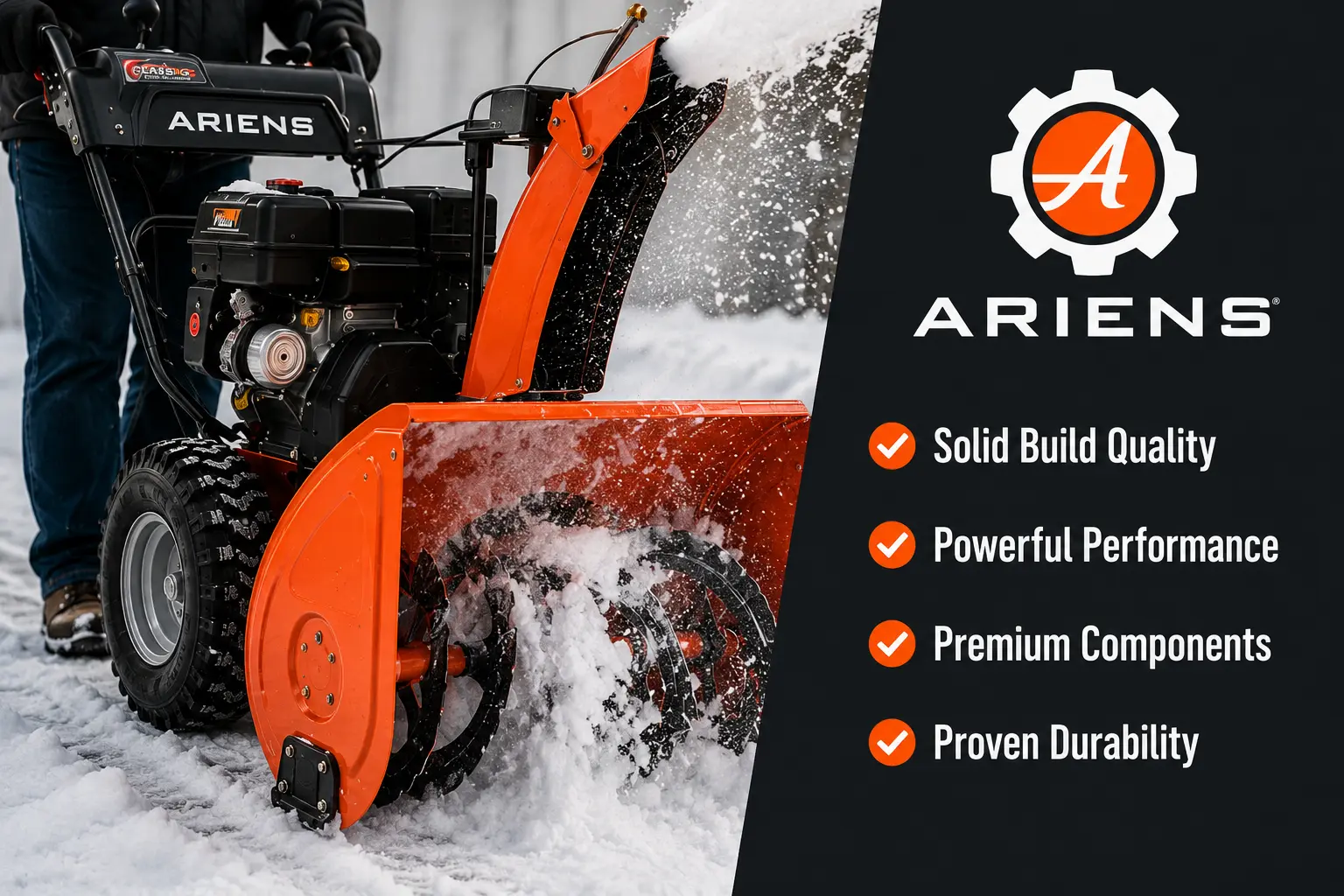
Long-term durability of structural components. Ariens steel housings and frames hold up better against years of heavy use. The auger gearboxes, in particular, are well-regarded for surviving heavy commercial use.
Two-stage performance in deep snow. Ariens Deluxe and Platinum models tend to throw heavier, wetter snow more aggressively than equivalent Toro models. Owners in heavy-snow regions (New England, Upper Midwest, Mountain West) often prefer Ariens for this reason.
Premium models with hydrostatic transmissions. The Ariens Platinum series uses hydrostatic drive systems that are smoother and more durable than Toro's friction-based premium drive systems.
Resale value. A used Ariens of comparable age typically sells for 10-20% more than a comparable Toro on the secondary market. This matters if you plan to upgrade in 5-10 years.
Where Toro has the edge
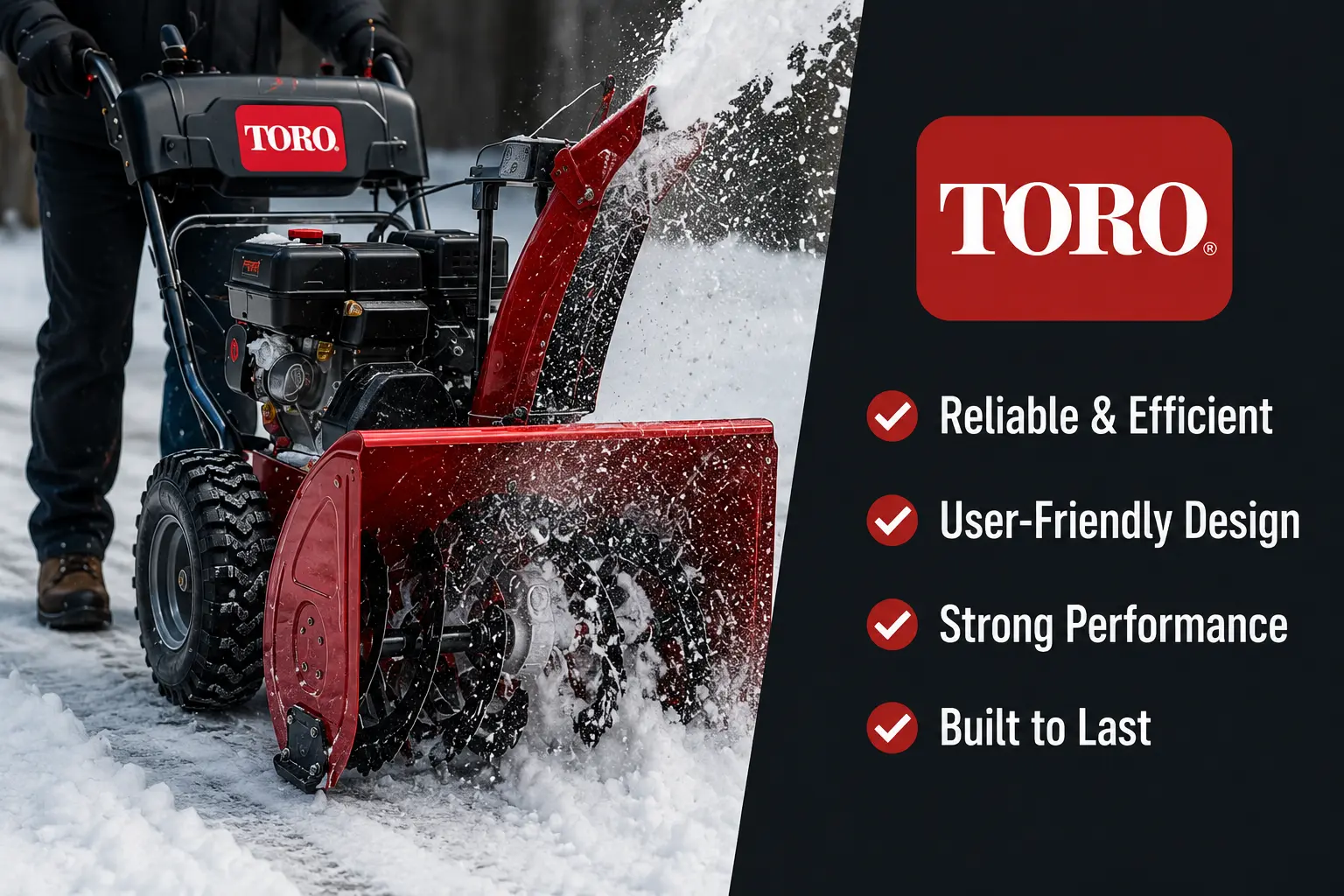
Initial ease of use. Toro's Personal Pace system on single-stage models is the easiest snowblower drive system most homeowners ever use — push harder, it goes faster, no levers or speeds to manage.
Lighter weight. Toro snowblowers in the same class are typically 5-15% lighter than Ariens equivalents. Matters more than you'd think for getting the snowblower in and out of storage.
Better availability of low-end models. Toro's entry-level lineup is more developed than Ariens — easier to find a basic, reliable Toro at $400-600 than an equivalent Ariens.
Engine parts availability. Briggs & Stratton parts are universally stocked. If your snowblower needs an engine part on a Sunday, you can probably get one. Specialized AriensCo parts may require waiting for delivery.
Slightly better warranty coverage on premium models. Both brands offer 3-year residential warranties; Toro's specific warranty terms tend to be slightly more favorable on edge cases.
Brand differences that don't matter
Some marketing-driven differences look important but don't affect real-world ownership:
- Auger system designs. Both Ariens "AX" and Toro "Power Max" auger systems work fine for residential use. Differences are marginal.
- Heated handle availability. Both brands offer heated handles on premium models. Reliability is similar.
- Chute control mechanisms. Manual cranks vs joystick electric controls vary by model in both brands. Both work fine when new; both eventually need service.
- Headlights. Both brands have moved to LED headlights on most current models. No meaningful difference.
Decision framework
Choose Ariens if:
- You're in a heavy-snow region (40+ inches average annual snowfall)
- You plan to keep the snowblower 15+ years
- You value long-term resale value
- You want maximum performance on wet, heavy snow
- You're buying a premium two-stage or three-stage model
Choose Toro if:
- You want the easiest drive system to use (Personal Pace)
- Lightweight matters (storage in tight spaces, smaller user)
- You want a lower-priced reliable option
- You're in a moderate-snow region (20-40 inches average)
- You value broad parts availability for long-term repairs
Choose either:
- For mid-tier two-stage models in normal use, both are excellent
- For commercial use, both make commercial-grade equipment that performs well
- For most U.S. driveways and average snowfall, the differences won't matter
A note on used snowblowers
Both brands hold up reasonably well as used purchases. When evaluating a used Ariens or Toro:
- Check engine compression (should be 130+ psi cold)
- Verify the auger gearbox spins smoothly without grinding
- Test all controls (drive, auger engagement, chute rotation)
- Look for fluid leaks (oil from engine, oil from auger gearbox)
- Inspect belts, paddles, and scraper bar for wear
- Verify the carburetor isn't leaking fuel
A snowblower that passes these checks at 8-10 years old will likely last another 8-10 years with proper maintenance. The brand matters less than the specific machine's condition and maintenance history. For a repair-versus-replace cost framework by snowblower type and age, see snowblower repair vs replace.
If you're not sure where to start with an Ariens or Toro repair decision, find a verified small engine repair shop near you below. Most can give a phone diagnosis and rough estimate before you bring the unit in.
This guide compares current and recent-generation Ariens and Toro snowblowers (2010-present). Older models from both brands have different engine sources (Tecumseh) and different reliability patterns not covered here. Always verify specific repair costs with local shops, as pricing varies meaningfully by region.