Why Won't My Chainsaw Start? 7 Common Causes (And What To Try)
You've got a tree to deal with. The chainsaw that worked fine last fall is sitting on the bench refusing to fire. You've been pulling the cord for ten minutes and your shoulder is starting to complain.
Before giving up and calling a shop, the good news: most chainsaw no-start issues trace to fuel system problems, and most of those are fixable in an afternoon with basic tools and a few cheap parts. The bad news: chainsaws are particularly punishing on neglected fuel — they sit longer than most equipment between uses, and the small carburetors gum up faster than larger engines.
The seven causes below are listed in the order a small engine technician would actually check them. Work through them sequentially.
1. Bad fuel mix or fuel that's gone stale
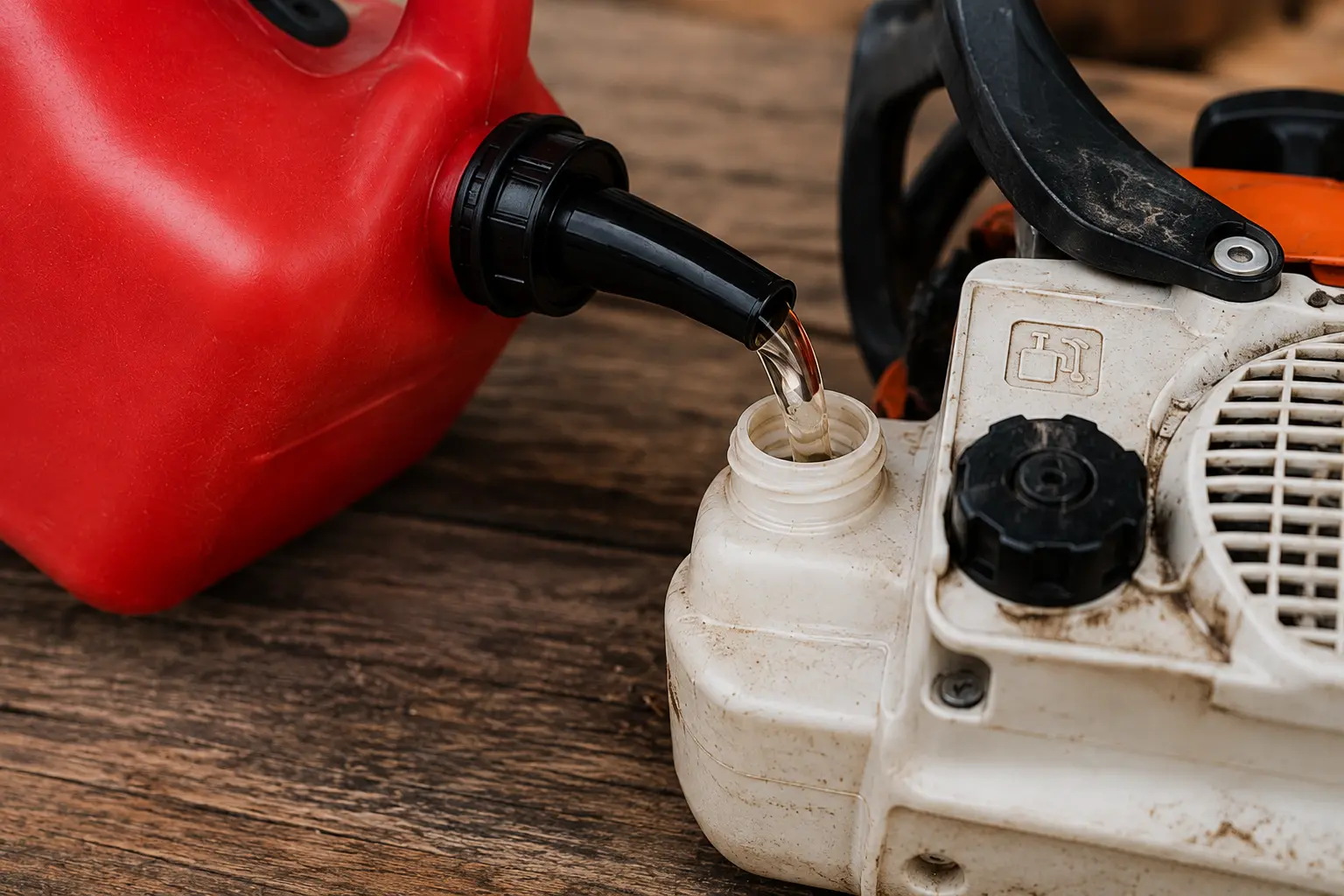
Two-stroke chainsaws (which is most consumer chainsaws) need fuel that's mixed with two-stroke oil at a specific ratio — usually 50:1 for modern engines, sometimes 40:1 for older ones. The mix matters: too little oil and the engine seizes; too much oil and the spark plug fouls. Check your manual for the exact ratio.
Even with the right mix, fuel goes bad. Two-stroke fuel mixed with ethanol-blended pump gas (which is most U.S. gasoline) starts degrading within 30 days. After 6 months in a chainsaw tank, it's basically varnish.
What to try first:
Pour the old fuel out of the tank into a separate container — don't put it back in your gas can with fresh fuel. Mix fresh gasoline (ethanol-free if available) with the correct ratio of Stihl HP Ultra 2-cycle oil or a quality 50:1 two-stroke oil. Premixed fuels (TruFuel pre-mixed fuel, VP Small Engine Fuels) are also an option — they're more expensive but stay stable for 2+ years.
Refill the tank with fresh mix. Try starting again. If it fires briefly and dies, the carburetor is fouled too (see #2).
2. Carburetor gummed up from old fuel
The carburetor on a chainsaw is small, and the fuel passages inside it are smaller. When fuel evaporates inside, the residue blocks the jets and metering passages. Even with fresh fuel in the tank, a gummed carburetor won't deliver the right mixture to the cylinder.
Symptoms: engine fires for 1-2 seconds and dies, runs only with the choke fully on, won't idle, or won't start at all even with fresh fuel.
What to try first:
Spray carburetor cleaner directly into the air intake while pulling the starter. If the engine fires for a few seconds, the carb is the issue. A full clean involves removing the carburetor, soaking the components, and clearing the jets — doable for a careful DIYer but it's where many people decide to bring it to a shop.
For chainsaws specifically, the diaphragm and gaskets in the carburetor harden over time and need replacement during a full service. Carburetor rebuild kits are $10-20 for most popular models (Stihl MS 170, Husqvarna 440, Echo CS-400, Poulan Pro models) and include all the parts you'll need.
If you're not comfortable with carburetor work, this is a reasonable point to bring it in. A shop carb service typically runs $50-100 plus parts.
3. Fouled spark plug
Two-stroke engines are particularly hard on spark plugs because of the oil mixed into the fuel — the oil burns and leaves carbon deposits on the plug electrode. After 50-100 hours of run time, or after a few seasons of light use, the plug stops firing reliably.
What to try:
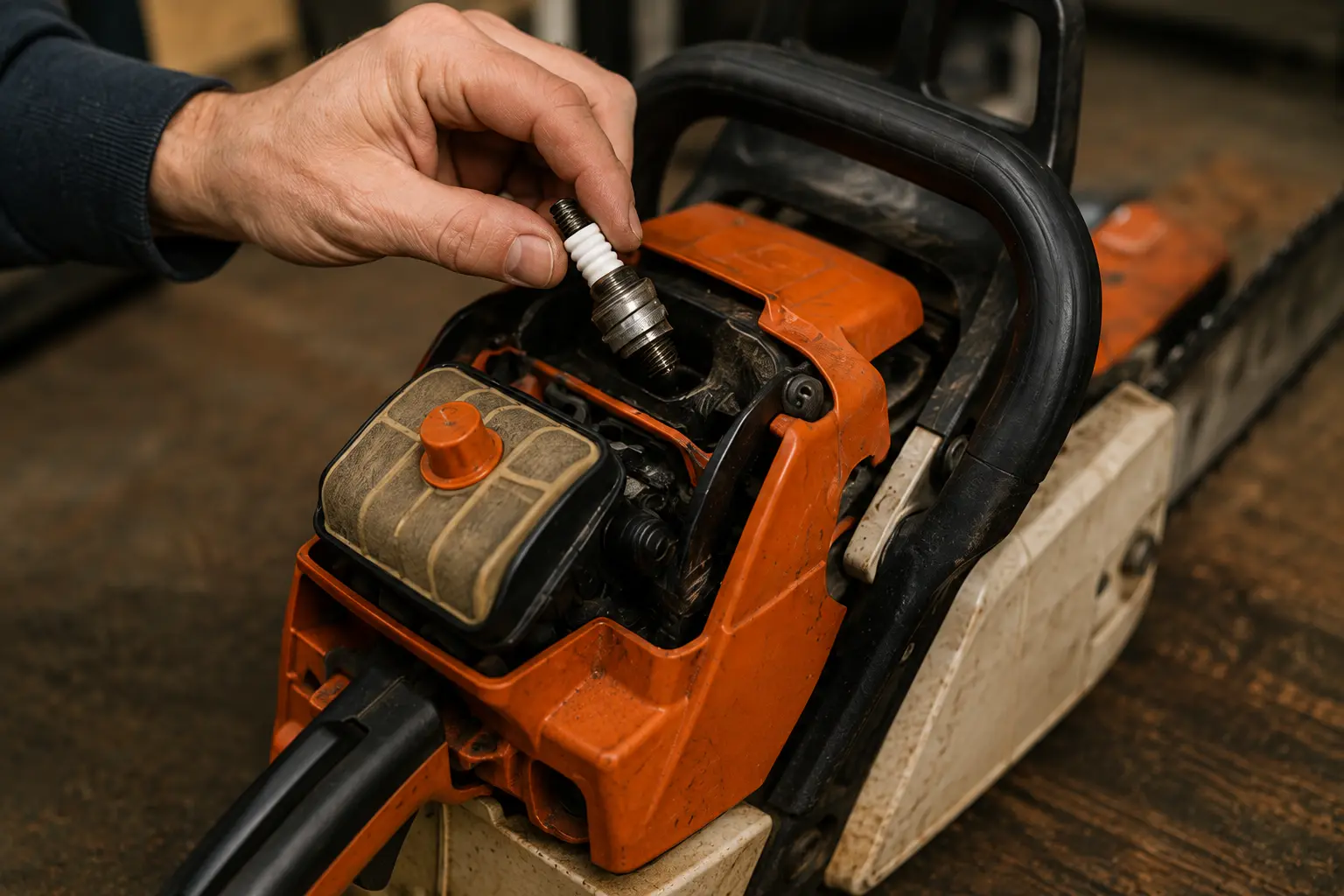
Pull the spark plug with a plug wrench. If it's wet with fuel, you flooded the engine — pull the cord 10-15 times with the choke open and plug out, then reinstall and try again. If the plug is black and crusty, replace it. Plugs are $4-8 — the Champion CJ8Y (a common chainsaw plug) fits many consumer saws, though always confirm against your owner's manual or model lookup.
While the plug is out, ground the metal body of the plug against the cylinder fins (using the wire boot, not your bare hand) and pull the starter. You should see a clean blue spark jump the gap. No spark or weak orange spark suggests the ignition coil has failed, which is a shop visit.
Note: chainsaws use specific spark plug gaps that vary by model. Most are pre-gapped from the factory — check the new plug's box. If the gap needs setting, your manual will list the spec (usually 0.020-0.025 inches).
4. Air filter clogged with sawdust
Chainsaws operate in some of the dirtiest conditions of any small engine — they're literally cutting wood, and the air filter takes the brunt of it. A neglected filter chokes the engine, throwing the fuel-air mix way too rich and preventing combustion or causing it to run rough.
What to check:
Pop the cylinder cover (usually one or two screws or quick-release clips depending on model). The air filter is right behind it. If the filter is caked with sawdust to the point that you can't see light through it, clean or replace it.
Foam filters can be washed in warm soapy water, dried completely, and lightly oiled with two-stroke oil. Paper-style filters should be replaced. Don't try to "blow clean" a filter with compressed air pointed at the dirty side — that pushes debris through the element. Blow from the clean side outward, or just replace it.
A $10 filter that gets replaced annually is one of the cheapest forms of insurance against engine wear.
5. Choke or primer not working
Cold chainsaw engines need a richer fuel mix to start. The choke restricts airflow, and many models also have a primer bulb that pre-fills the carburetor with fuel.
What to check:
Operate the choke lever and watch the choke butterfly inside the air intake. It should fully close in the "choke" or "start" position and fully open in the "run" position. If it's stuck partway, work it back and forth and add a drop of light oil to the pivot.
Press the primer bulb (the small rubber bulb near the carburetor on most models) and look at it as you press. Fuel should be visible filling the bulb. If the bulb stays soft and empty, or if it's cracked, replace it — primer bulbs are $5-10 and include the connecting fuel lines on most chainsaws.
If you can't get the engine to start cold but it'll start warm, the choke or primer is the likely issue.
6. Fuel filter or fuel lines clogged
The fuel filter is a small mesh or felt cylinder inside the gas tank, attached to the fuel pickup line. It can clog with debris from old fuel or just deteriorate over time.
What to check:
Empty the fuel tank. Use a piece of bent wire or a small hook to pull the fuel pickup line out through the fill opening. The filter is at the end. If it's discolored, soft, or visibly clogged, replace it. Filters are $3-5 and a 60-second swap once you have it out.
While you're in there, inspect the fuel lines themselves. Two-stroke fuel and ethanol-blended gas degrade rubber lines, especially the small-diameter lines on chainsaws. If the line is cracked, brittle, or swollen, replace it. Fuel line is sold by the foot at any small engine shop and most hardware stores.
7. Compression loss or worn engine internals
If you've worked through the fuel system fixes above and the engine still won't start, the issue might be inside the cylinder rather than the fuel system.
Quick compression check:
Pull the spark plug. Stick your thumb tightly over the plug hole. Pull the starter cord briskly. You should feel strong pressure pushing your thumb back. If there's almost no pressure, compression is low — likely from worn piston rings or a damaged cylinder.
Compression issues mean engine teardown, which on a chainsaw often costs more than the saw is worth — particularly on consumer-grade saws under $300 new. Professional saws (Stihl MS 261, Husqvarna 562 XP, Echo CS-590) are worth rebuilding; entry-level saws usually aren't.
A shop compression test takes 5 minutes and tells you exactly what you're dealing with. If you're considering a rebuild, get the test first.
When to call a shop
Some problems aren't worth DIY fixing:
- No spark after replacing the plug — likely an ignition coil failure
- Compression loss confirmed by the thumb test or shop test
- Engine cranks freely but never fires after fresh fuel and a fresh plug
- Visible oil leaks at gaskets or seals
- Bar oil pump failure (chain stops getting oiled)
- Clutch slipping or chain not engaging at running RPM
Independent chainsaw shops typically charge $80-120 per hour of labor. A full carburetor service runs $80-150 at most shops. For consumer-grade saws, the cost-benefit calculation gets thin fast — shops will tell you honestly when a repair isn't worth it compared to a new saw. If the saw starts but cuts poorly, the chain may just need sharpening — a 20-minute job covered in how to sharpen a chainsaw chain.
For Stihl and Husqvarna specifically, authorized dealer pricing is generally higher than independent shops, but warranty work has to be done at an authorized location. If your saw is still under warranty, check what's covered before paying anyone. For Stihl-specific failure patterns by model family, see Stihl chainsaw repair: 7 common issues.
A word on saw safety
If your chainsaw won't start and you're frustrated, take a break before forcing anything. The most common chainsaw injuries happen on day-of repairs — someone gets it running, immediately tries to cut the tree they were originally targeting, and skips the safety check that comes with a fully-rested operator. Sharp chains, healthy tension, working chain brake, and a clear cutting plan matter more than getting the engine running quickly.
If you're not sure where to start, find a verified small engine repair shop near you below. Most can give a phone diagnosis before you bring the saw in.
This guide covers two-stroke gasoline chainsaws (Stihl, Husqvarna, Echo, Poulan, Craftsman, and similar consumer and prosumer brands). Battery-powered chainsaws have entirely different failure modes (mostly battery and motor controller issues) and aren't covered here. Always follow your specific saw's manual for fuel mix ratios and service intervals.