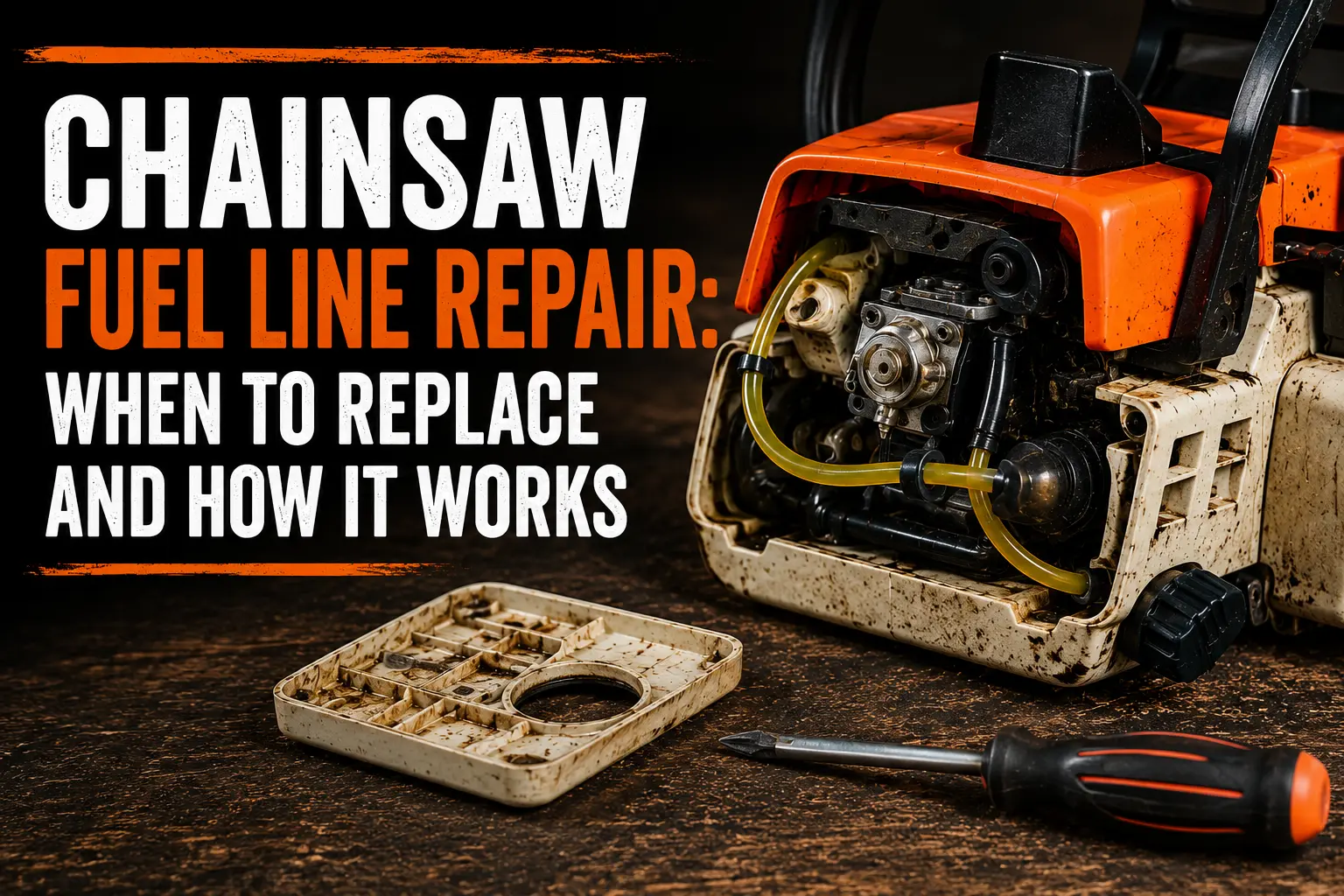
Chainsaw Fuel Line Repair: When to Replace and How It Works
Fuel line failure is one of the most common problems on chainsaws that have been sitting in storage. The rubber (or reinforced polymer) lines that carry fuel from the tank to the carburetor degrade from ethanol exposure, heat cycling, and simple age. A fuel line that looks intact can have hairline cracks or internal hardening that causes lean running conditions, intermittent fuel starvation, and sometimes a visible fuel leak near the carburetor.
The good news: fuel line replacement is one of the more straightforward chainsaw repairs. The parts are inexpensive, the procedure is well within reach for anyone who's done minor small engine work, and it's something any shop can do quickly.
How the fuel system works
A chainsaw fuel system has three main hose components:
The main fuel line runs from the tank, through a rubber grommet in the tank wall, to the carburetor inlet. This is the primary fuel delivery line.
The return line (on saws that have one) carries excess fuel back to the tank. Not all chainsaws have a return line — many two-cycle designs are returnless.
The fuel pickup is a short section of flexible line inside the tank with a filter on the end. It draws fuel from the tank as the chainsaw is used in various orientations. The pickup filter and line are replaced together as a unit.
All three are vulnerable to ethanol degradation and age hardening.
Signs a fuel line needs replacement
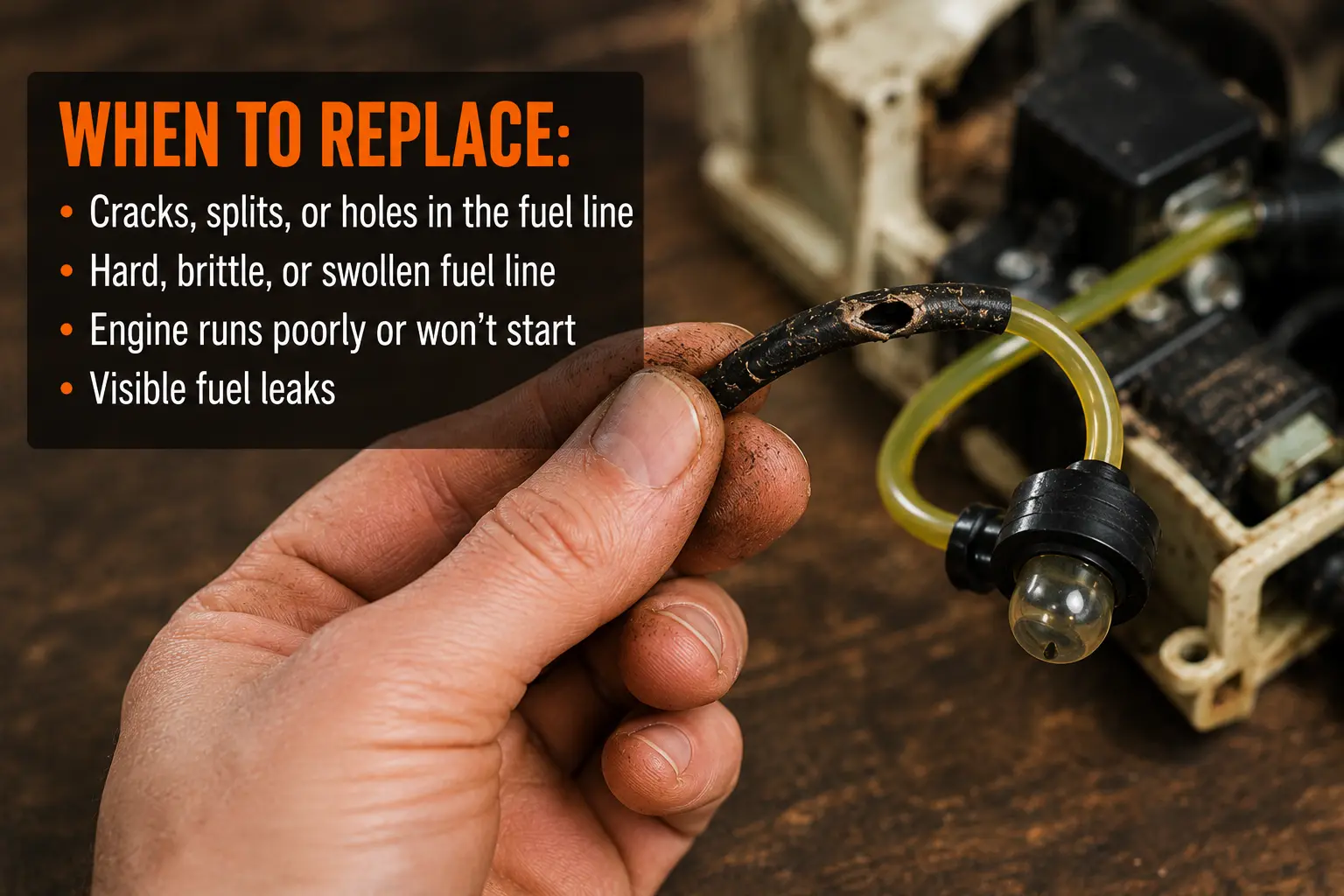
Visible cracks. Inspect the exterior of the fuel line where it exits the tank and where it connects to the carburetor — these are the stress points where cracks appear first. Hairline cracks may only be visible when the line is flexed. If you see any cracking, replacement is overdue.
Hardness or brittleness. A healthy fuel line is flexible and returns to shape when bent. A degraded line feels stiff, resists bending, and may crack when flexed. If the line feels like a dry twig rather than rubber tubing, it's past its service life.
Fuel odor or visible fuel near the carburetor. A wet appearance on the outside of the line, or fuel smell that persists when the saw isn't running, indicates a leak. Fuel leaks on a hot engine are a fire hazard — don't run the saw until the line is replaced.
Lean running or bog under load. A cracked line admits air into the fuel system, leaning out the fuel-air mixture. The result is a saw that runs fine at idle but bogs, surges, or dies when you apply throttle. This symptom often gets misdiagnosed as a carburetor issue — replace fuel lines before rebuilding the carburetor.
Hard starting after sitting. A degraded fuel line may not hold fuel in the system between uses. After sitting for a day or more, the carburetor bowl empties through the leaking line, requiring more priming and more pulls to start.
The fuel pickup filter
The fuel pickup filter — the small mesh or felt filter on the end of the pickup line inside the tank — should be replaced at the same time as the fuel lines. It's inexpensive and inaccessible without the same level of disassembly anyway.
A clogged pickup filter restricts fuel flow under load, causing the saw to bog and lose power when throttle demand is high. On a chainsaw that bogs when cutting but runs fine at idle, the pickup filter is a primary suspect alongside the main fuel line.
What replacement involves
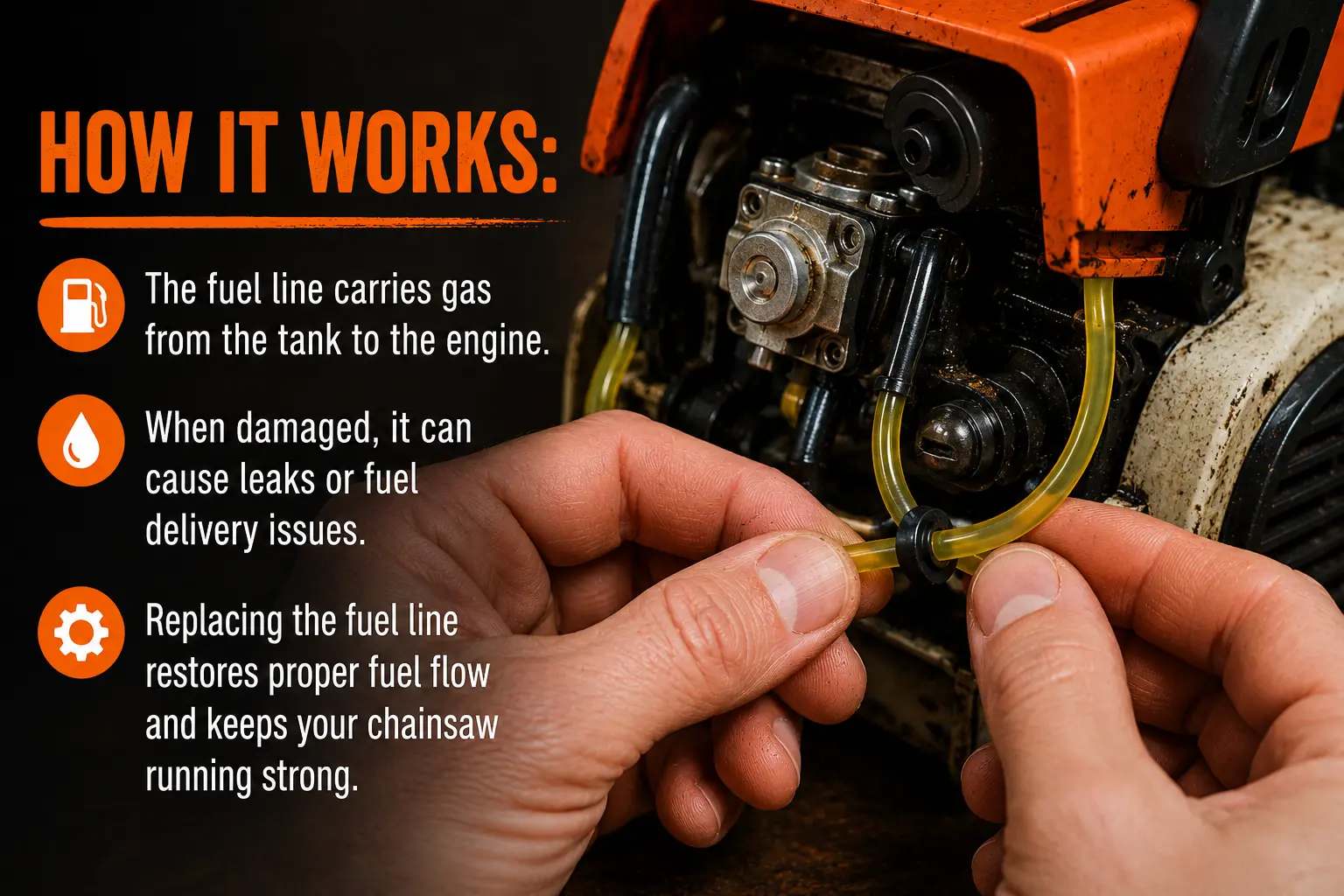
Parts: Fuel line is sold by the foot at small engine dealers and online suppliers. The inside diameter varies by saw brand and model — common sizes are 3mm x 5mm for the main line on consumer-grade saws, but confirm the correct size for your specific model before buying. Fuel line kits for common Stihl and Husqvarna models are available that include the correct line, return line if applicable, pickup filter, and sometimes a new primer bulb.
Procedure overview: The main fuel line is accessed by removing the carburetor cover and carburetor, then pulling the old line through the tank grommet. The grommet itself should be inspected — a cracked or hardened grommet allows air to enter the fuel system. New line is threaded through, connected to the carburetor inlet, and routed correctly.
The pickup line is accessed by reaching into the fuel tank or using a bent wire to fish it out through the fuel cap opening. The old line and filter are removed, new line and filter are installed, and the line is routed to reach fuel in all orientations.
Time and cost: A fuel line replacement at a shop typically takes 30-45 minutes. Labor cost ranges from $40-80 depending on local rates. Parts for a standard consumer saw run $10-25 for a complete kit. Total at a shop: $60-100 in most markets.
For a DIY-inclined owner, it's a reasonable 45-60 minute project with the right tools and parts. The main challenge is working in a confined space and routing the lines correctly.
What to do about a fuel leak right now
If you have an active fuel leak — visible fuel on the saw body, strong fuel smell — don't run the saw. A fuel leak near a hot engine or exhaust can ignite.
Empty the fuel tank by running the saw until it's out of fuel, or carefully drain the tank if you can access the fuel cap without the leak getting worse. Store the saw without fuel until the repair is done.
Replacing the primer bulb at the same time
The primer bulb — the small rubber bulb you press to pull fuel into the carburetor before starting — is made of the same rubber compounds as the fuel line and degrades similarly. A cracked, stiff, or collapsed primer bulb is a hard-starting cause that often accompanies fuel line failure.
If you're already having fuel lines replaced, ask the shop to inspect and replace the primer bulb at the same time. The additional parts cost is typically $5-8, and it's accessible during the same service. Doing it preventively avoids a return trip when the bulb fails later.
When it's more than the fuel lines
Fuel line replacement fixes the delivery problem, not any damage the degraded lines may have caused. If the saw ran lean for an extended period due to a cracked line admitting air, the carburetor may also need service — a lean-running saw is hard on the carburetor diaphragm and needle.
Ask the shop to inspect the carburetor when the fuel lines are replaced. If the diaphragm shows hardening or distortion, a carburetor rebuild at the same visit is more efficient than two separate service trips.
To find a chainsaw repair shop near you, use the directory search below. If you have a Stihl saw, see how to find a Stihl authorized repair shop for guidance on finding factory-trained service.
This guide covers two-cycle and four-cycle chainsaw fuel systems. Fuel line specifications vary by brand and model — always confirm the correct diameter and material for your specific saw before purchasing replacement parts.