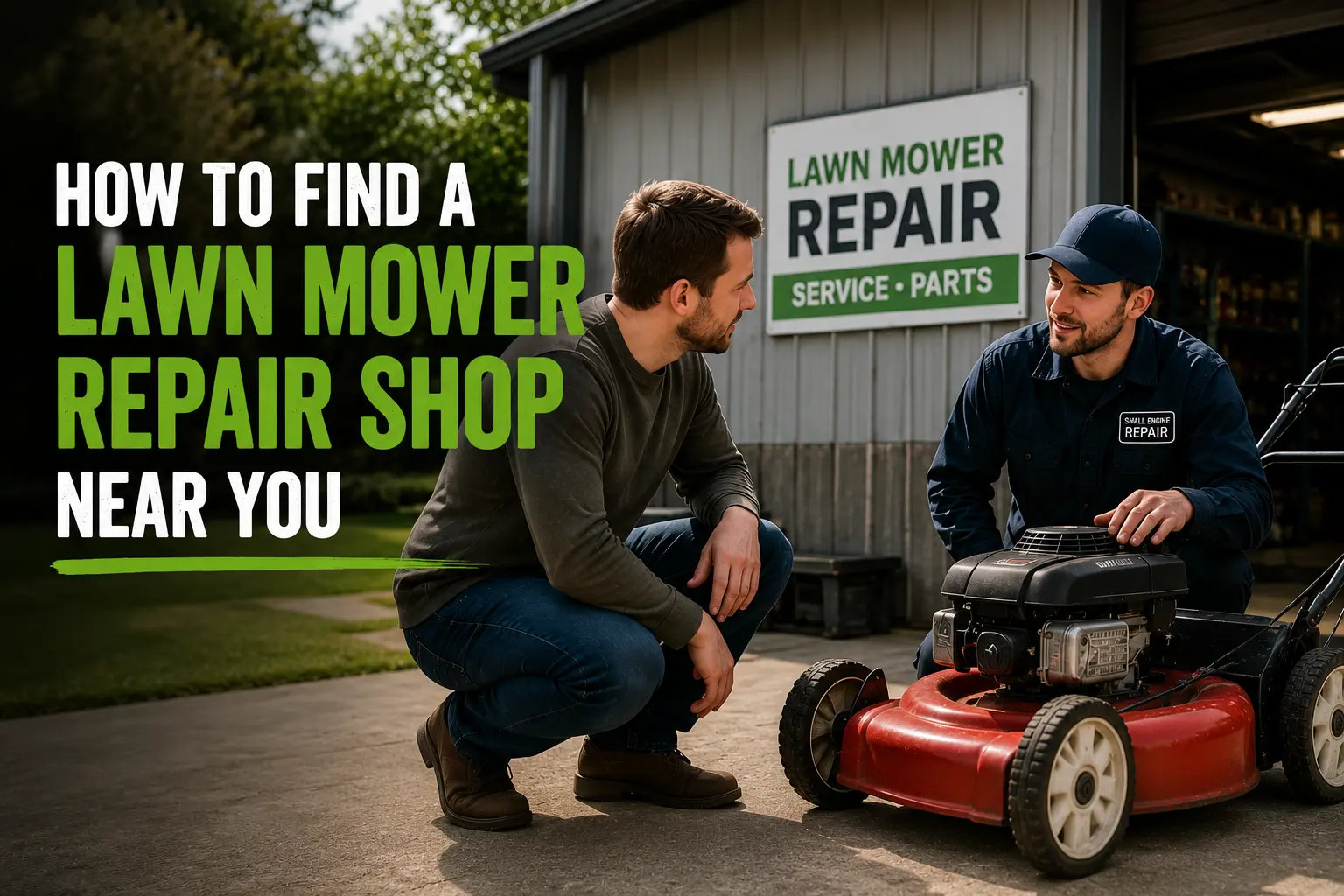
How to Find a Lawn Mower Repair Shop Near You
Spring is the worst time to need a lawn mower repair. Every shop in the country is backed up from March through May, and a mower that breaks down on a Friday afternoon in April may sit in a queue for two to three weeks before a technician touches it.
That's the reality. This guide covers how to find a shop that does quality lawn mower work, how to shorten your wait, and what to ask before you drop the mower off.
Confirm they actually work on your type of mower
Small engine shops vary in what they specialize in. Some focus on commercial equipment — riding mowers, zero-turns, and commercial-grade walk-behinds — and take in residential push mowers as a courtesy. Others specialize in two-cycle equipment like chainsaws and trimmers. A shop that primarily works on generators may not have the parts stock or experience depth for a carburetor rebuild on a Briggs & Stratton walk-behind.
When you call, be specific: tell them what you have and what it's doing. "I have a Honda HRX217 self-propelled walk-behind, it starts but surges and dies after about 30 seconds" gives the shop enough to tell you immediately whether it's in their wheelhouse and roughly what the repair looks like. A shop that knows immediately what you're describing is a shop that's seen it before.
If you have a riding mower or zero-turn, the same applies. Not all push mower shops are set up for deck service, belt replacement, and the electrical complexity of a riding mower's interlock system.
Check for brand authorization
Major lawn mower brands — Honda, Toro, Husqvarna, Cub Cadet, Ariens — have authorized service dealer networks. Authorized dealers receive factory training, carry OEM parts, and are accountable to the manufacturer's service standards. They're not automatically better than a quality independent shop, but authorization signals commitment to the brand.
For mowers still under warranty, authorized service is often required. Check your warranty documentation before taking a covered mower to an independent shop — warranty work at a non-authorized location may void coverage.
This directory shows brand authorizations where available. Use the equipment filter to find shops that specifically service lawn mowers, and look for any brand badges on the listing if you have a specific manufacturer.
Read the reviews — specifically for lawn mower work
Generic five-star reviews ("great service, fast turnaround") are less useful than reviews that mention the specific type of work you need. Search for "lawn mower" or "mower" in the shop's reviews on Google.
"Fixed my Toro when three other shops said the carb was trash" tells you something. So does "brought my riding mower in, they found a frayed belt I didn't know about and called me before fixing it." You're looking for evidence that this shop does thorough work and communicates.
Pay attention to how recent the reviews are. A shop that was excellent four years ago and has declining reviews since may have lost a key technician or changed ownership.
Timing your visit makes a real difference
Spring (March–May): Heaviest demand period. Queues of 2-4 weeks are normal at good shops. If you can wait, you may save money — some shops offer off-season discounts. If you can't wait, call multiple shops and ask about current wait times.
Summer (June–August): Moderate demand. Queues are shorter but still exist at quality shops. Good time for non-urgent repairs and tune-ups.
Fall (September–October): Best time to bring a mower in. Shops are transitioning from peak season, queues are minimal, and technicians have more time for thorough work. If your mower developed a problem late in the season, fall service is ideal — the mower is ready to go when spring arrives.
Winter (November–February): Minimal mower demand. Shortest queues. Many shops offer storage and service packages during this period at competitive prices.
If your mower breaks down in peak season and every local shop has a long queue, ask specifically whether they do emergency or priority service. Some shops reserve slots for urgent repairs at a premium rate.
Questions to ask before dropping it off
"What does a diagnostic cost, and does it apply toward the repair?" Standard shop practice is $50-80 for a diagnostic, credited to the repair if you proceed. This covers the technician's time to properly assess the problem. A shop that won't give you a straight answer about diagnostic fees is worth avoiding.
"Can you give me an estimate before starting work?" The answer should always be yes. A reputable shop calls you with a diagnosis and cost before doing anything beyond the initial assessment. Work done without your authorization isn't something you should pay for.
"What's your current wait time?" Ask this before driving the mower over. If the answer is three weeks and you need it in one, you can keep calling.
"Do you handle both walk-behinds and riding mowers?" (if relevant) Some shops are equipped for one or the other, not both.
"Do you offer any pickup and delivery?" A growing number of shops offer equipment pickup, which is worth knowing about if you don't have a truck. Usually a flat fee of $30-60 depending on distance.
What to bring with the mower
Tell the technician at drop-off everything you know about the problem. When it started. What changed recently — new fuel, sat over winter, used in wet conditions. Whether it's getting worse. Any recent repairs or parts swaps.
If the mower is under warranty, bring proof of purchase and the warranty documentation.
If you have a preferred parts approach — OEM only, or you're comfortable with quality aftermarket — say so upfront. It avoids surprises in the estimate.
Red flags to watch for
No written estimate before work begins. If a shop starts working before you've seen a cost, you have limited recourse on the final bill.
Vague answers about wait time. "We'll get to it when we can" isn't an answer. A well-run shop knows its queue.
Can't tell you what's wrong over the phone from your description. Not every problem is diagnosable sight-unseen, but a technician with real experience can give you a likely cause list from a clear symptom description. "I have no idea, just bring it in" from a shop that supposedly specializes in small engines is worth noting.
No physical location you can verify. Look the shop up on Google Maps before dropping anything off. You should be able to see the shop, not just a home address or a mailbox.
Using this directory
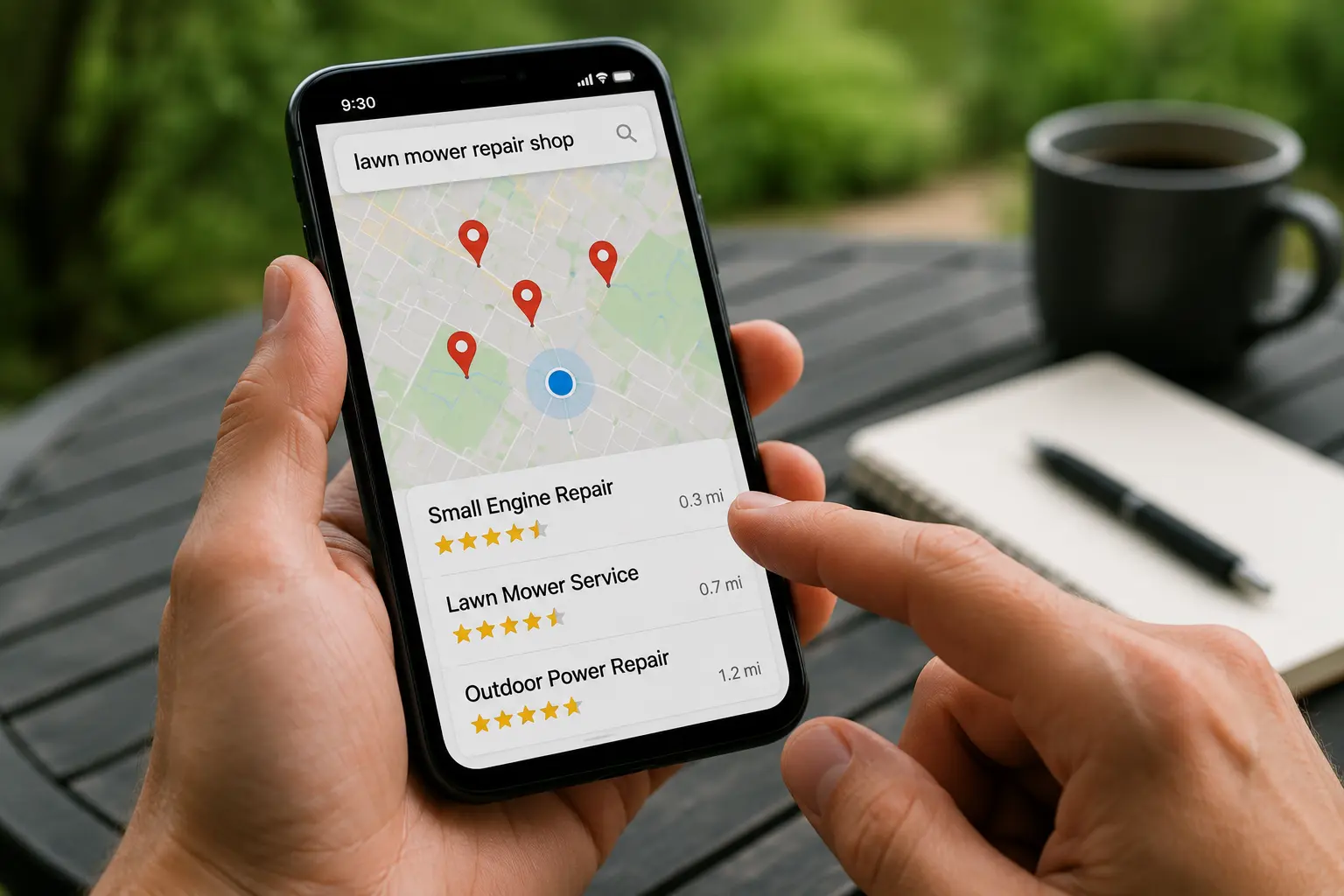
This directory lists over 13,000 small engine repair shops across all 50 states. Use the search below to find shops near you. Filter by equipment type to find shops that specifically list lawn mower service. Google ratings and review counts are shown where available — sort by rating to see who has the strongest track record in your area.
Call the shop before going. Confirm wait time, confirm they work on your specific mower type, and get a sense of whether you're dealing with someone who knows their stuff.
Shop listings are sourced from manufacturer dealer networks and Google Places. Service capabilities shown reflect available data and may not be complete. Call to confirm before visiting.