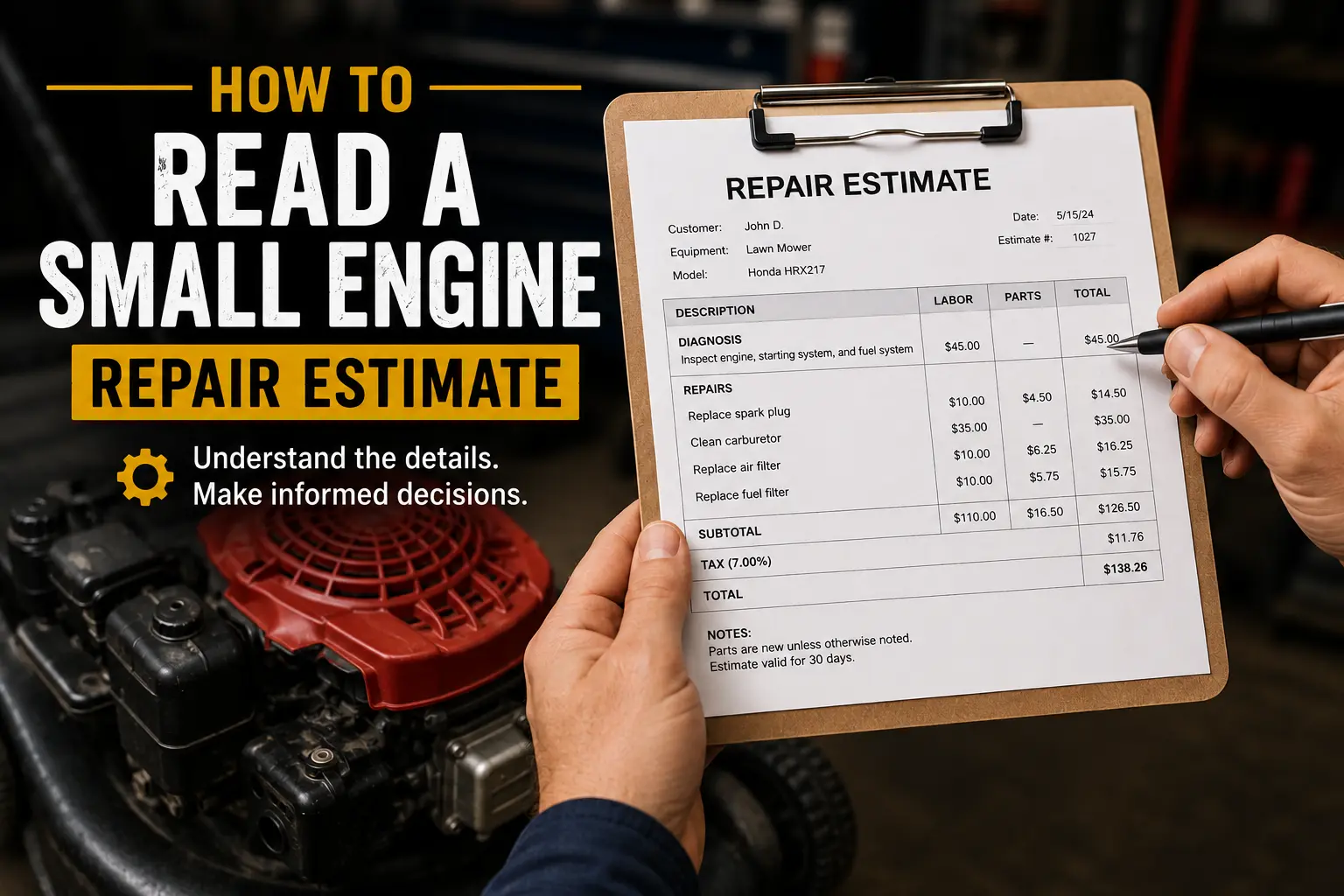
How to Read a Small Engine Repair Estimate
A repair estimate is a document that deserves more attention than most people give it. It's not just a price — it's a description of the problem, a proposed solution, and an implicit statement about what the technician found and what they're recommending. Reading it carefully before you sign off protects you from misunderstandings, surprise charges, and repairs you didn't actually authorize.
This guide covers what a well-written estimate includes, the line items you should expect to see, questions worth asking, and the red flags that suggest you should slow down before approving the work.
What a complete estimate should include
A professional repair estimate for small engine work should clearly state four things:
1. What's wrong. The diagnosis in plain language. "Carburetor clogged with varnish from old fuel" or "auger drive belt worn and slipping" or "ignition coil failed — no spark." If the estimate says only "engine service" or "repair as needed" without a specific diagnosis, ask for clarification before signing. You're authorizing a fix for a specific problem, not a blank check for whatever the shop decides to do.
2. What the fix involves. The proposed repair, described specifically. "Remove and clean carburetor, replace float needle and seat, new bowl gasket" is a rebuild. "Clean carburetor passages" is a cleaning. "Replace carburetor" is a replacement. These are different procedures at different price points — the estimate should be specific enough that you know which one you're getting.
3. Parts and labor listed separately. A good estimate breaks out parts cost and labor cost. This lets you understand what you're paying for and compare apples-to-apples if you get a second opinion. A single "all-in" number with no breakdown is harder to evaluate.
4. What happens if you decline. You should know the diagnostic fee upfront (typically $50–$80 at most shops, credited toward the repair if you proceed). If you decline the repair after diagnosis, you pay the diagnostic fee and take the machine home as-is. A shop that isn't clear about this before you drop the equipment off is worth asking directly.
Common line items and what they mean
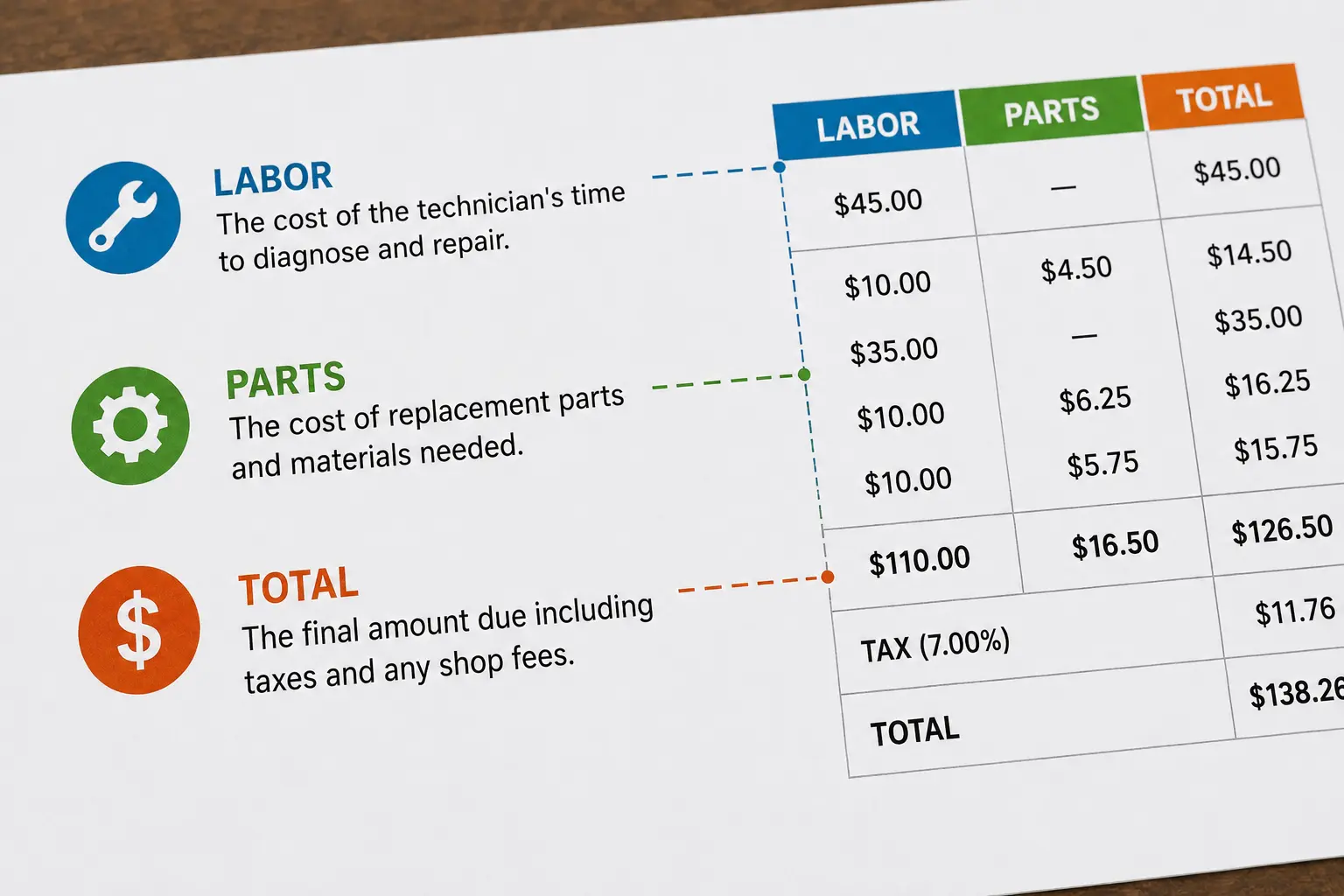
Diagnostic fee / inspection fee: $50–$80. The charge for the technician's time to assess the problem. Usually credited toward the repair. Not all shops charge this separately — some fold it into the repair labor. Ask upfront.
Labor: Priced at an hourly rate (typically $65–$110/hour depending on region and shop type) multiplied by estimated time. A carburetor cleaning might be quoted at 0.75 hours; a belt replacement at 1.5 hours. Some shops use flat-rate pricing (fixed price for defined jobs) rather than hourly.
Parts: Individual parts listed with quantity and unit cost. A spark plug, air filter, and carburetor rebuild kit should each show as separate line items with prices. Watch for vague entries like "misc. parts" or "supplies" without specifics — these are worth asking about.
Shop supplies / shop fees: Some shops add a percentage charge (often 5–15%) for consumables like shop towels, cleaning solvents, and small fasteners. This is common practice; it's not a red flag, but it's worth knowing it'll appear.
Tax: Parts are typically taxable; labor may or may not be taxable depending on your state.
Questions worth asking before approving
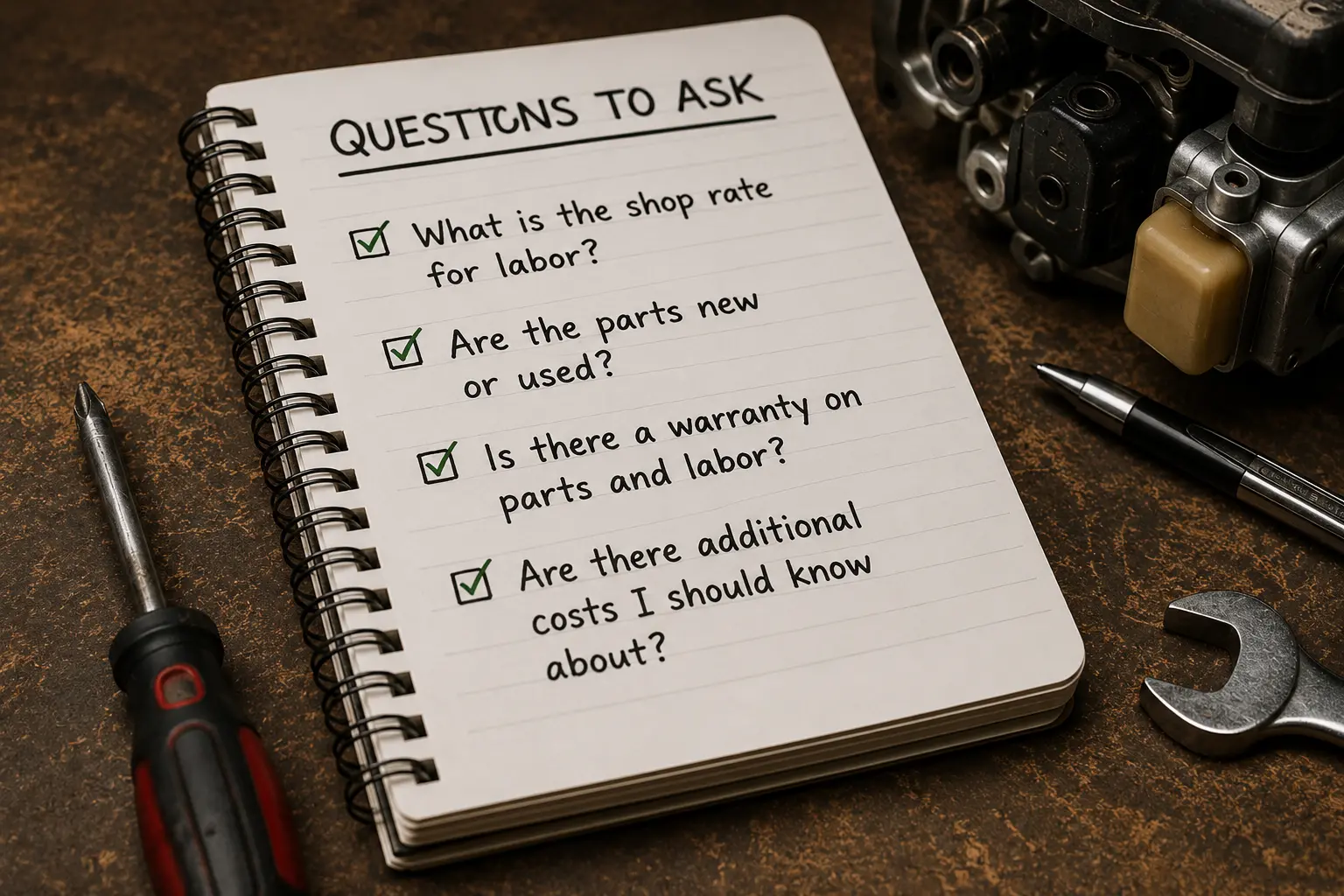
"Is there anything else you noticed that I should know about?" A thorough technician looks at the whole machine, not just the presenting problem. Ask whether they noticed any other wear items — a fraying belt, a fuel line showing cracks, a blade that's past its service life. You don't have to authorize those repairs now, but you want to know they're coming.
"What happens to the machine if I don't do this repair?" Sometimes the answer is "it won't start." Other times it's "it'll keep running but this will get worse." Knowing the consequence of declining helps you prioritize when the repair cost is significant.
"Is this an OEM part or aftermarket?" For high-precision components — carburetors, ignition coils, carburetor rebuild kits — it's worth knowing. For consumables like filters and spark plugs, it usually doesn't matter.
"What does this repair's warranty cover?" Most reputable shops warranty their labor for 30–90 days and the parts for whatever the manufacturer's warranty covers. Ask specifically: if this repair fails within 30 days, what happens?
"How long will the repair take?" Not on the estimate, but worth confirming before you leave. A shop with a 3-week queue should tell you that before you drop the machine off, not after.
Red flags on an estimate
Vague diagnosis. "Needs service" or "carburetor issue" without specifics means you don't actually know what's wrong or what the fix entails. A diagnosis should be specific enough that a second shop could confirm it without re-diagnosing.
No parts breakdown. A single number that combines parts and labor makes it impossible to evaluate the estimate. Ask for the breakdown before signing.
Repair cost exceeds what you authorized. In most states, a shop cannot legally charge more than the authorized estimate amount without calling you first. If the actual repair cost exceeds the estimate by more than a small percentage (typically 10%), the shop should have called before proceeding. If they didn't, you have grounds to negotiate.
Recommendations to replace before attempting repair. Replacing a carburetor is faster for the shop than cleaning and rebuilding one. On a machine where a $25 rebuild kit might solve the problem, a replacement carburetor quote without a cleaning attempt isn't automatically wrong — but it's worth asking whether the simpler fix was tried first.
Pressure to decide immediately. A reputable shop gives you time to review the estimate and ask questions. High-pressure "we need an answer today" tactics on non-emergency repairs are unusual and worth noting.
If the repair cost surprises you
You're always entitled to decline a repair after seeing the estimate. You'll pay the diagnostic fee and take the machine home. You can then get a second opinion from another shop, decide to buy a replacement instead, or simply defer the repair.
If you want to negotiate — for example, if you're comfortable doing part of the work yourself, or if you want aftermarket parts instead of OEM to reduce cost — ask. A shop will tell you whether that's possible. Not every shop will adjust, but the conversation is always reasonable to have.
If you think you were charged for work that wasn't performed or parts that weren't installed, ask the shop to show you the old parts. A reputable shop retains removed parts until the customer picks up the machine, precisely for this reason.
The estimate as a communication tool
The best shop relationships are ones where the estimate is the beginning of a conversation, not a take-it-or-leave-it transaction. A technician who explains the diagnosis in plain language, answers your questions directly, and calls before doing work beyond the estimate is the kind of shop worth returning to.
Use the directory search below to find small engine repair shops near you with strong Google reviews — shops that handle estimates and customer communication well tend to show it in how people write about their experience.
Repair estimate practices and consumer protection rules vary by state. If you believe you were charged for unauthorized work, your state attorney general's consumer protection office handles these disputes.