
Lawn Mower Tune-Up Cost: What to Expect
A lawn mower tune-up at an independent small engine shop typically runs between $60 and $120 for a standard push mower, and $100 to $200 for a self-propelled or riding mower. The wide range comes down to what's actually included, regional labor rates, and whether any parts need replacing beyond the standard consumables.
Here's what you should expect for that price, what gets left out of budget tune-ups, and how to evaluate whether the quote you're getting is fair.
What a complete tune-up includes
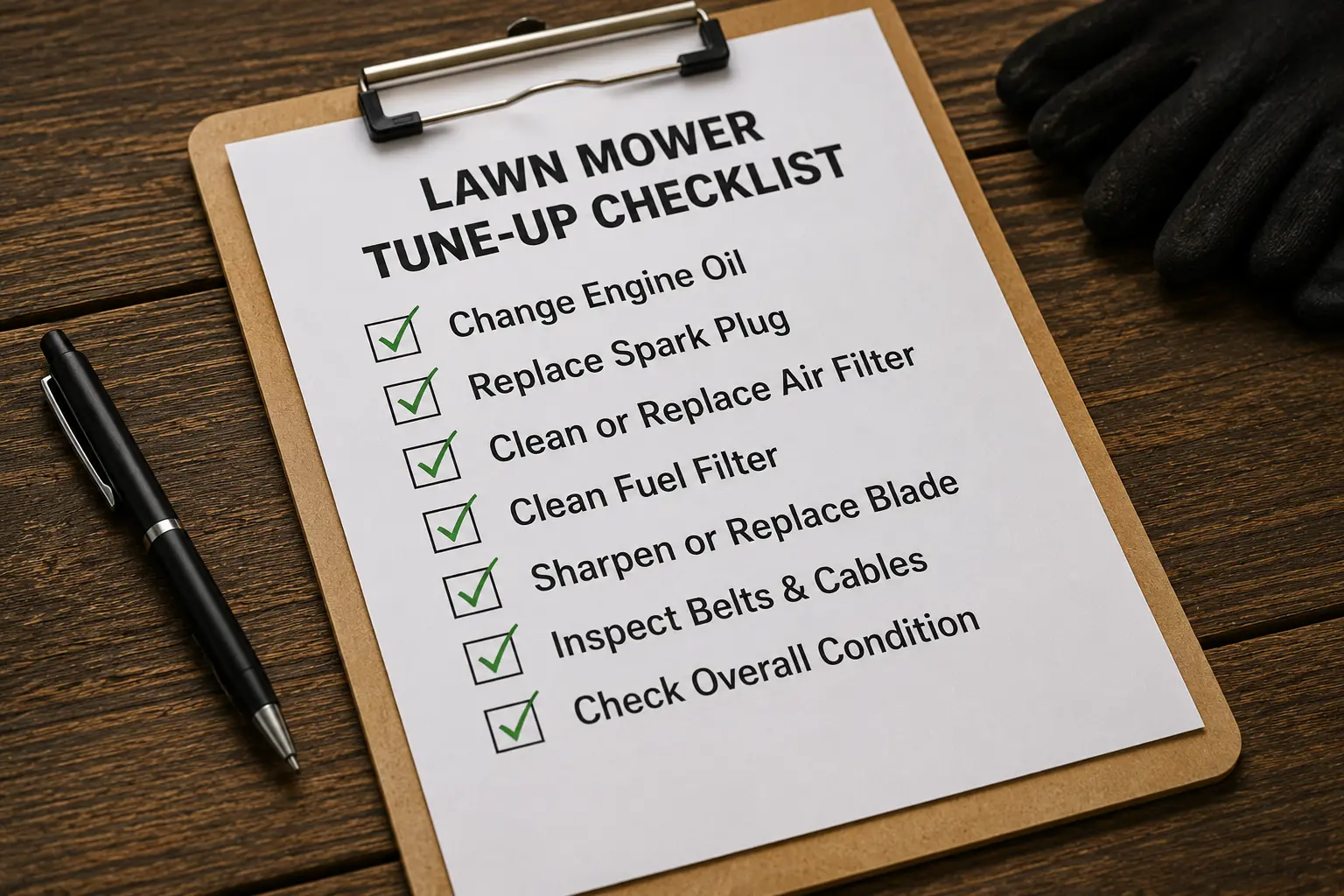
A thorough tune-up covers every item that degrades with regular use and affects starting, performance, or longevity:
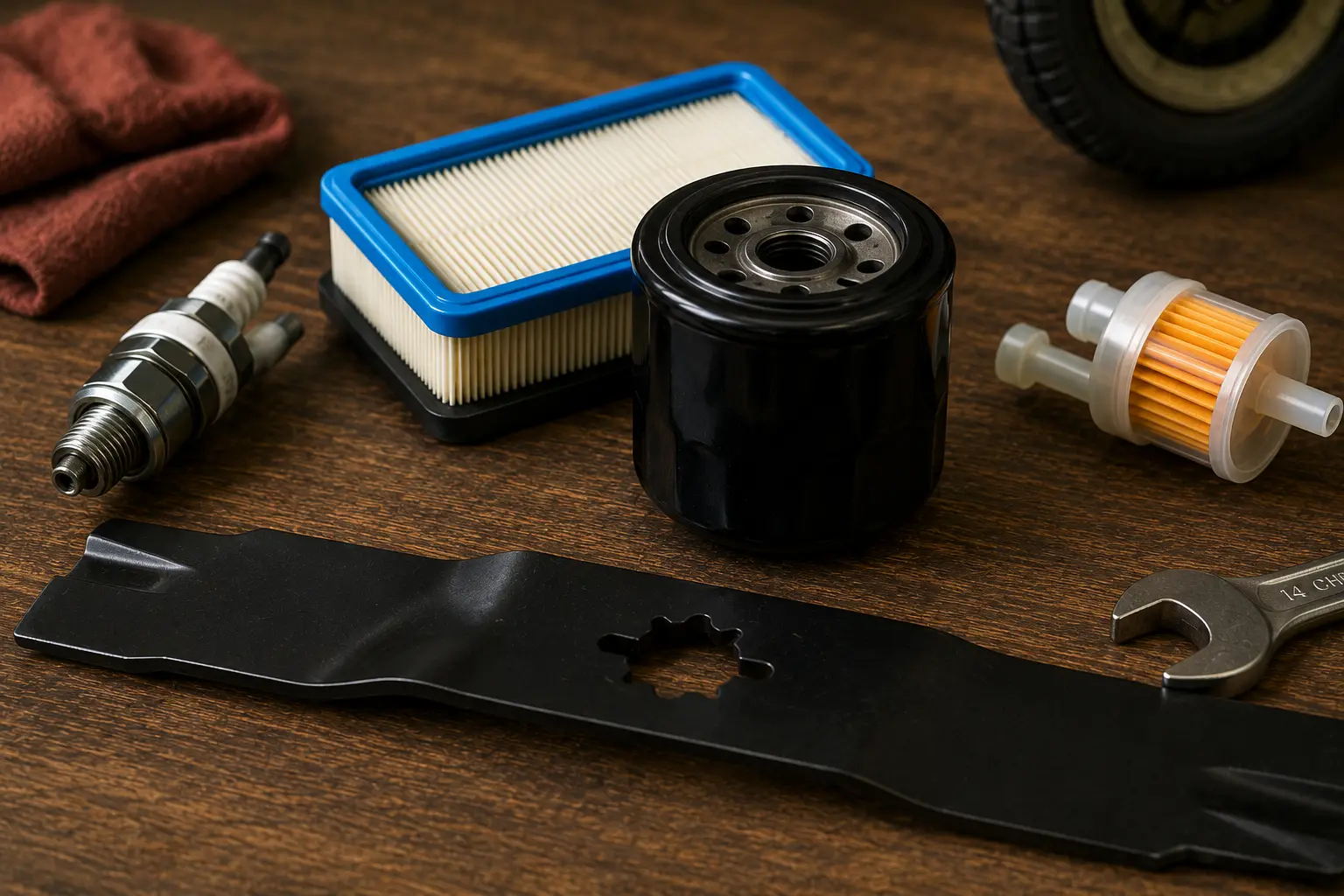
Spark plug replacement. The plug is replaced, not just inspected. A worn plug is cheap insurance — plugs for common mower engines cost $4-8 — and starting reliability drops noticeably as a plug ages past 100 hours of use.
Air filter replacement or cleaning. A paper filter is replaced. A foam filter is washed, dried, and lightly oiled. A combination filter (paper element inside a foam pre-cleaner) gets both cleaned. The air filter affects combustion efficiency and protects the engine from dirt.
Oil change. Drained, refilled with fresh oil at the correct grade (usually SAE 30 or 10W-30). Used oil is acidic from combustion byproducts and shouldn't sit in the crankcase between seasons. This is especially important on mowers that were stored without an oil change.
Fuel system service. Old fuel drained if present. Fresh fuel added. Carburetor inspected; if it shows symptoms of gumming or varnish, the technician will note it and quote a cleaning separately if needed.
Blade inspection and sharpening. The blade is removed, examined for cracks or damage (a cracked blade is a safety issue and gets replaced, not sharpened), balanced, and sharpened. A sharp blade cuts cleanly; a dull blade tears grass, which browns the tips and stresses the turf.
Blade brake and safety system check. The blade engagement system is tested. Safety interlock switches are confirmed functional.
Cable and linkage inspection. Throttle, choke, and drive cables (on self-propelled models) are inspected for fraying, kinking, or poor adjustment. Cables that are close to failure get noted in the estimate.
Belt inspection (self-propelled and riding mowers). Drive belts are inspected for glazing, cracking, or stretching. Belts approaching end of life are called out so you can make an informed decision.
Exterior cleaning. The underside of the deck is scraped clean of accumulated grass and debris, which affects airflow and cutting quality.
What a basic tune-up leaves out
Not all shops do the same thing for the same price. A "tune-up special" at the low end of the price range may include only spark plug, air filter, and oil — skipping blade sharpening, carburetor inspection, and cable checks. This isn't necessarily dishonest, but it means you're not getting a complete service.
When getting a quote, ask specifically: "Does that include blade sharpening and a carburetor check?" The answer tells you what level of service you're actually purchasing.
Tune-up cost by mower type
Push mower (non-self-propelled): $60–$90 at most independent shops. Minimal complexity — no drive system to inspect, one belt if any, simple deck.
Self-propelled walk-behind: $80–$120. Additional time for drive cable inspection, drive belt and wheel gear check.
Riding mower / lawn tractor: $100–$200+. More complex — multiple belts, deck belt and blade spindle inspection, battery check, tire pressure, steering linkage. Some shops price riding mower tune-ups separately from walk-behind service.
Zero-turn mower: $150–$250. Hydraulic drive system adds inspection time. Deck maintenance is similar to a riding mower.
Regional variation
Labor rates vary more than parts costs. In high cost-of-living metro areas (coastal cities, major urban centers), shop labor rates run $85-110/hour. In rural or Midwest markets, $55-75/hour is common. A tune-up that takes 45 minutes of shop time will cost noticeably more in San Francisco than in rural Ohio, even with identical parts.
When to get a tune-up vs. a repair
A tune-up is preventive maintenance on a mower that's running. If the mower won't start, runs rough, surges, smokes, or has visible damage, you need a diagnosis and repair, not a tune-up. The diagnosis may reveal that a tune-up is all that's needed — but lead with the symptom, not the service, so the shop can tell you what's actually wrong.
Some shops price tune-up labor separately from any repair work it reveals. Others roll it together. Ask upfront: "If the tune-up turns up a carburetor issue, how does that get priced?" Good shops give you a clear answer.
Tune-up frequency
Most small engine manufacturers recommend annual tune-ups — spark plug, air filter, oil change — regardless of hours used. For mowers that get regular use (1-2 hours per week during the season), that's roughly 50-80 hours per year, well within the standard service interval.
For low-use mowers (occasionally mowing a small lot), you can extend to every other year on parts replacement while still changing oil annually.
The blade is a different story. Sharpen the blade every season regardless of use, or any time you notice the cut quality declining. A torn, brown-tipped lawn is almost always a dull or unbalanced blade.
DIY vs. shop tune-up
The parts for a complete tune-up — spark plug, air filter, oil — cost $20-35 for a standard push mower. If you're comfortable with basic tool use and can safely tip the mower to access the blade bolt, a DIY tune-up is a reasonable option.
Where most people get stuck is blade sharpening (requires a bench grinder or angle grinder and a blade balancer, which most homeowners don't have) and carburetor work (requires carburetor cleaner, patience, and some mechanical comfort). For those steps, a shop is worth the money.
A hybrid approach works well: do the oil, plug, and filter yourself at the start of the season, and take the mower in for blade sharpening and a carburetor check every other year or when starting problems develop.
Finding a shop that does good work
Price alone is a poor guide. A $65 tune-up that includes a thorough blade balance and carburetor check is better value than a $50 tune-up that just swaps the plug and filter. Ask what's included before committing.
Look for shops with real Google reviews that mention lawn mower service specifically. A shop that primarily does chainsaw and generator work may take on mowers but won't be as efficient or current on common mower-specific issues.
Spring is the busiest season for lawn mower shops. If you bring the mower in March, expect faster turnaround and more attentive service than if you bring it in May when every shop has a 2-3 week queue.
Use the directory search below to find small engine repair shops near you that service lawn mowers.
Prices in this guide reflect typical rates at independent small engine shops across the United States as of 2026. Dealer service centers for major brands (Honda Power Equipment, Toro, etc.) may price differently. Always get a written estimate before authorizing work.