
Professional Chainsaw Tune-Up: What's Included and What It Costs
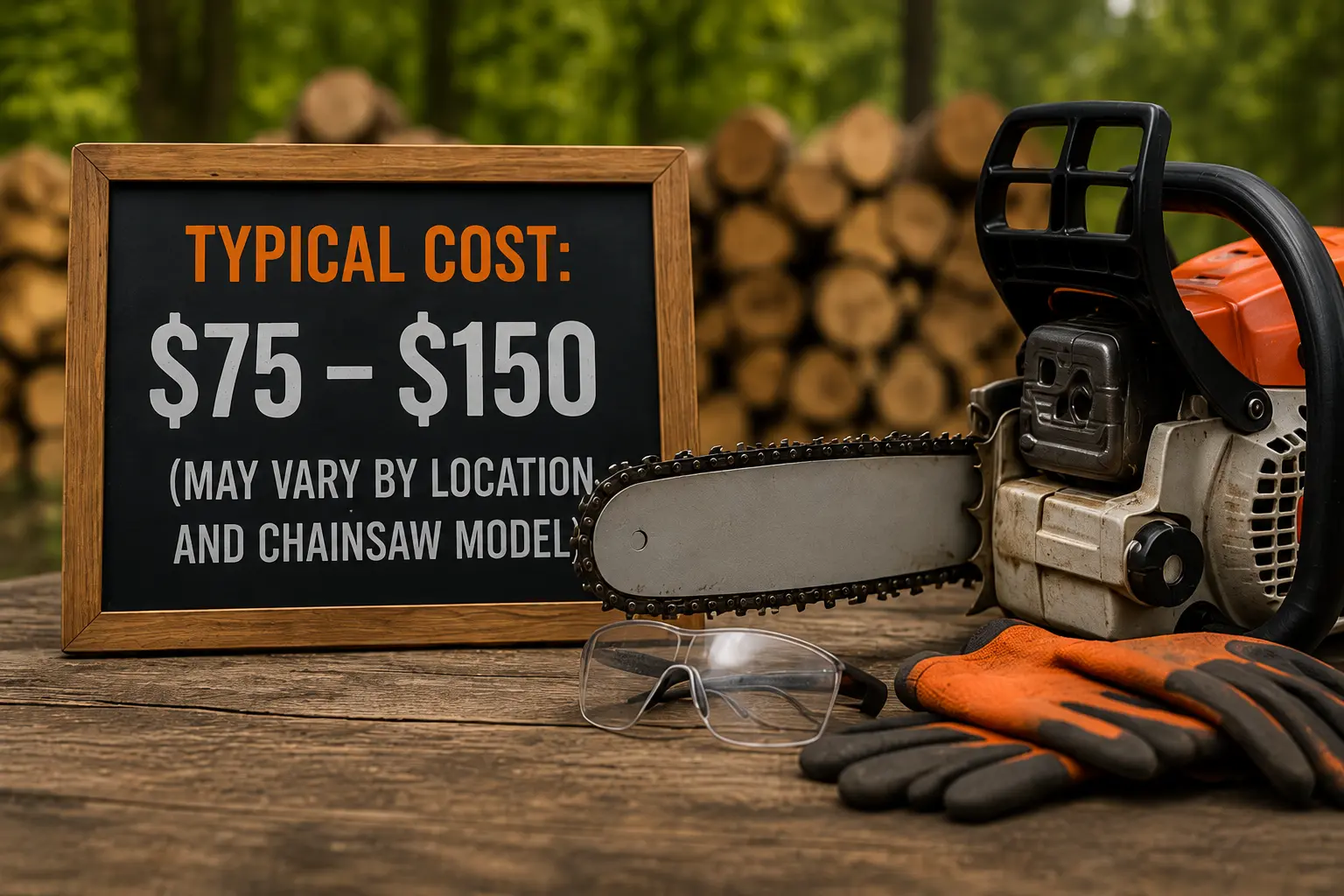
A chainsaw tune-up at a reputable small engine shop typically runs $60 to $120 for a standard consumer or prosumer saw. The range comes down to what's actually included, your region's labor rates, and whether any parts beyond standard consumables need replacement.
Most chainsaw problems — hard starting, rough running, poor cutting performance, and excessive fuel consumption — trace back to items that a proper tune-up addresses. Understanding what a complete service looks like helps you evaluate whether you're getting the full job done or a partial service at a full-service price.
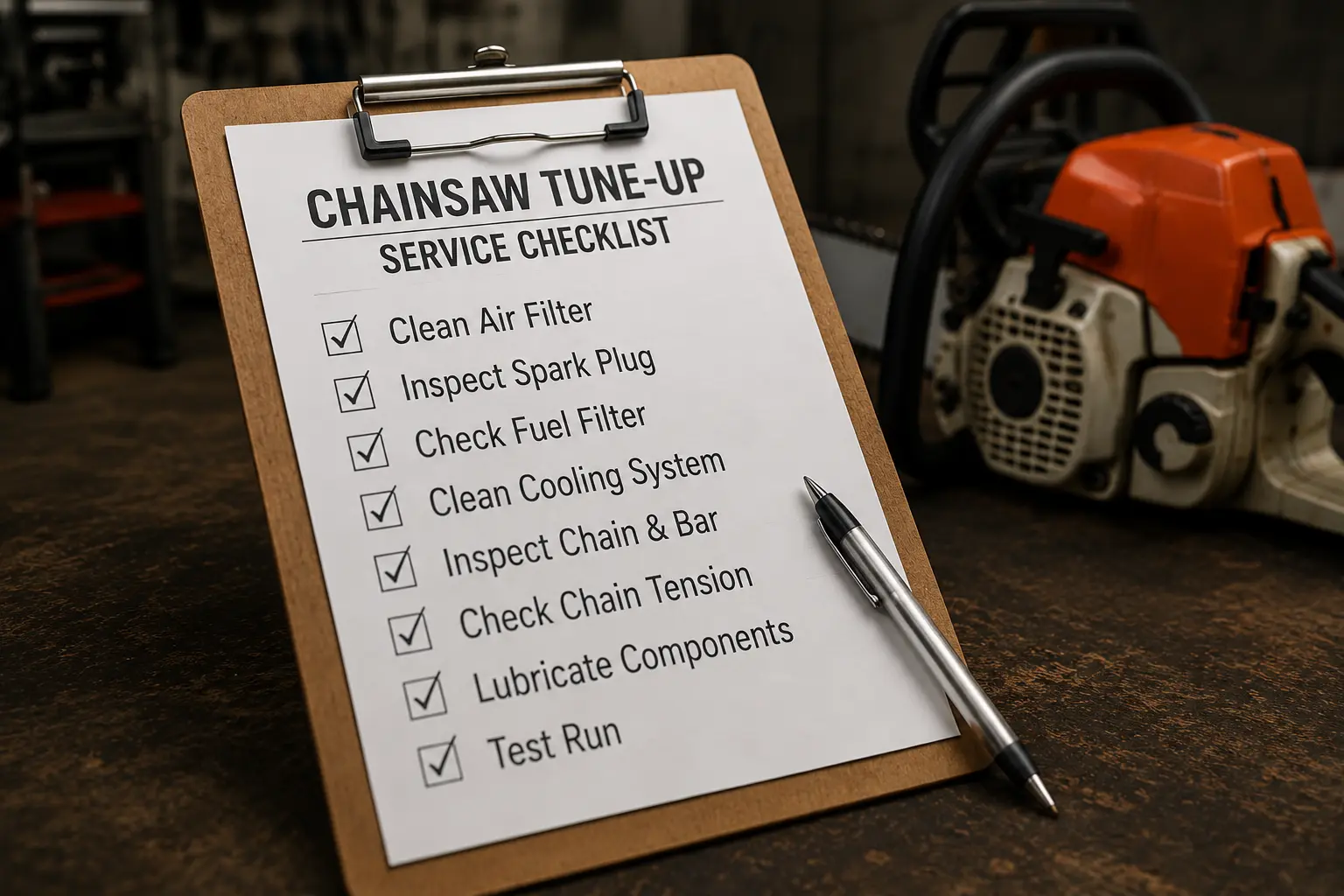
What a complete tune-up includes
A thorough chainsaw tune-up covers every component that degrades with normal use and affects starting, running, and safety:
Air filter replacement or cleaning. The air filter prevents debris from entering the carburetor and cylinder. A clogged filter starves the engine of air, causing a rich-running condition, reduced power, and hard starting. Paper filters are replaced; felt or foam filters are cleaned with compressed air or washed.
Spark plug replacement. Not inspection — replacement. A new plug is cheap insurance on any engine, and chainsaws run their plugs hard. Carbon-fouled or worn plugs cause misfires and hard starting, particularly in cold conditions. The shop should install the correct plug for your engine, not a generic substitute.
Fuel filter replacement. The fuel filter sits inside the fuel tank on the end of the fuel pickup line. It prevents debris from reaching the carburetor. Fuel filters are inexpensive and often overlooked — a partially clogged fuel filter causes lean running and bog under load.
Carburetor inspection and adjustment. The carburetor controls the fuel-air mixture at idle and at full throttle. A properly tuned carburetor runs cleanly at idle without stalling, accelerates without hesitation or bog, and reaches correct top-end RPM without over-revving. On most modern chainsaws, the high and low speed mixture screws are factory-set and sealed — adjustment requires special tools. An experienced technician can assess whether the carburetor is within spec and address any cleaning or adjustment needed.
Chain sharpening. A complete tune-up includes sharpening the chain to proper angles and filing the depth gauges to the correct specification. If the chain is too worn to sharpen effectively — cutters filed below minimum height or damaged drive links — the shop should tell you and quote a replacement.
Bar inspection and service. The bar is inspected for rail wear, groove condition, and nose sprocket wear. Rails are dressed square if needed. The bar oil inlet hole is cleared. The bar is flipped if it hasn't been recently.
Bar and chain oil system check. The automatic oiler is confirmed to be delivering oil to the bar. Chainsaws with insufficient bar oiling wear through bars and chains quickly and are a fire risk. The oil delivery rate is checked visually (hold the bar near a light surface at speed — you should see an oil mist spraying off the chain tip).
Chain tension adjustment. Set to the correct specification for the engine temperature.
Chain brake inspection. The chain brake is a critical safety component that stops the chain within milliseconds of a kickback event. It's tested to confirm it engages properly under both manual and inertia activation. A chain brake that doesn't function is a serious safety issue — if yours fails testing, repair or replacement isn't optional.
Compression test. A compression check tells you the condition of the piston, rings, and cylinder. Low compression indicates internal wear that a tune-up can't address. Knowing the compression reading at service time gives you a baseline for tracking engine condition over time.
Visual inspection of fuel lines and primer bulb. Fuel lines and primer bulbs degrade from ethanol exposure over time. Cracked lines and hardened primer bulbs are safety issues (fuel leaks) and functional issues (hard starting). The shop should flag any that are approaching end of life.
What gets left out at the low end
A basic tune-up at the lower price range may include only spark plug, air filter, and carburetor adjustment — skipping chain sharpening, bar service, compression test, and safety system checks. This is a legitimate service, but it's not a complete tune-up.
When getting a quote, ask specifically:
- Does that include chain sharpening and depth gauge filing?
- Does it include a chain brake test?
- Do you do a compression check?
The answers tell you what level of service you're actually buying. A shop that tests the chain brake and does a compression check is more thorough than one that swaps consumables and calls it done.
Cost by saw type
Consumer saws (Stihl MS 170/180, Husqvarna 120/130, Echo CS-310): $60–$90 at most independent shops. Simpler carburetor design, widely available parts, faster service time.
Prosumer saws (Stihl MS 271/291, Husqvarna 450/455): $80–$120. Slightly more involved carburetor work, higher-quality components to inspect.
Professional saws (Stihl MS 362/461, Husqvarna 572 XP): $100–$150+. More thorough inspection warranted on a machine worth $800-1,200. Labor time is similar but the technician should give the entire saw more attention.
Tune-up frequency
Light homeowner use (occasional firewood, storm cleanup): Annual tune-up before each season is appropriate. If the saw only sees 5-10 hours per year, you can extend spark plug and air filter intervals slightly, but fuel filter and chain service should still happen annually.
Regular use (several cords of firewood per year, frequent storm work): Service every 50-100 hours of use, or annually, whichever comes first. Chain sharpening happens far more frequently — every 2-4 hours of cutting.
Professional or heavy use: 25-50 hour service intervals. Professionals typically sharpen chains daily and do their own field maintenance between shop visits.
Signs you need a tune-up now, not at the end of the season
Don't wait for the annual service window if the saw is showing active symptoms:
Hard starting or multiple pulls required. On a well-maintained saw, cold starts take 2-4 pulls with the choke. If you're regularly pulling 10-15 times, something is off — fuel filter, air filter, plug, or carburetor.
Runs at idle but bogs under load. Classic carburetor high-speed mixture issue, or a clogged fuel filter starving the engine under demand.
Chain not getting oil. If the wood around the bar tip isn't showing an oil mist during cutting, the oiler is blocked or failing. Running without oiler function destroys a bar and chain quickly.
Chain brake feels stiff or won't release cleanly. The brake mechanism needs service. Don't use a saw with a questionable chain brake.
Visible fuel leak. Cracked fuel line or deteriorated primer bulb. Don't run the saw until the leak is fixed — fuel on a hot engine is a fire hazard.
DIY vs professional tune-up
Spark plug, air filter, and fuel filter are straightforward DIY replacements — 20 minutes with basic tools, $15-25 in parts. Chain sharpening is learnable and worth doing yourself if you use the saw regularly.
Where most homeowners benefit from a shop visit is carburetor adjustment (requires specialized tools on modern saws), chain brake testing (requires knowing the pass/fail criteria), and the overall inspection eye of someone who sees hundreds of these machines per year.
A reasonable approach: do the consumables yourself each season, take it to a shop every other year for a full inspection and anything beyond your comfort level.
To find a chainsaw repair shop near you, use the directory search below. If your saw is Stihl, see how to find a Stihl authorized repair shop for guidance on finding factory-trained technicians.
Prices in this guide reflect typical independent shop rates across the United States as of 2026. Authorized dealer service centers for Stihl and Husqvarna may price differently. Always get a written estimate before authorizing work.