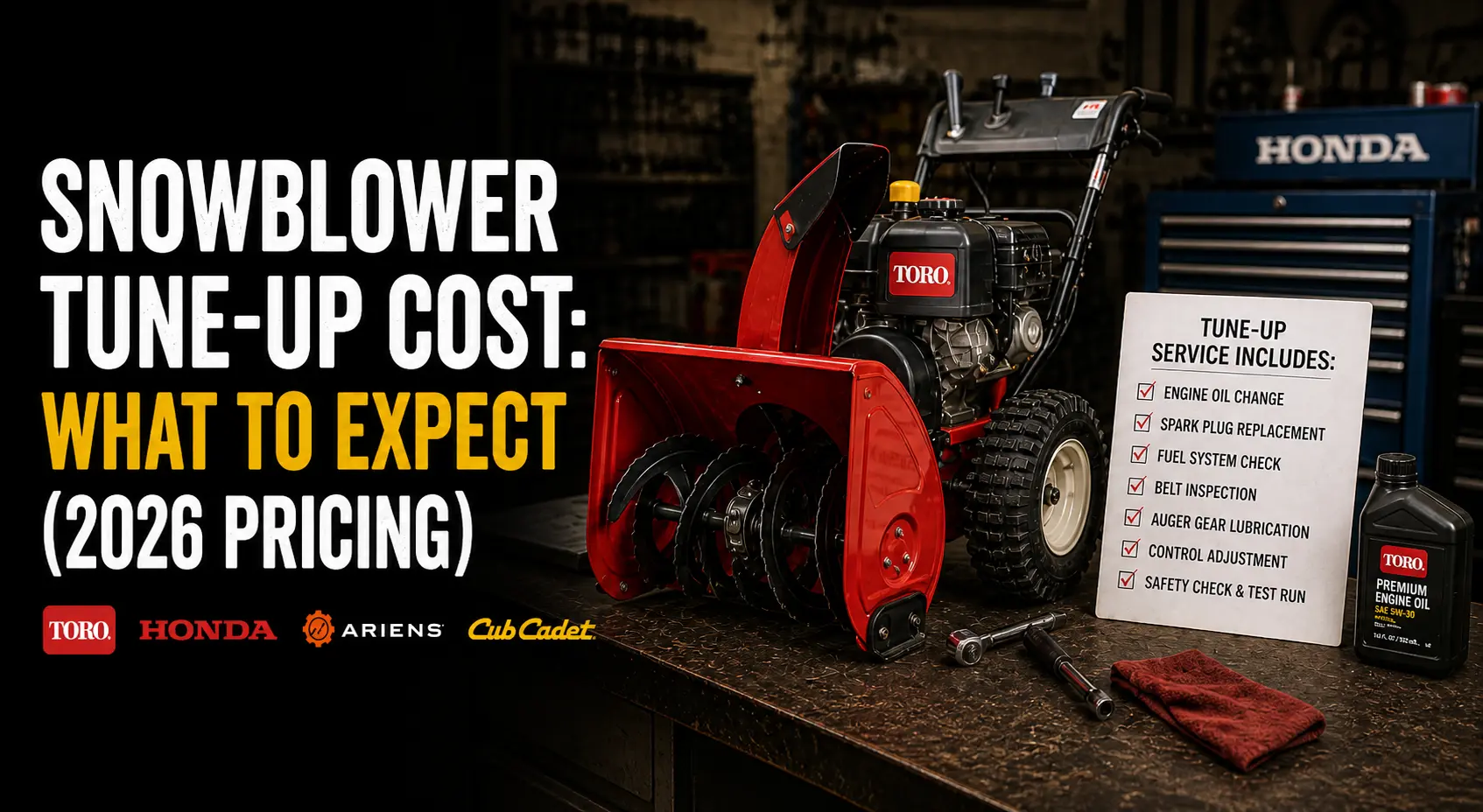
Snowblower Tune-Up Cost: What to Expect (2026 Pricing)
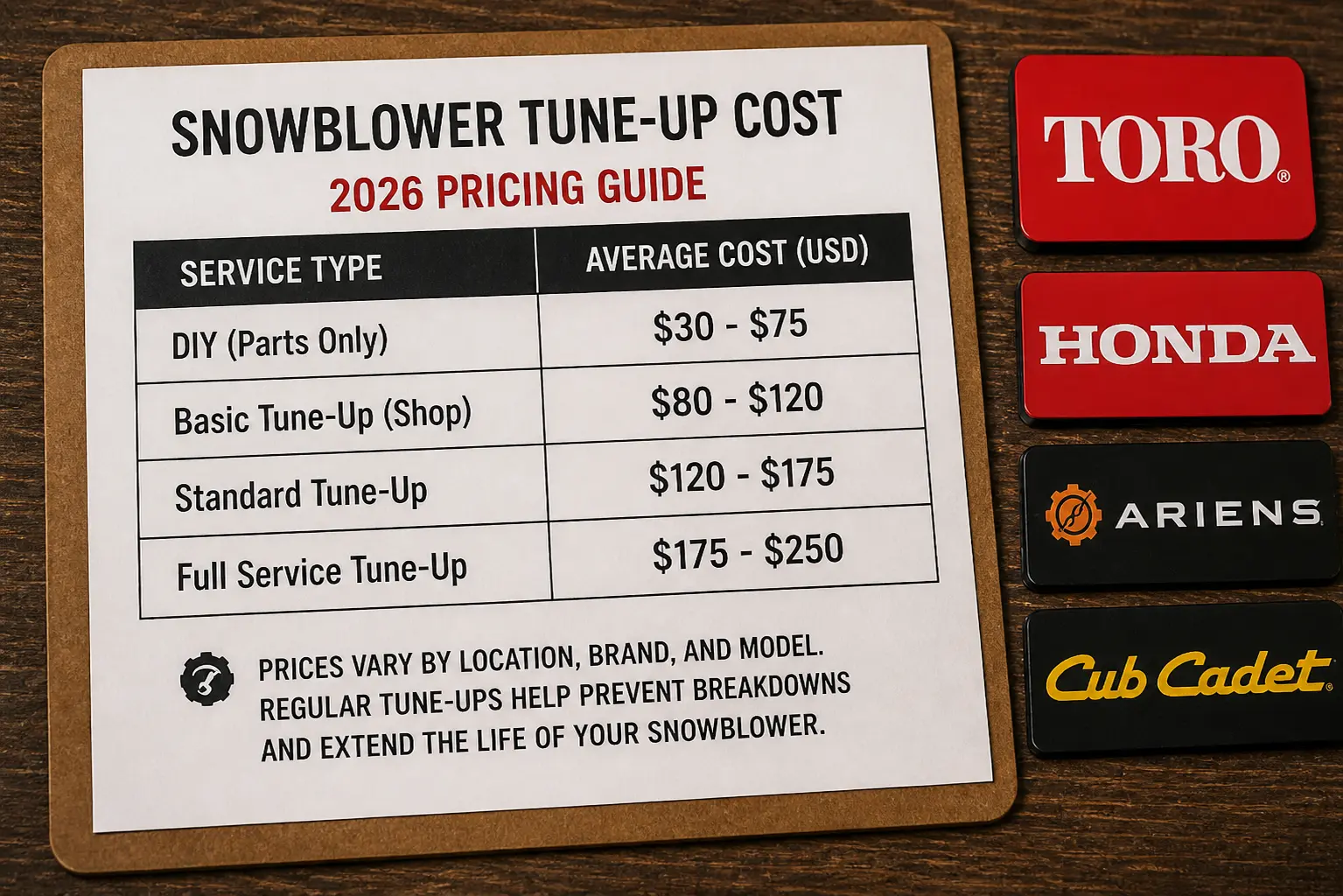
A snowblower tune-up at most independent shops runs $120-220 in 2026, depending on engine size, what's included, and where you live. Pre-season pricing (September-October) is generally at the lower end of that range; in-season emergency service costs more and often involves wait times of 2-3 weeks.
This guide breaks down what's actually included, what each component should cost individually, and how to tell whether a quote is fair before you authorize work.
If your snowblower won't start at all and you're trying to decide whether to fix it yourself, the snowblower won't start guide covers DIY troubleshooting first. This article assumes you've decided to bring it to a shop.
Quick tune-up box
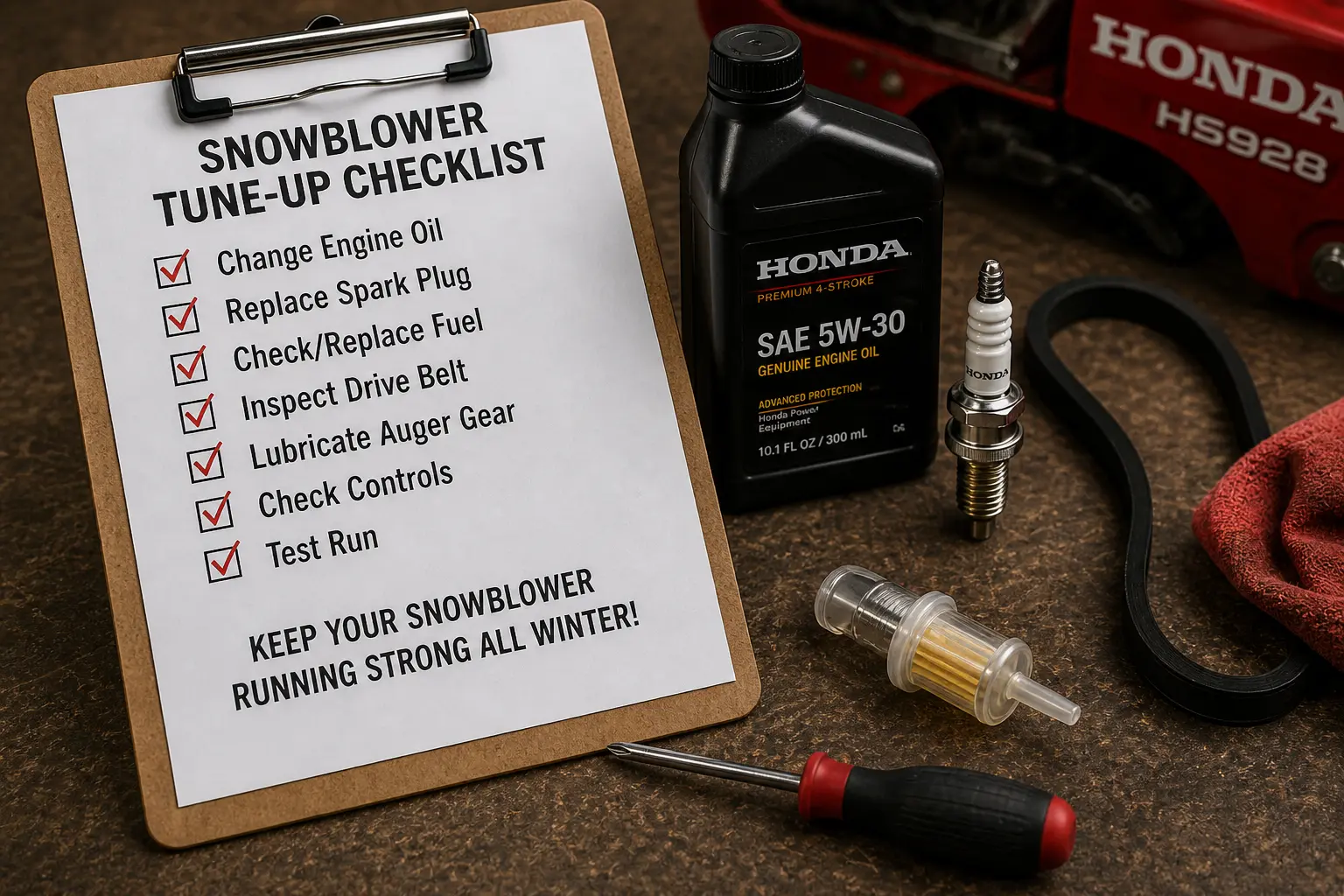
What's included in a standard tune-up
A real snowblower tune-up at an independent shop typically covers:
Oil change. Drain old oil warm (warm oil drains cleaner), replace with fresh SAE 5W-30 synthetic for cold-weather use, dispose of old oil. Most snowblowers hold 16-24 oz of oil — small quantity, but oil age matters more than quantity used.
Spark plug replacement. New plug, gapped to spec. Plugs are inexpensive and most shops replace at every tune-up rather than inspect and reuse.
Fuel system service. Drain old fuel, replace fuel filter if equipped, inspect fuel lines for cracks, often includes carburetor cleaning if the snowblower has been sitting with old fuel.
Air filter inspection or replacement. Check the foam pre-filter and paper element. Clean foam filters with soapy water and re-oil; replace paper elements if degraded.
Auger gear box check. Verify oil level in the auger gearbox (separate from the engine oil). Top off or replace if dirty.
Belt inspection. Check drive belts for glazing, cracks, or stretching. Replace as needed.
Shear pin inspection. Check the auger shear pins for cracks or wear. These are the sacrificial pins that break to protect the auger if you hit a hidden object — important they're intact before storm season.
Skid shoes and scraper bar inspection. Check wear on the metal pieces that ride along the ground and scrape snow.
Test run. Start the engine and run it for 10-15 minutes. Engage the auger and drive systems briefly to verify operation.
A tune-up that only covers oil, plug, and air filter without addressing the fuel system isn't a real tune-up — it's a basic service. Worth asking specifically what's included before booking.
What each component should cost individually
If you're getting nickel-and-dimed on add-ons, here's what each piece typically runs at independent shops:
- Oil change only: $40-70
- Spark plug replacement: $15-25 (including labor)
- Air filter replacement: $20-40
- Carburetor clean (basic): $80-130
- Carburetor rebuild (with diaphragm and gaskets): $130-200
- Fuel filter replacement: $20-40
- Fuel line replacement: $30-60
- Belt replacement (each): $40-80
- Shear pin replacement (per pin): $5-15
- Skid shoe replacement (pair): $30-60
- Auger gearbox oil change: $30-60
- Carburetor float bowl gasket: $20-40
A bundled tune-up is almost always cheaper than the sum of these individual prices because the shop labor overlaps — they're already inside the engine for the oil change, so adding the plug and air filter is just minutes.
What a tune-up should cost by snowblower type
Pricing varies meaningfully by snowblower size and complexity:
Single-stage snowblowers (Ariens Path-Pro, Toro Power Clear, Honda HS720, similar):
- Annual tune-up: $100-160
- Includes: oil, plug, air filter, fuel system, belt inspection
- Labor: 1-1.5 hours
Two-stage snowblowers (Ariens Deluxe/Platinum, Toro Power Max, Cub Cadet 2X/3X, Husqvarna ST series):
- Annual tune-up: $140-220
- Includes: above plus auger gearbox check, shear pin inspection, two-belt service
- Labor: 1.5-2.5 hours
Three-stage snowblowers (Cub Cadet 3X, Troy-Bilt Vortex, similar):
- Annual tune-up: $160-260
- Includes: above plus accelerator system inspection
- Labor: 2-3 hours
Tracked or commercial-grade snowblowers (Honda HSS series, Ariens Pro series):
- Annual tune-up: $200-350
- Often requires specialized tools and parts
- Labor: 2-4 hours
Authorized dealer pricing typically runs 20-40% higher than independent shops. For warranty work, you have to use a dealer. For out-of-warranty work, an experienced independent is usually fine and significantly cheaper.
Pre-season versus in-season pricing
This is where snowblower service pricing differs most dramatically from other equipment.
Pre-season (September-October): Most independent shops offer their best pricing in the off-season because they need to keep techs busy. Same-week service is usually available. Some shops run pre-season specials at 10-20% off standard pricing.
Early season (November-early December): Standard pricing, 1-2 week wait times depending on region.
Mid-storm season (December-February): Pricing often increases, wait times stretch to 2-4 weeks, and emergency or expedited service can add 25-50% to the bill. After a major storm, every shop in the region is booked solid.
Post-season (March-May): Pricing returns to standard, but inventory of parts can be limited. Some shops won't even take snowblower service in spring — they're switching over to lawn equipment.
The cheapest snowblower tune-up of the year is the one you book in late September. The most expensive is the one you call about at 6 AM the morning after the first big storm.
Red flags in a tune-up quote
- No itemization. "It'll be about $200" without parts/labor breakdown means the shop isn't being transparent.
- Quotes well below the typical range. A "$60 snowblower tune-up" is almost certainly an oil change being upsold. Real tune-ups include parts that cost the shop $20-40 in materials.
- Pressure to add a carburetor rebuild without specific symptoms. A carb rebuild is appropriate when there's evidence of fouling — surging, won't idle, runs only on choke. If the snowblower runs fine and the shop is pushing a $150 rebuild, get a second opinion.
- Refusal to provide written estimates. Reputable shops put proposed work and pricing in writing before they start. Verbal-only is a red flag.
- Vague warranty terms. Most shops warranty their tune-up work for 30-90 days. Get this in writing.
When you should DIY instead of going to a shop
A snowblower tune-up is one of the more DIY-friendly services on small engine equipment, particularly for someone with basic mechanical skills. The full tune-up checklist above takes 1.5-3 hours at home with about $40-60 in parts — 5W-30 synthetic oil, a spark plug, air filter, fuel stabilizer, and a carburetor rebuild kit if needed.
DIY makes sense when:
- You're comfortable with basic tools (sockets, pliers, screwdrivers)
- The carburetor doesn't need rebuild work
- You have a clean, heated workspace (cold concrete is miserable in October)
- You want to save $80-150 in labor
Take it to a shop when:
- The carburetor needs rebuild work (small parts, easy to lose, requires specific cleaning)
- The engine has compression or ignition issues beyond a simple plug replacement
- You'd rather spend the $150 than spend the afternoon
- The auger gearbox needs service (most owners don't have the right tools or oil for this)
When to skip the tune-up entirely
Some snowblowers hit a point where annual tune-up costs more than replacement value:
- Replacement value under $300: Tune-up budget cap of $100. Above that, weigh against replacement.
- Replacement value $300-700: Tune-up budget cap of $180. Above that, ask the shop if anything beyond standard tune-up is needed.
- Replacement value $700+: Annual tune-up always worthwhile.
Reputable shops will tell you when ongoing repairs aren't worth it — see snowblower repair vs replace for the full cost-threshold framework by snowblower type. That honest assessment is one of the most valuable things a good local repair shop offers.
Booking effectively
For best pricing and fastest turnaround:
Book in September. First-week-of-September is the sweet spot — shops want the work, pricing is best, and you have buffer time before storms.
Ask what's included before booking. "What does your standard snowblower tune-up cover?" should get you a specific list, not vague answers.
Bring service history if you have it. Knowing when oil was last changed or carb was last serviced helps the tech price accurately and avoid duplicate work.
Confirm written estimates and warranty terms before authorizing work.
If you don't have a snowblower shop you trust, find a verified small engine repair shop near you below. Most will give a phone estimate before you bring the unit in.
This guide covers gas-powered single-stage, two-stage, and three-stage snowblowers (Ariens, Toro, Cub Cadet, Craftsman, Husqvarna, Honda, and similar consumer/prosumer brands). Battery-powered electric snowblowers have entirely different service schedules and aren't covered here. Pricing ranges are based on independent shops; authorized dealers typically charge 20-40% more.