
What to Expect at Your First Small Engine Repair Appointment
If you've never taken a lawn mower, generator, snowblower, or chainsaw to a small engine shop before, the process can feel uncertain. What do you tell them? How long does it take? Will they call you before doing anything? What does it cost just to have them look at it?
The answers are more straightforward than most people expect. Here's how the typical repair process works from start to finish.
Before you go: what to do at home
Drain most of the fuel. Most shops prefer equipment arrive with the tank mostly empty — not bone dry, but not full either. A half-empty tank is fine. This makes the machine safer to transport in a vehicle and easier for the shop to handle. If your equipment has a fuel shutoff valve, turn it off before loading.
Note the symptoms specifically. The more precisely you can describe the problem, the faster the diagnosis goes — and faster diagnosis means lower labor cost. "It won't start" is the minimum. "It starts fine when cold but dies after about two minutes of running" is much more useful. "It starts, runs for two minutes, then stalls and won't restart until it cools down completely" is excellent.
Think through: When did the problem start? Did anything change before it started — new fuel, sat over winter, got dropped or hit something, got rained on? Does it happen every time or intermittently? Any unusual sounds, smoke, or smells?
Know the basic machine info. Model number and engine model are on the label on the machine or engine. You don't need to memorize them, but if the shop asks and you don't have them handy, take a photo of the label before you go. The right model number speeds parts sourcing significantly.
Note any recent service history. If the machine was serviced at another shop, or if you replaced the spark plug or air filter yourself recently, mention it. This prevents the shop from diagnosing and billing for something you just did.
At drop-off: what to say
When you arrive, you'll typically speak with the service counter — either the shop owner, a service writer, or the technician themselves at smaller shops.
Tell them:
- What the machine is (make, model if you know it)
- What it's doing (or not doing)
- The relevant history (sat over winter, hit a rock, recently worked on)
- Whether there's any urgency on your end
Ask them:
- What's the diagnostic fee, and does it apply toward the repair?
- Will you call me with an estimate before doing any work?
- What's your current turnaround time?
The first two questions establish the financial ground rules. You should not authorize open-ended repairs without a call first. Most shops operate this way by default — they'll diagnose, then call you — but confirming upfront prevents any misunderstanding.
The turnaround question gives you realistic expectations. During spring (lawn mower season) and fall (snowblower season), good shops run 2–4 week queues. In the off-season, turnaround can be 2–5 days.
What happens after drop-off
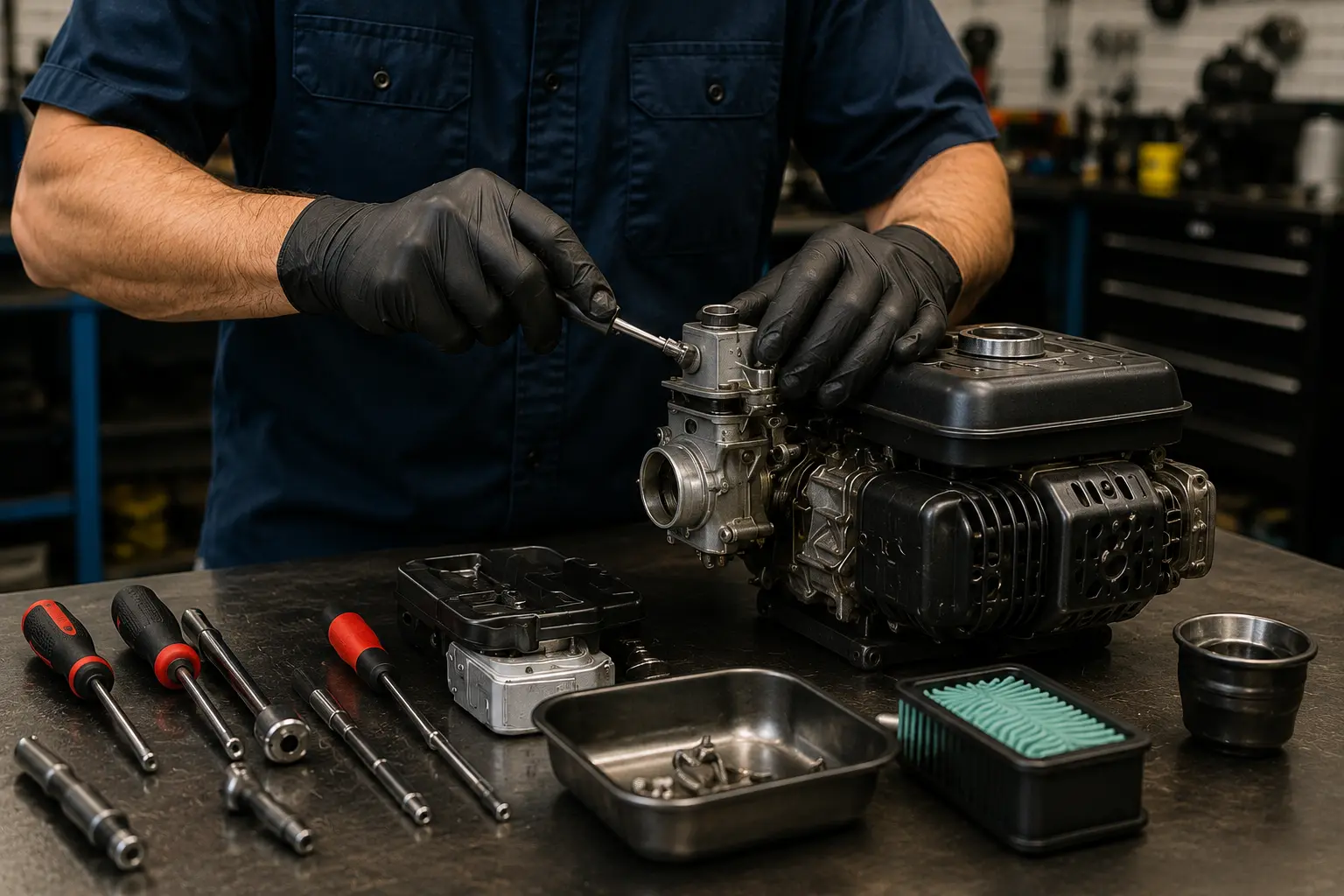
Your machine goes into the queue. When a technician gets to it, they'll run a diagnostic — which means testing the fuel system, checking spark, running a compression test if needed, and identifying the root cause of the problem.
Then they call you. This call covers:
- What they found
- What they recommend
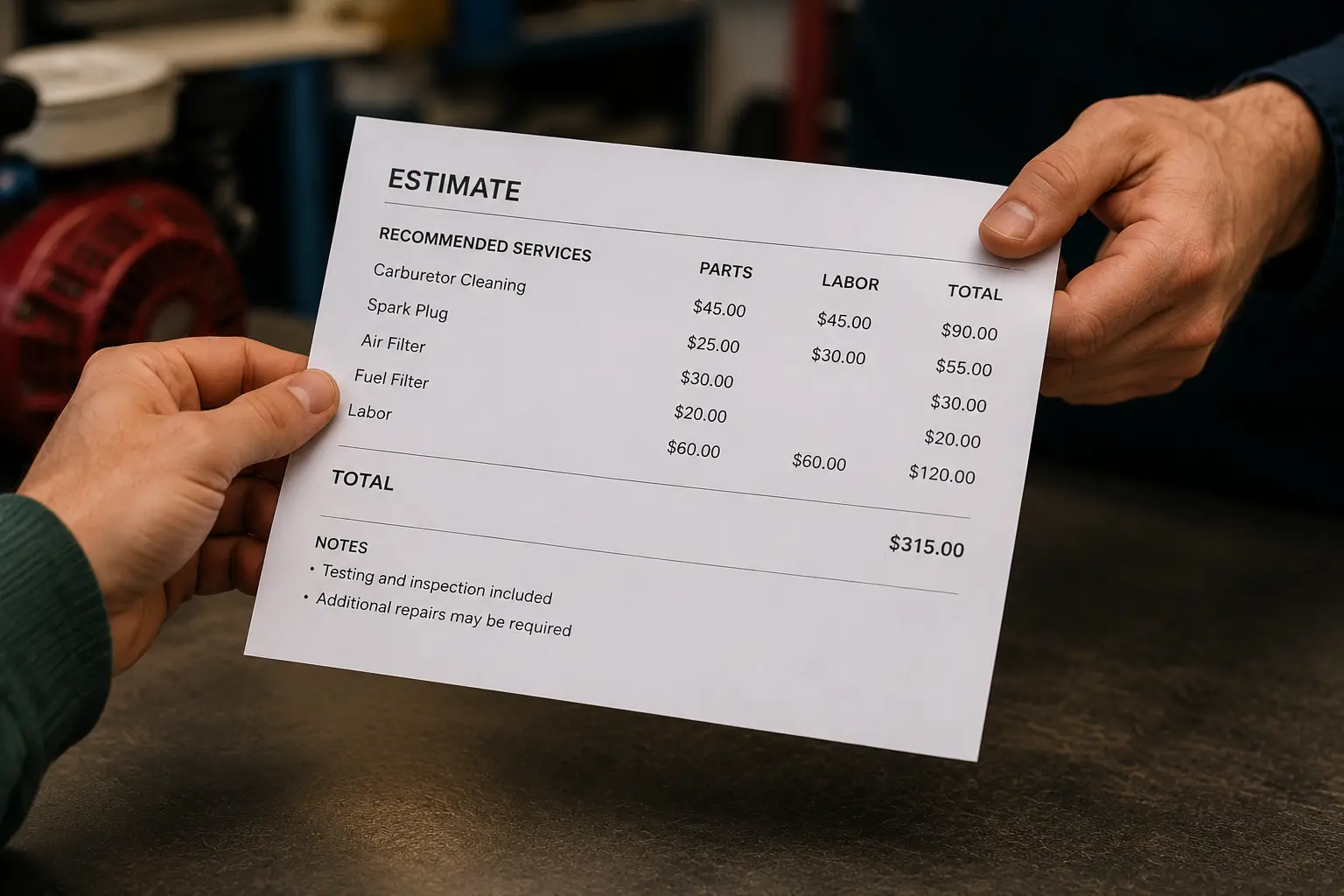
- The estimated cost broken down by parts and labor
- Whether there's anything else they noticed
You have three choices: authorize the repair, decline and pay only the diagnostic fee, or ask for time to think about it. You're not obligated to approve anything on the spot.
If the repair uncovers something additional once they're into the work — for example, they're replacing a belt and notice the spindle bearings are failing — a reputable shop calls you again before proceeding. Work beyond the authorized estimate requires your approval.
Typical timelines
Once you authorize the repair, actual repair time is usually shorter than the queue wait. Most common repairs — carburetor service, belt replacement, tune-up — take 1–3 hours of actual shop time. The wait is queue time, not work time.
After the repair is complete, the shop calls you for pickup. Some shops text if you prefer.
Typical timelines by season:
- Spring (March–May): 2–4 weeks from drop-off to pickup at busy shops
- Summer (June–August): 1–2 weeks
- Fall (September–October, snowblower season): 2–3 weeks
- Winter/off-season: 3–7 days at most shops
If your timeline is urgent — you need the generator before a storm, or the snowblower before snow is in the forecast — say so at drop-off. Some shops can prioritize urgent repairs, sometimes at a premium. It's always worth asking.
At pickup: what to check
When you pick up the machine, the shop should walk you through what was done and give you a receipt that lists the parts installed and labor performed. Keep this receipt. It's useful if the same problem recurs and for warranty claims.
Before you leave:
Ask to see the old parts. If a carburetor was rebuilt, a belt was replaced, or a spark plug was swapped, ask to see what came out. Reputable shops keep removed parts until the customer collects the machine. Seeing the worn belt or the varnished carburetor confirms the work was actually done.
Ask about the warranty on the repair. Most shops cover labor for 30–90 days and parts for whatever the manufacturer warranties. If the same problem recurs within the warranty period, it shouldn't cost you for labor.
Ask what to watch for. A good technician will mention if there's something else that may need attention in the near future, or if there's a usage note relevant to the repair — "the carburetor was rebuilt because of old fuel damage, so going forward use stabilizer every tank and drain it before storage." This is useful information.
Test it before you leave if possible. Some shops will start and demonstrate the repair before you load the machine. If yours offers this, take them up on it.
If something isn't right after the repair
If the machine has the same problem within days of pickup, call the shop immediately. Don't wait. Most shops will want to see it back right away and will make it right without additional charge if the same root cause is involved.
If a different problem develops shortly after — something that wasn't there before — that's also worth a call. The shop may have noticed something during the repair that's unrelated, or there may be a connection to the work done. Either way, a conversation is the right first step.
Finding a good shop
The repair experience described above — clear diagnosis, estimate before work begins, old parts available, warranty on the repair — is the standard at a reputable shop. If a shop you're considering doesn't operate this way, it's worth looking for another option.
This directory lists over 13,000 small engine repair shops across the United States with Google ratings, phone numbers, and hours. Use the search below to find verified shops near you.
Shop processes vary. Some smaller owner-operated shops operate more informally but are equally reputable — what matters is clear communication, honest pricing, and quality work. Use your judgment based on how questions are answered when you call.