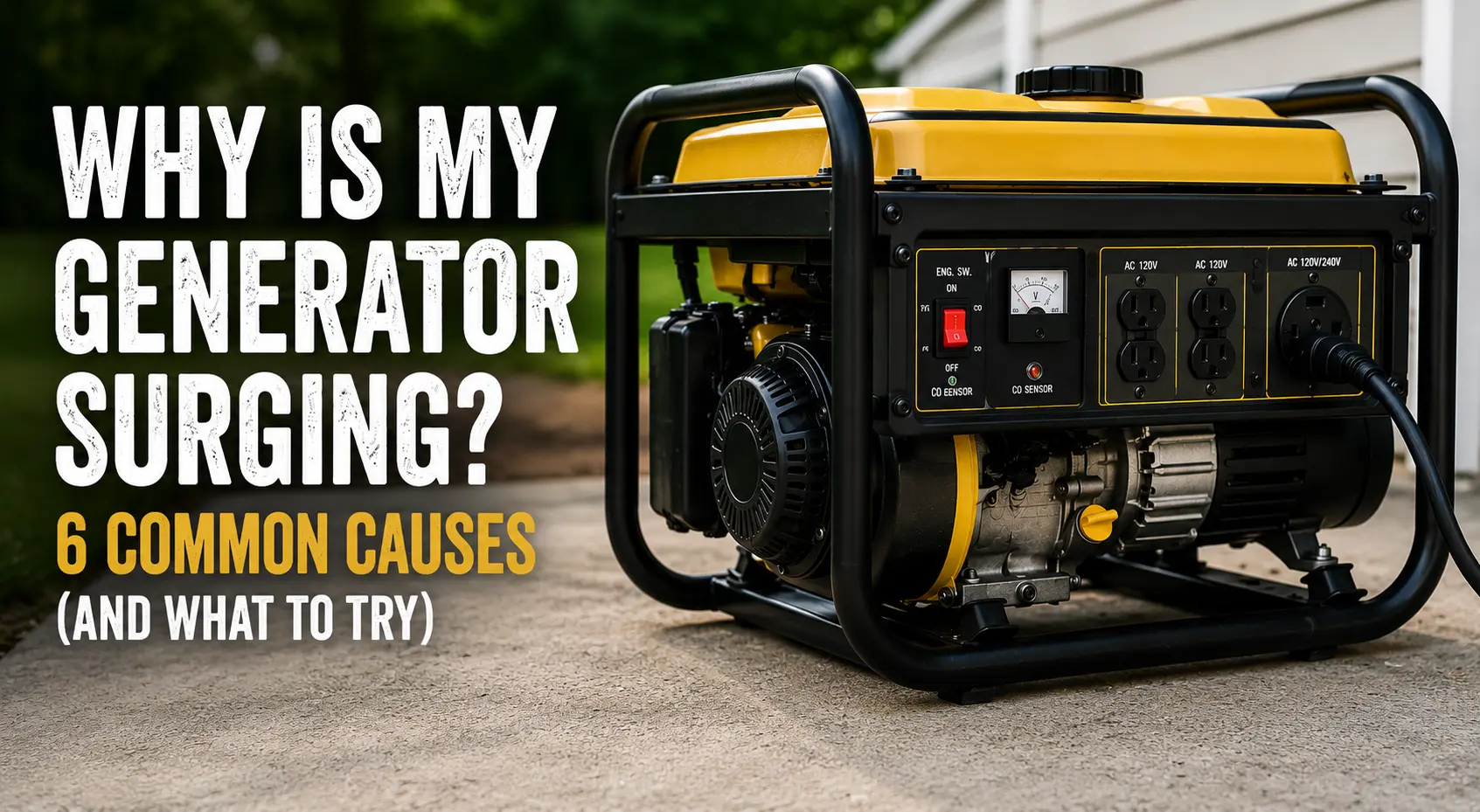
Why Is My Generator Surging? 6 Common Causes (And What To Try)
The generator runs, but the engine note keeps cycling — RPM rises and falls every second or two, like the engine can't decide what speed it wants to be. Lights flicker. Refrigerator compressors won't kick on cleanly. Anything sensitive plugged in is at risk of brownout damage.
Surging (also called "hunting") is one of the most common generator problems and one of the most fixable. Unlike a generator that won't start at all, a surging generator is telling you it's almost working — fuel and ignition are reaching the cylinder, but something is interrupting steady delivery. Six causes account for nearly every case, and the technician's order of checks below works through them from cheapest to most involved.
If your generator won't start at all, the generator won't start guide covers that troubleshooting path first. This article assumes the engine runs but won't hold a steady RPM.
Use the interactive generator-surging diagnostic to narrow the likely cause from when the surging happens and how the generator responds to load.
Quick product boxes
A quick diagnostic rule
Before working through specific causes, pay attention to when the surging happens:
- Surging at all loads, all the time — almost always a fuel system or governor problem. Causes 1-5 below.
- Surging only at idle (no load), runs steady under load — usually an idle mixture or idle circuit problem. Causes 3 and 6 below.
- Surging only under load (steady at idle) — could be a fuel restriction (cause 6) or, less commonly, an electrical regulator issue covered in the last section.
- Random, irregular hunting with no clear pattern — usually ignition-related, less commonly fuel.
Note which pattern you have before opening anything. The pattern tells the technician — or you — where to look first.
1. Stale or contaminated fuel
The same fuel that causes generators to fail to start can also cause surging when the engine does manage to start. Old gasoline burns inconsistently — the lighter compounds that ignite easily are gone, and what remains lights unevenly cylinder-stroke to cylinder-stroke. The result is uneven combustion the governor can't keep up with.
Generators are particularly vulnerable because they often sit unused for months between storms. Fuel that's been in the tank since last hurricane season is the most likely culprit.
What to try:
Drain the tank completely. Refill with fresh, ethanol-free gasoline if available, or fresh 10% ethanol pump gas if that's all you can get. Add a fuel stabilizer like STA-BIL at the dose listed on the bottle to extend the shelf life of the new fuel.
Run the generator for 5-10 minutes. If surging clears up as fresh fuel works through the carburetor, you've found your problem. If it doesn't, residue from the old fuel is still blocking carburetor passages — keep going.
2. Carburetor jet partially clogged
The carburetor has tiny precision-drilled passages called jets that meter fuel into the air stream. When fuel evaporates inside the carb, varnish residue partially blocks these jets. A fully blocked jet means no fuel and the engine won't start at all. A partially blocked jet means inconsistent fuel delivery — exactly what produces surging.
This is the single most common cause of surging in generators that have been sitting with old fuel.
Symptoms specific to jet clogging:
- Surging at all engine speeds
- Smooths out briefly when the choke is partially applied (extra airflow restriction makes the partially-clogged jet "enough")
- Often shows up after a generator sits unused for 6+ months
What to try:
Spray carburetor cleaner directly into the air intake while the engine is running at low throttle. Short bursts, not a continuous spray. If the surging changes pattern (gets worse briefly, then improves) you've confirmed the carb is the issue.
A short-term fix is to run the engine for 10-15 minutes after spraying — the cleaner works through the passages and can clear minor residue. For a permanent fix, the carburetor needs to come off, get soaked in carb cleaner, and have its jets cleared with the fine wires that come in most carb rebuild kits.
Generator carb rebuild kits run $15-30 for most popular models (Generac GP series, Honda EU series, Champion, Briggs & Stratton engines). DIY is reasonable for a careful mechanic; many people prefer to bring it to a shop for $80-130.
3. Idle mixture screw out of adjustment
Many small-engine carburetors have an idle mixture adjustment screw — a small brass screw on the side of the carb that meters fuel at idle. If it's been turned out too far (too rich) or in too far (too lean), the engine surges at idle. This commonly happens after a carburetor service that wasn't fully tuned, or after vibration loosens the screw over years.
Symptoms:
- Surging at idle (no load) but smooth under load
- Engine "hunts" through a 200-300 RPM range when warm
- Often paired with hard cold starts
What to try:
The exact procedure varies by model, but the general approach: with the engine warm and idling, turn the idle mixture screw inward (clockwise) slowly until the engine just begins to stumble or run rougher. Then back it out (counterclockwise) until the engine runs smoothly — usually 1.5 to 2.5 turns out from fully closed.
Don't force the screw in tightly when finding the seated position — it has a fine point that can be damaged. Bottom it out gently and count from there.
For carburetors without an external mixture screw, this adjustment is internal and requires removing the carb. Bring it to a shop if you're not comfortable with that level of disassembly.
4. Vacuum leak after the carburetor
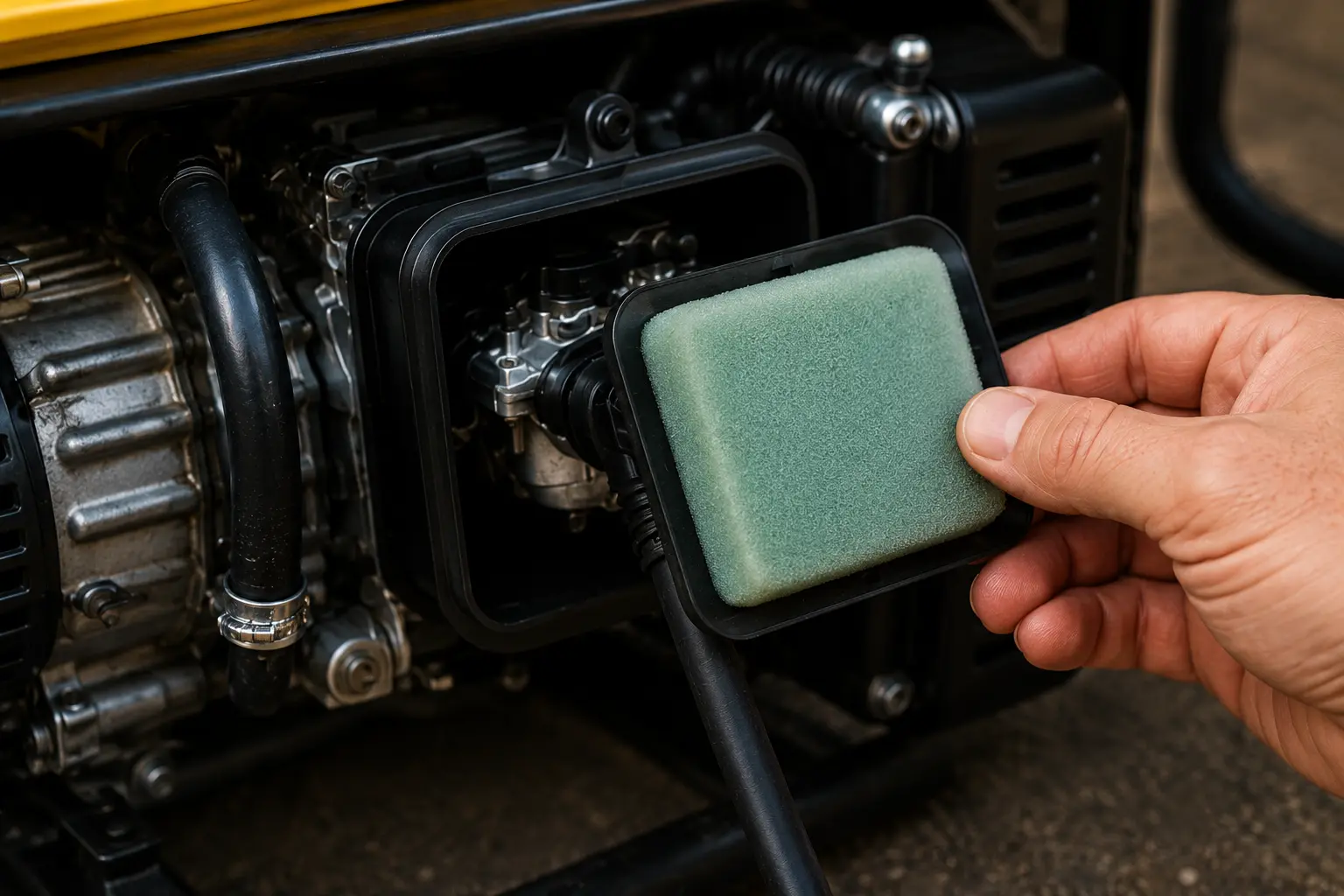
Anywhere unmetered air can enter the engine after the carburetor is a vacuum leak — a torn intake gasket, a cracked rubber hose, a loose carburetor mounting bolt, or a hardened governor shaft seal. Unmetered air leans the mixture and the engine compensates by hunting for the right RPM.
Vacuum leaks are common in generators that are 5+ years old or that have had recent carburetor service without fresh gaskets.
Symptoms:
- Engine surges at all speeds, with a high-RPM bias (revs higher than expected)
- Lean misfire (a soft "pop" through the carb intake on hard throttle)
- Often started after a recent carb service or fuel system repair
What to try:
With the engine running, spray a short burst of carburetor cleaner at the carburetor mounting flange, around the intake manifold gasket, and at any rubber fittings between carb and engine. If the engine RPM briefly changes (rises or smooths out) when you spray a particular spot, you've found the leak.
Common fixes:
- Tighten loose carburetor mounting bolts (1/4 turn at a time, in a cross pattern)
- Replace the carburetor-to-engine gasket ($5-15)
- Replace any cracked rubber hoses ($1-5 per foot at a small engine shop)
- Replace the governor shaft seal if it's hardened — this requires partial disassembly and is usually shop work
Don't run an engine with a known vacuum leak for long. The lean condition can damage the cylinder over time.
5. Governor system issue
The governor is the mechanical system that maintains constant engine RPM regardless of electrical load. As load increases, the governor opens the throttle to add power; as load drops, it closes the throttle. When the governor isn't responding correctly, you get surging — the throttle oscillates between too open and too closed.
Most small-engine governors are mechanical: a flyweight assembly inside the engine connected to the throttle by an external linkage and spring. Some newer generators use electronic governors, with similar failure modes.
Symptoms specific to governor issues:
- Surging gets worse under varying loads (turning a fridge on or off triggers a surge cycle)
- The throttle linkage visibly moves rapidly when the engine surges
- Often gets worse over the life of the generator as the spring weakens
What to check:
With the engine off, find the governor linkage — usually a pair of small metal rods running between the throttle and the governor arm on the side of the engine. Move them by hand. They should slide smoothly with no binding. If they catch or feel sticky, work them back and forth and add a drop of light oil to each pivot point.
Inspect the governor spring (a small coil spring connecting the linkage to a fixed mount). If it's stretched, kinked, or has corroded coils, replace it. Springs are $3-10 and slip on with no tools needed for most models.
If the linkage is smooth and the spring is good, the issue is internal to the engine — the governor flyweights or shaft. That's shop work, typically $100-200.
6. Fuel filter or pickup tube partially clogged
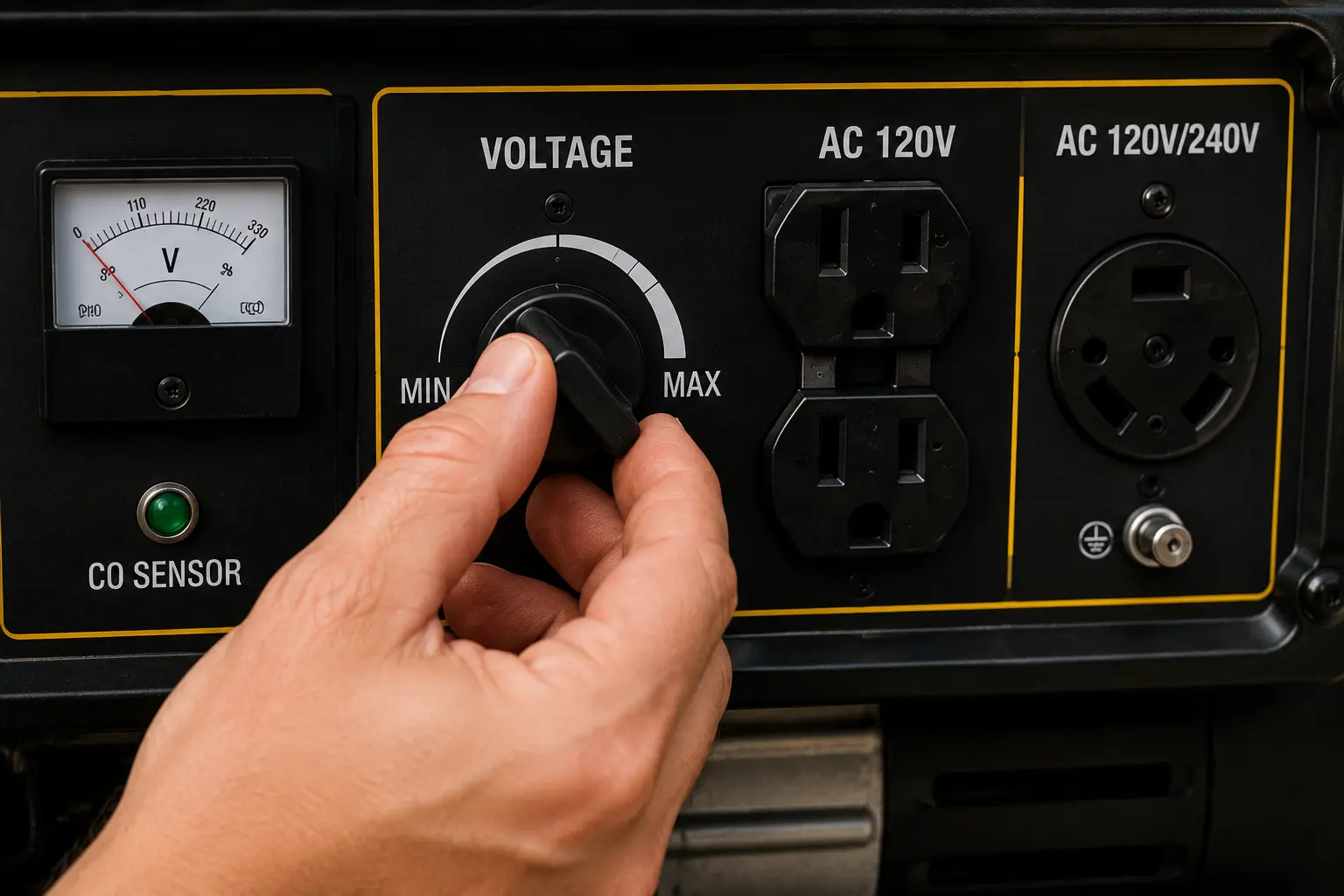
A fuel filter or pickup tube that's partially clogged restricts fuel flow under high demand but provides enough at low demand. The result: engine runs fine at idle and surges as load increases. This is one of the easier issues to confirm and one of the cheapest to fix.
Symptoms:
- Smooth at idle, surges under any electrical load
- Surging gets worse the longer the load runs (a heat-soaked filter softens and restricts more)
- Often appears in generators that have been sitting with old fuel for years
What to check:
Most generator fuel filters are inline cartridges between the tank and the carburetor — easy to spot, easy to replace. Some are inside the tank on a pickup tube. Replacement filters are $5-15.
Pickup tube clogs are less common but harder to clear. If the inline filter is clean and surging continues under load, drain the tank, remove the pickup tube (usually accessible from the bottom of the tank or through the fuel valve), and inspect for varnish buildup.
Special case: surging only under heavy load
If your generator runs perfectly at idle and only surges when you connect a major appliance — a refrigerator compressor kicking on, a well pump starting, a microwave running — the issue may be electrical rather than mechanical. The automatic voltage regulator (AVR) on inverter and digitally-regulated generators can fail in ways that look like engine surging. The engine itself is steady, but the generator's voltage output is hunting, which makes connected motors cycle and creates the appearance of surge.
This is a shop diagnosis. AVR replacement runs $80-200 in parts plus 1-2 hours of labor. Not DIY-friendly without a multimeter and the service manual for your specific model.
When to call a repair shop
Most generator surging issues from the list above are DIY-fixable in an afternoon with about $30 in parts. Bring it to a shop when:
- You've worked through fuel system fixes and surging continues
- The carburetor needs full disassembly and you're not comfortable with small parts
- Internal governor issues (broken flyweight, worn shaft)
- Suspected AVR or voltage regulation problem
- The engine cuts out completely during surging, not just changing speed
- Smoke from the exhaust during surge cycles
Independent generator repair shops typically charge $80-120 per hour. A complete carburetor service runs $150-250 at most shops. Storm-season pricing may add a premium and wait times stretch to 2-3 weeks after a major weather event — get problems diagnosed before the next storm if possible. See how to prepare your generator for hurricane season for the full pre-season checklist.
If you're not sure where to start, find a verified generator repair shop near you below. Most can give a phone diagnosis before you bring the unit in.
This guide covers gas-powered portable and small standby generators (Generac Honda, Champion, Briggs & Stratton, Kohler, and similar brands). Diesel generators and large standby units have different surge causes and aren't covered here. If your generator is under warranty, check the manufacturer's authorized service requirements before attempting any fixes — DIY work may void coverage.