Carburetor Clean vs Replace: How to Decide
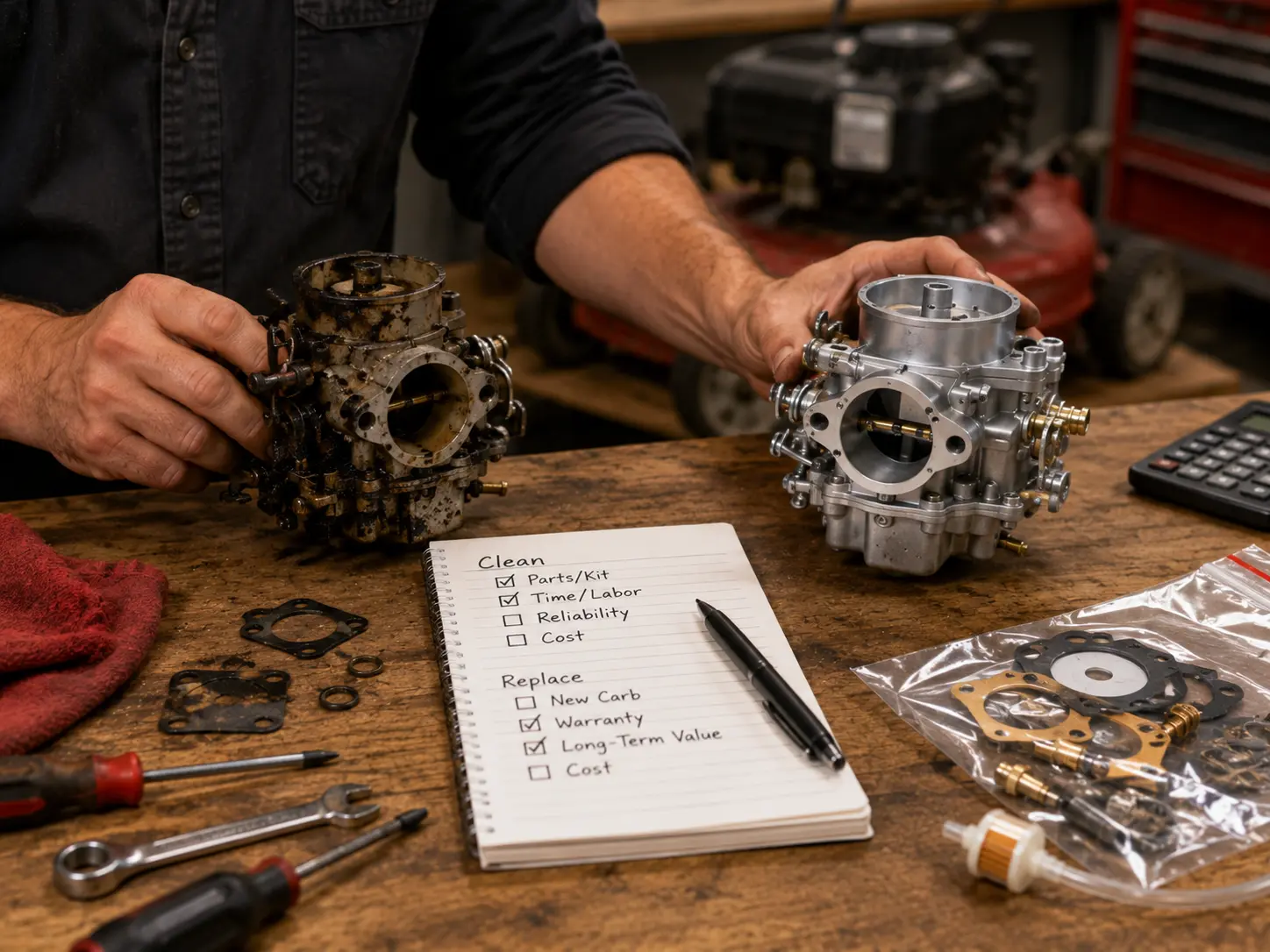
A dirty carburetor is one of the most common causes of a small engine that won't start, starts and stalls, or runs rough. The question most owners ask after pulling the carb is: clean it or just replace it?
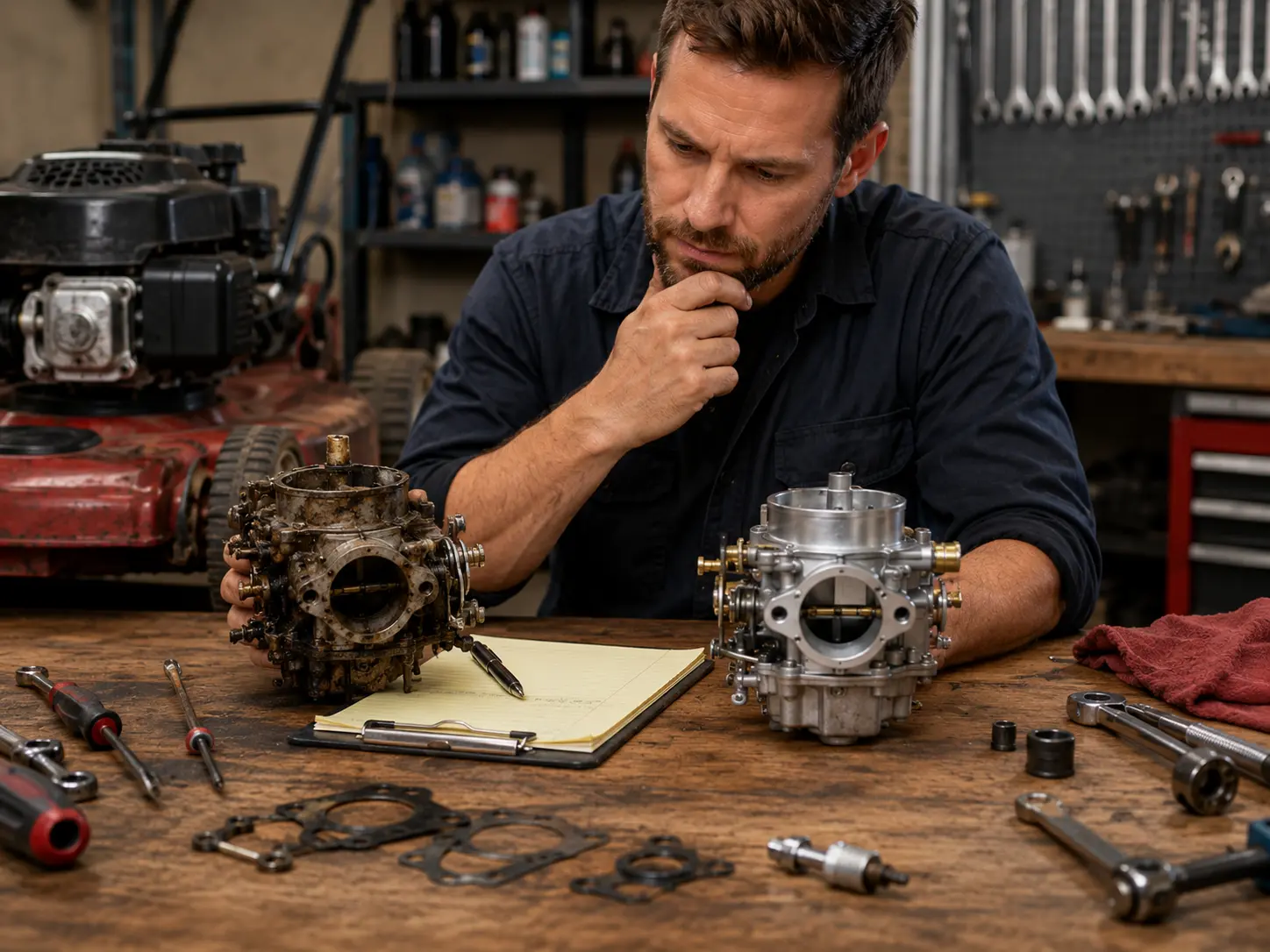
The answer depends on why the carb failed in the first place. Cleaning fixes one category of problems. Replacement fixes a different category. Getting them confused means either spending labor time on a carb that can't be saved, or spending money replacing a part that needed cleaning.
If the engine starts and then stalls, use the lawn-mower starts-then-dies diagnostic first. It helps confirm whether the carburetor is actually the likely cause before you remove or order anything.
This guide includes some Amazon Associate links. We earn a small commission on qualifying purchases at no extra cost to you, and we only link products we'd recommend to a neighbor.
Quick product boxes
When cleaning works
Cleaning is the right move when the carburetor failed due to deposits — gum, varnish, or fuel residue that has clogged the jets, passages, or float bowl.
This covers the majority of small engine carburetor problems. Ethanol-blended gasoline is the usual culprit. When fuel sits in the carburetor for more than 30–60 days, the light fractions evaporate and leave behind a sticky residue. The residue hardens on the jets, needle valves, and emulsion passages, restricting fuel flow.
Signs that cleaning will work:
- The engine ran fine last season but won't start after sitting
- Fuel is visibly discolored, varnished, or has a sour smell
- The float bowl has brown or yellowish deposits
- The engine starts briefly with starting fluid but won't sustain on its own
- The main jet or pilot jet is visibly gummed
How to clean effectively:
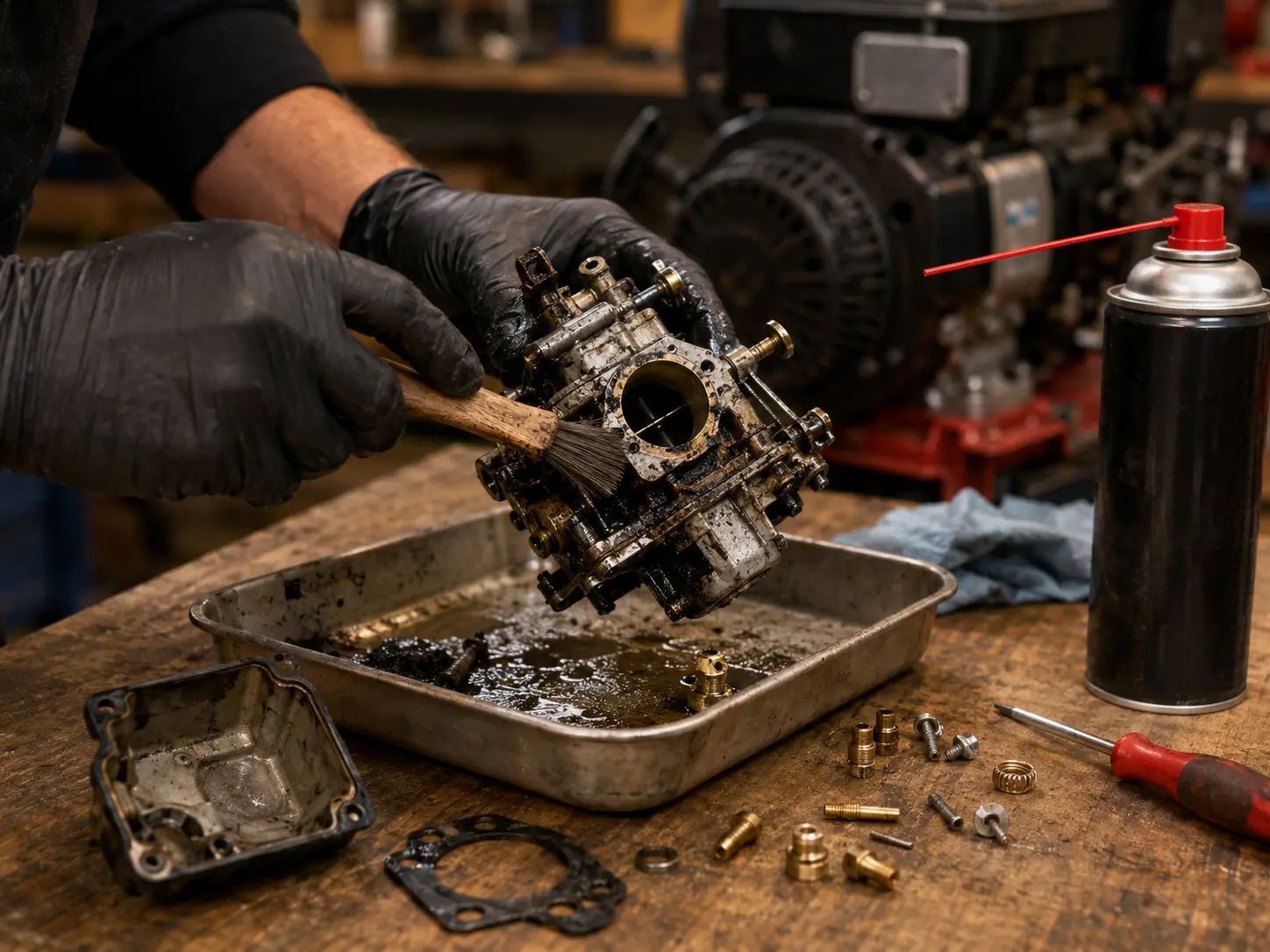
For light-to-moderate deposits, carburetor cleaner spray is the standard approach. Remove the float bowl, drain the old fuel, and spray cleaner through every passage — the main jet, pilot jet, emulsion tube, and any air bleeds you can reach. Let it soak for 5–10 minutes. Blow compressed air through each passage to confirm it's clear (you should see light through small jets when held up). Reassemble and test.
For heavier deposits, full disassembly and a chemical soak is more effective. Disassemble the carb completely (keep all parts together in a small container), soak the metal parts in carb cleaner for 30–60 minutes, and rinse with compressed air before reassembly.
Ultrasonic cleaning — available at most machine shops and specialty small engine shops — is the most thorough method for heavily varnished carbs. It removes deposits from passages that spray cleaner can't reach. This is what many shops do as a matter of routine.
When a rebuild kit is the better move
Cleaning removes deposits. It does not fix worn mechanical components. After cleaning, if the engine still runs poorly, the issue may be in the carb's mechanical parts — not the passages.
A carburetor rebuild kit typically includes:
- Float valve needle and seat (the valve that controls fuel level in the bowl)
- Gaskets (float bowl, throttle shaft, carb-to-engine interface)
- O-rings
- Sometimes an emulsion tube or diaphragm (on diaphragm carbs)
Signs that a rebuild kit is the right move:
- Carburetor leaks fuel (bowl gasket or float valve seat worn)
- Engine floods easily (needle not seating)
- Cleaning didn't fully fix the problem — some improvement but not resolved
- The carb has been cleaned before and keeps gumming up (needle seat worn, not sealing)
For engines with Honda GCV carburetors — a very common engine on push mowers, pressure washers, and rototillers — rebuild kits like the Honda GCV160/GCV190 carburetor kit replace the needle, seat, float, and gaskets for $10–$20. This covers most of what wears out without replacing the carb body itself. Verify the exact engine model first; the small-engine model-number guide shows where to look.
Rebuild kits are the middle path: more thorough than spray-cleaning, less expensive than full replacement.
When replacement is the right call
Replacement makes sense when the carburetor body itself is damaged or corroded in ways that cannot be cleaned or rebuilt.
Replace the carb when:
1. The carb body is cracked. Even a hairline crack in the main body or throttle bore causes an unmeasured air leak. The engine will run lean and hunt no matter how well the passages are cleaned.
2. Throttle shaft is worn. The throttle shaft runs through the carb body and controls the throttle plate. When the shaft wears, it develops play, which creates an air leak around the shaft. You can sometimes feel or hear this as a hiss. Cleaning does nothing; the shaft bore in the carb body is worn.
3. The main body is corroded or pitted. On aluminum carbs, exposure to ethanol-water mix can pit and corrode the internal passages. Heavy corrosion cannot be cleaned out — the passages are structurally compromised.
4. A critical jet is corroded through. The main jet is a precisely sized brass orifice. Corrosion can eat the jet wall, changing the orifice size. No amount of cleaning restores the correct fuel metering.
5. OEM rebuild kit cost exceeds replacement cost. On older or less common engines, replacement carburetors (aftermarket, from Amazon or a parts house) can cost $12–$30. If the OEM rebuild kit is $35 and the aftermarket replacement carb is $15, replacement makes more economic sense — especially when the engine is old.
Cleaning cost vs replacement cost
| Approach | DIY cost | Shop cost |
|---|---|---|
| Spray cleaning (light deposits) | $5–$10 (cleaner) | $40–$80 labor |
| Chemical soak cleaning (heavy deposits) | $10–$20 | $60–$120 labor |
| Rebuild kit + cleaning | $10–$30 (kit + cleaner) | $80–$160 labor + kit |
| OEM replacement carb | $30–$120 | $100–$250 installed |
| Aftermarket replacement carb | $12–$40 | $80–$180 installed |
The labor column matters: shops charge $45–$95/hour, and a carburetor job typically runs 1–3 hours depending on engine access and disassembly required. Cleaning is cheaper in parts but not necessarily in shop hours. On an older or inexpensive engine, the shop may recommend replacement over cleaning — not because cleaning wouldn't work, but because the labor cost of a thorough cleaning approaches the cost of a new carb.
The aftermarket replacement question
Aftermarket carburetors for common small engines — Honda GCV, Briggs Quantum, Tecumseh — are widely available online for $12–$35. These are not OEM parts. They are manufactured to the same external dimensions but with varying levels of jet and passage accuracy.
For basic homeowner engines used seasonally, aftermarket carbs often work fine. For commercial equipment, premium brand engines (Kawasaki, Kohler), or engines with precision fuel mapping, stick with OEM or a verified compatible rebuild.
The short version: if your engine is 10+ years old, relatively low-value, and you've confirmed the carb body itself needs replacement (not just cleaning), an aftermarket carb is reasonable to try before buying OEM. See the companion guide on when a budget carburetor is worth trying for the full decision framework.
When to take it to a shop
If you have cleaned the carb — including soaking and compressed air — and the engine still runs poorly, a shop diagnostic will determine whether:
- The cleaning was incomplete (ultrasonic cleaning may finish the job)
- A mechanical component needs replacement (needle, seat, diaphragm)
- The carb body is worn or damaged and needs replacement
- The problem is not the carb at all (compression, ignition, or fuel delivery)
Most small engine shops can diagnose and clean or rebuild a carburetor in one visit.
Manufacturer note: Carburetor specifications and rebuild procedures vary by engine model. Always refer to your engine manufacturer's service manual for jet sizes and torque specs. smallengine.directory is an independent repair-shop directory and is not affiliated with Honda, Briggs & Stratton, Kawasaki, Kohler, or any other manufacturer.