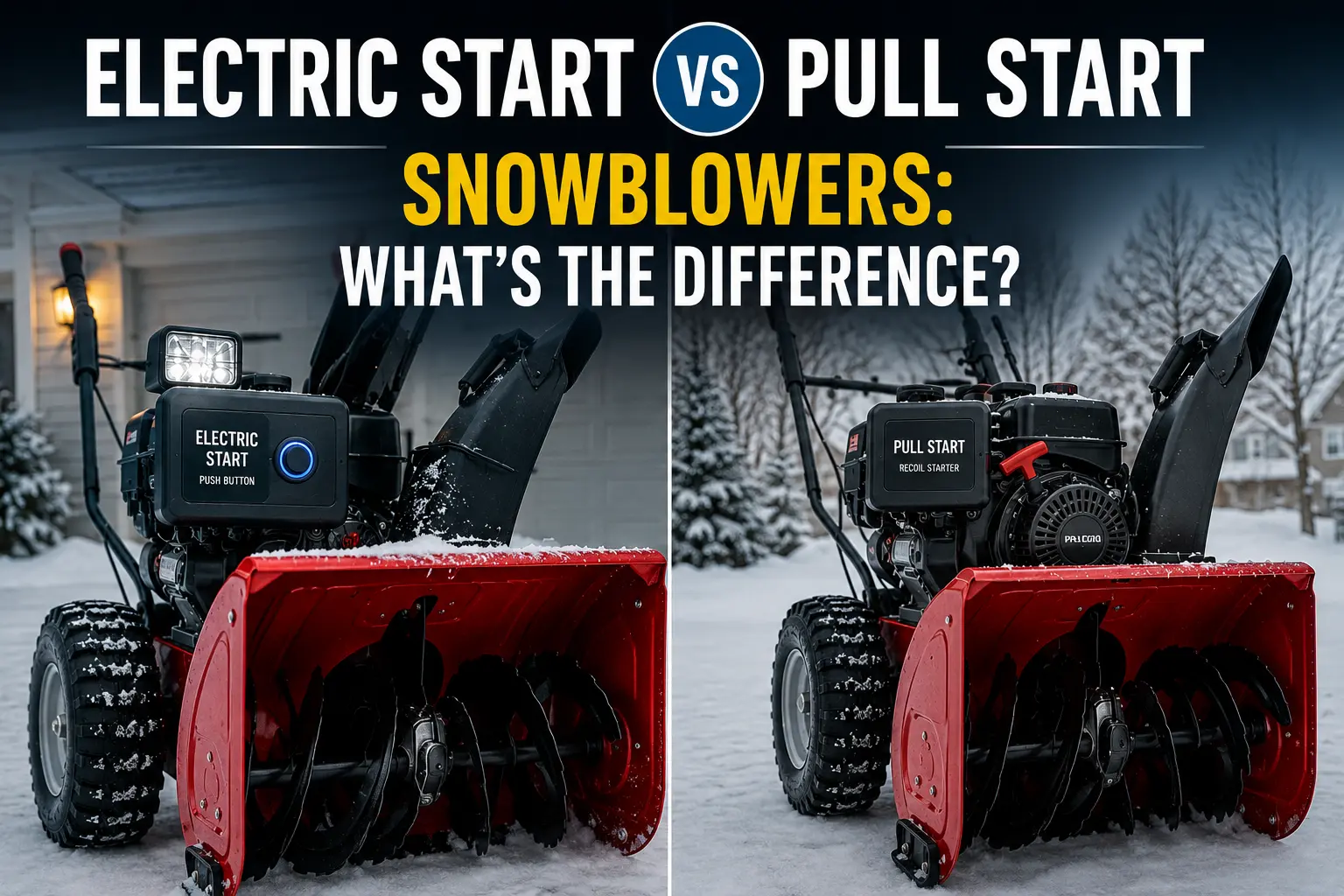
Electric Start vs Pull Start Snowblowers: What's the Difference?
Electric start snowblowers and pull start snowblowers run the same engine and do the same job. The difference is entirely in how the engine gets going, and whether that difference is worth anything to you depends on a few specific factors — your physical situation, your storage setup, and how old your machine is.
Here's an honest look at both systems: what they actually involve, where each one has an edge, and what to do when either one fails.
How pull start works
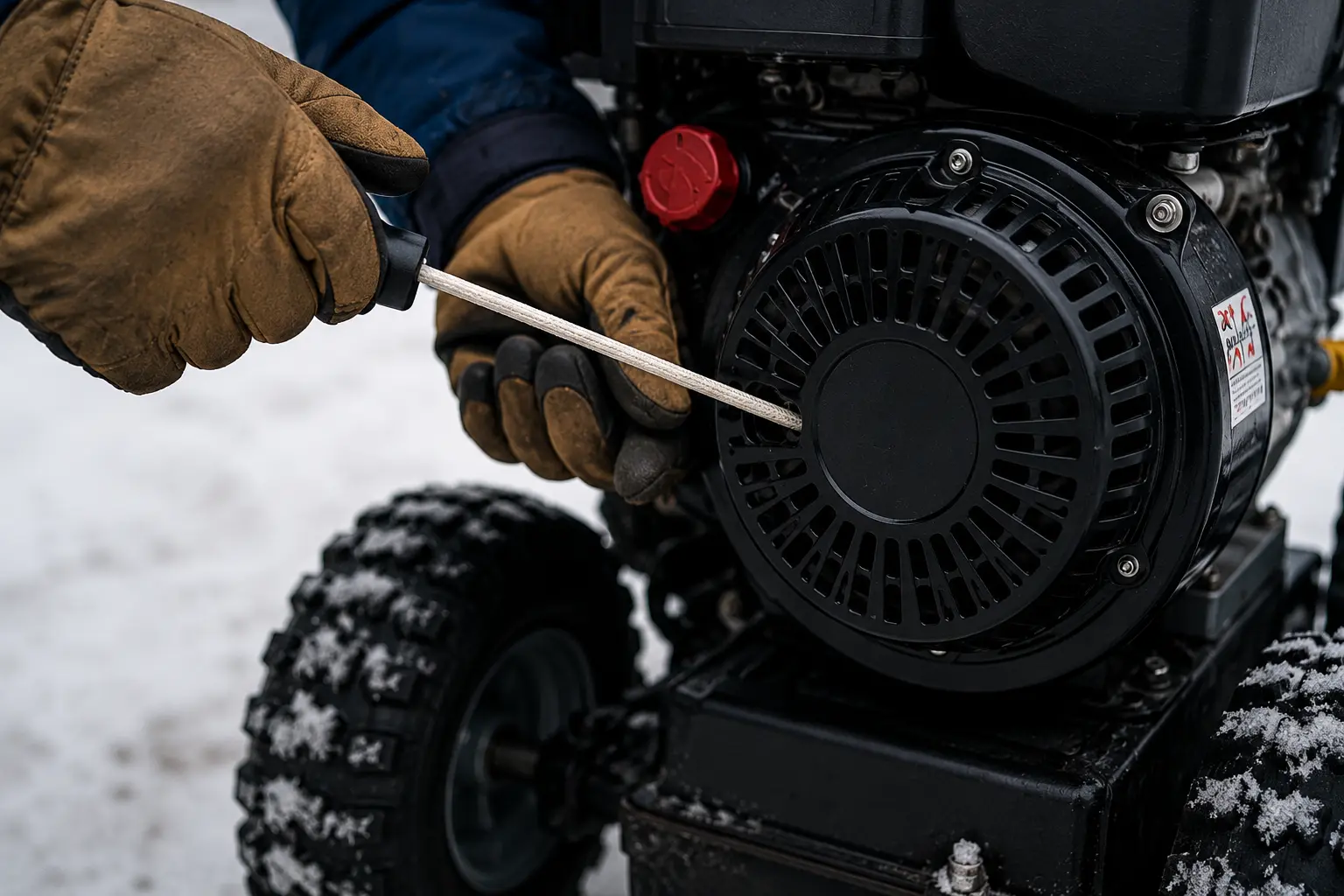
A recoil starter is a spring-loaded mechanism that winds up as you pull the cord and uses that stored energy to spin the engine fast enough to fire. You pull, the mechanism engages pawls on the flywheel that spin the crankshaft, the spring recoils as you release, and the cord resets.
On a well-maintained engine with fresh fuel and a functioning choke, this works reliably in most conditions. Cold engines are harder to start — lower temperatures thicken the oil, make the fuel less volatile, and require more starting effort. An engine at 10°F in January takes more pulls than the same engine at 40°F.
What makes pull starting harder:
- Old or degraded fuel
- Clogged or poorly adjusted choke
- Fouled spark plug
- Low compression from a worn engine
- Physical limitations of the operator
What makes pull starting easier:
- Fresh, ethanol-free fuel
- A properly working choke (set to full choke for cold starts)
- Annual spark plug replacement
- A warm storage environment — a garage vs. an unheated shed makes a meaningful difference in cold-start effort
A properly maintained pull start snowblower is not the frustrating experience it's sometimes made out to be. The stereotype of the cord that won't catch comes almost entirely from machines with fuel system problems, not from the starting mechanism itself.
How electric start works
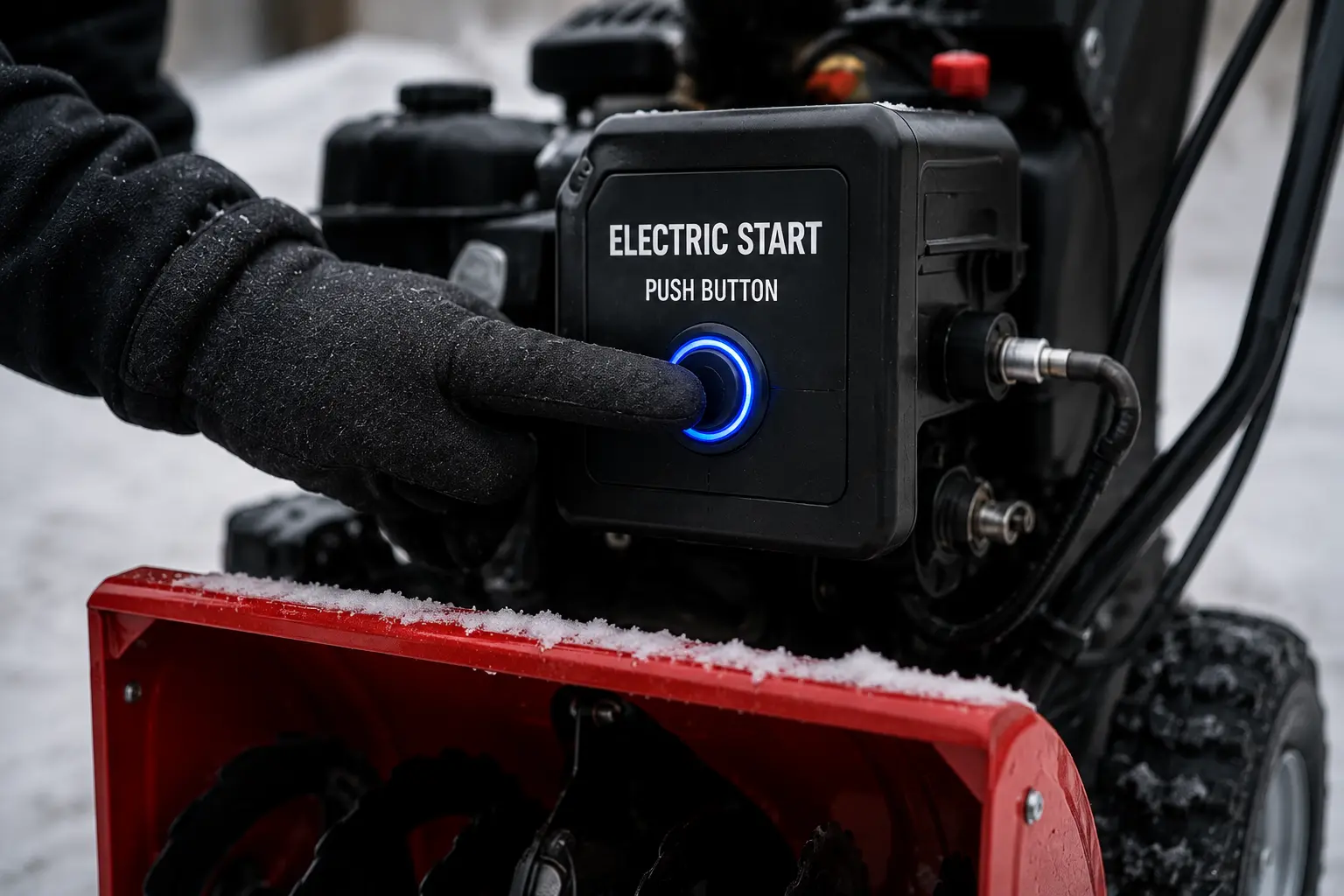
Electric start adds a small electric motor (the starter motor) that spins the engine when you press a button or turn a key. The starter motor is powered either by a battery (cord-free electric start) or by plugging a cord into a standard household outlet (corded electric start).
Corded electric start is the simpler and more reliable of the two. You plug in a standard extension cord, push the button, the engine starts, then you unplug the cord and proceed. There's no battery to maintain or charge. This is the most common form of electric start on residential snowblowers.
Battery electric start is fully cordless. The battery charges when the snowblower is connected to power during storage and provides enough stored energy to start the engine without a cord. More convenient during a storm, but adds a battery to maintain — batteries that sit discharged for months degrade.
The actual starting process with electric start: plug in the cord (if corded), move the choke to the cold start position, press the start button. The engine typically fires in 2-3 seconds. Switch the choke to run once the engine warms up. Unplug the cord.
When electric start is genuinely worth it
Physical limitations. Shoulder injuries, arthritis, reduced grip strength, and back problems can make repeated pull cord attempts genuinely difficult or painful. For anyone in this situation, electric start isn't a convenience — it's a practical necessity. This is the most compelling case for electric start, and it's worth prioritizing if it applies to you.
Unheated outdoor storage. Machines stored in very cold conditions — an unheated garage, a shed, outdoors — are harder to pull-start because the oil is thick and the fuel is cold. Electric start takes the variable of starting difficulty off the table. You push a button; it starts.
Frequent use. If you're starting and stopping the machine multiple times per storm, or dealing with multiple storms per week, electric start accumulates its value quickly.
Age. As snowblowers age, compression decreases and starting effort increases. An older machine with 150+ hours of use is noticeably harder to pull-start than a new one. Some owners add electric start capabilities when their machine gets older, though this isn't always practical depending on the engine design.
When pull start is fine
For most healthy adults in most residential situations, pull start is completely adequate. A snowblower stored in a heated or semi-heated garage, maintained with fresh fuel and an annual tune-up, typically starts in 2-4 pulls in cold weather. That is not a problem worth paying $50-100 to solve.
If you've heard complaints about pull-start snowblowers, consider that most of those complaints are about machines with maintenance problems — stale fuel, worn plugs, maladjusted chokes. Solve those problems and pull starting becomes non-controversial.
Cost and availability
Electric start is typically offered as an option on mid-range and higher snowblowers, adding $50-100 to the price. At the entry-level price point (under $500), most machines are pull-start only. Above $600, electric start is commonly available.
Some models are only available as one or the other. If electric start is a priority, confirm availability for the specific model you're considering before assuming it's an option.
Reliability and maintenance
Electric start components are an additional system that can fail. Common issues:
Corded systems: The outlet plug on the cord or machine can corrode. The starter motor can fail after years of use. These are infrequent problems but add repair complexity.
Battery systems: Batteries that sit discharged for months lose capacity and eventually need replacement. A battery that worked fine last season may not hold enough charge to start the engine this season if it wasn't maintained. Keep the battery topped off during storage.
Shared failure mode: On many machines, if the electric start fails, you can still pull-start the engine — the pull cord is present as a backup. This is worth confirming on any machine you're considering: is there a pull cord backup, or is electric start the only starting option?
Pull start mechanisms also fail, though they're simpler. Recoil springs can break, pawls can wear, and cords fray and snap. These are straightforward repairs that any small engine shop can handle quickly and inexpensively.
What to do when your start system fails
Pull cord won't retract: The recoil spring has likely broken. The entire recoil assembly can typically be replaced in 30-60 minutes — it's a bolt-on component on most engines. Parts cost $25-60.
Pull cord pulls without resistance: The pawls that engage the flywheel have failed, or the cord has fully unwound from the drum. Recoil assembly replacement is usually the fix.
Electric start button does nothing: Check the cord connection first (corded systems). Check the battery charge (battery systems). If those are fine, the starter motor may have failed. Starter motor replacement runs $60-150 at most shops.
Electric start motor turns but engine doesn't fire: The starting mechanism is working but there's a fuel or ignition issue. Treat it the same as any no-start problem — check fuel age, choke position, and spark plug. See why won't my snowblower start for the full diagnostic sequence.
The practical recommendation
If you're buying new and physical starting effort is not a concern, save the money and buy pull start. Keep the machine maintained and it will start reliably.
If you have any shoulder, back, or grip issues — or if you store the machine in very cold conditions and want zero starting drama on a dark January morning — spend the extra $75-100 for electric start. It earns its cost quickly in those situations.
If your existing pull-start snowblower is becoming difficult to start, the first step is a tune-up and fresh fuel — not an upgrade. Most starting problems are fuel system problems, not mechanical ones.
This guide covers gasoline-powered snowblowers. Battery-electric snowblowers (where the machine itself is battery-powered, not just the starter) are a different category with different tradeoffs and aren't covered here.