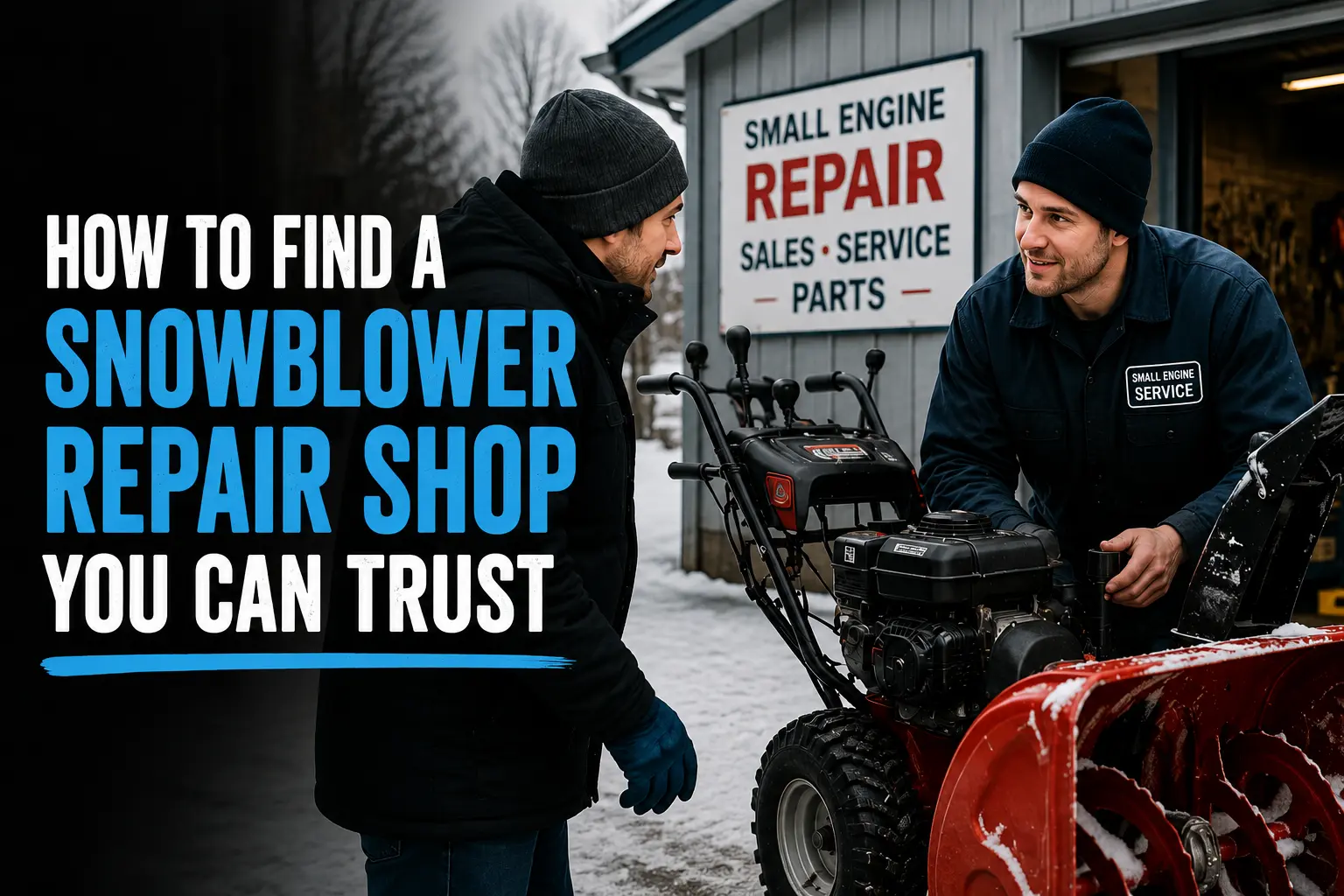
How to Find a Snowblower Repair Shop You Can Trust
Your snowblower stopped working, and now you're looking for someone to fix it. The problem isn't finding a shop — it's finding the right one. Not every small engine shop works on snowblowers. Some specialize in lawn equipment and rarely see a two-stage auger drive. Others do excellent snowblower work but are buried in the queue by October and can't get to yours until March.
This guide covers how to identify a shop that's actually equipped to handle your machine, what questions to ask before you drop it off, and what red flags to watch for.
Start by confirming they actually work on snowblowers
This sounds obvious, but it isn't. Many small engine repair shops focus on warm-season equipment — lawn mowers, string trimmers, tillers. When fall rolls around, some of those shops take in snowblowers as a courtesy but don't have the depth of experience or parts inventory to handle anything beyond basic carb cleans.
When you call, ask directly: "Do you regularly work on snowblowers?" Follow up with the brand if you have one: "Do you work on Ariens two-stage units?" A confident, specific answer tells you they know the machine. Vague reassurance ("Oh sure, we work on all small engines") tells you less.
If your snowblower is a major brand — Ariens, Toro, Husqvarna, Honda, Cub Cadet — check whether the shop is an authorized dealer or service center for that brand. Authorized shops receive factory training, have direct access to OEM parts, and are held to service standards by the manufacturer. They're not automatically better than an independent shop, but the authorization tells you they've committed to that brand.
Check Google reviews — but read them carefully
A shop's Google rating tells you something. A shop with 4.7 stars across 200 reviews has earned that consistently. A shop with 4.9 stars from 8 reviews could be the owner's friends.
Look for reviews that mention snowblowers specifically. "Fixed my Ariens after two other shops couldn't figure it out" is worth more than a generic "great service." Also look at how the shop responds to negative reviews — a defensive or dismissive reply is a warning sign. A thoughtful response to a complaint usually indicates a shop that takes its reputation seriously.
Pay attention to the age of the reviews. A shop that had great reviews three years ago and mediocre ones recently may have changed ownership or lost a key technician.
Timing matters more than most people realize

Snowblower repair shops run on a hard seasonal calendar. The shops that do excellent work are often booked solid from mid-October through December. If your snowblower breaks down in November right before a storm, you may be waiting three to four weeks regardless of how good the shop is.
The best time to take your snowblower in is late summer or early fall — August or September — when shops have bandwidth and parts are well-stocked. A pre-season tune-up before any problems develop is the ideal scenario: shops are less busy, you get faster turnaround, and you're not scrambling in a storm.
If you're calling in November or December, ask specifically about their current wait time before dropping the unit off. "We're running about three weeks out" is honest and helpful. A shop that won't give you an estimate is a shop that doesn't respect your time.
Questions to ask before you leave the snowblower
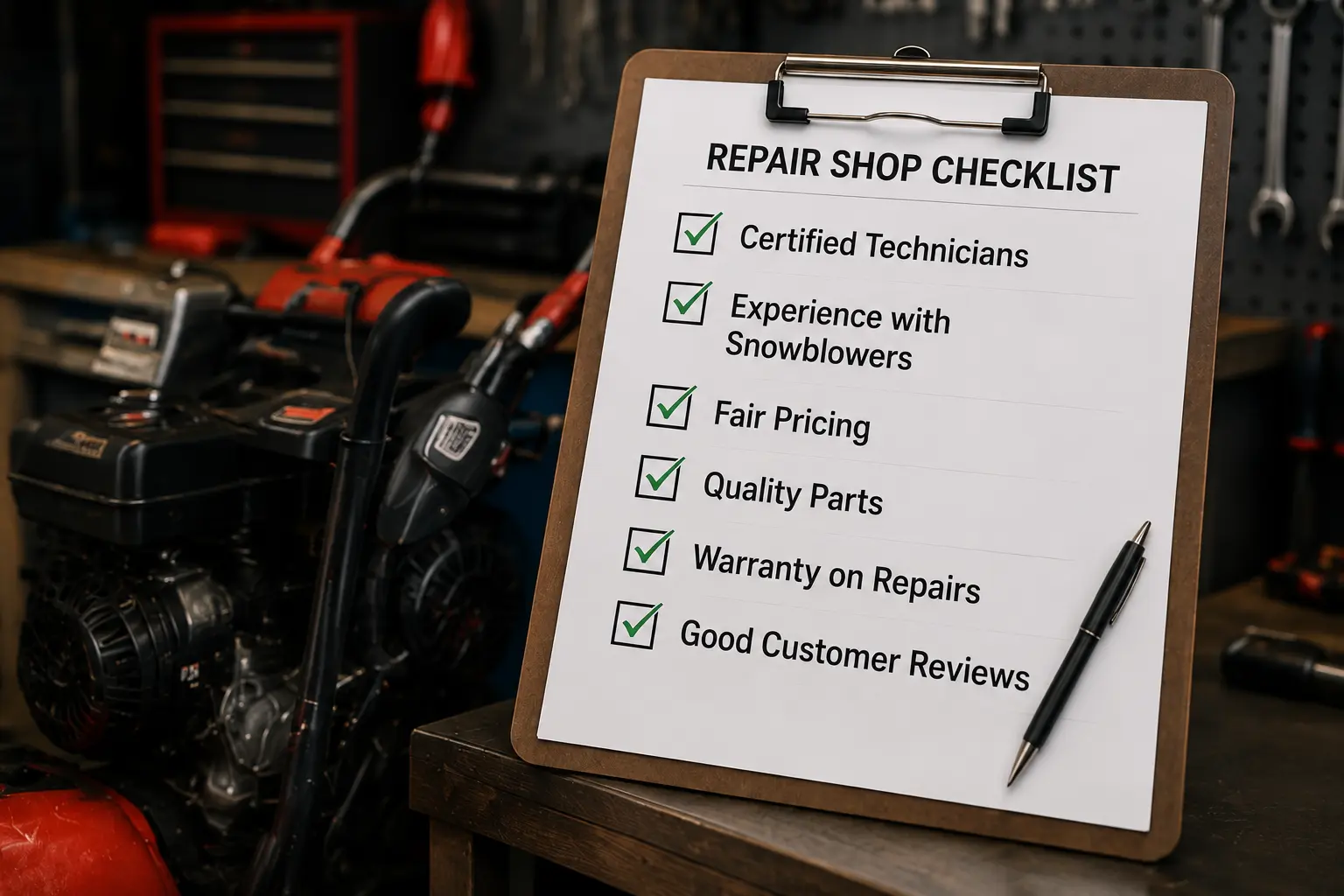
A reliable shop should be able to answer these without hesitation:
"What does a diagnostic cost, and does it apply toward the repair?" Most reputable shops charge $50-100 for a diagnostic, which covers the technician's time to assess the problem. That fee typically applies toward the repair bill if you authorize the work. If the shop charges for diagnostics but won't apply it toward repair, that's worth noting.
"Can you give me an estimate before starting work?" Yes, they can. A good shop will call you with a diagnosis and estimated cost before touching anything beyond the initial assessment. Any shop that does work without authorization first isn't one you want to deal with twice.
"What's your current turnaround time?" This sets expectations. If they say two weeks and it ends up being six, you have grounds to follow up. If they're honest about a long queue, at least you can plan.
"Do you use OEM parts or aftermarket?" Neither answer is automatically wrong. OEM parts cost more but fit precisely. Quality aftermarket parts from suppliers like Oregon or Stens are perfectly fine for many repairs. The red flag is a shop that uses cheap generic parts without disclosing it.
"Do you guarantee your work?" Most established shops offer a 30-90 day warranty on labor and parts. If a shop doesn't stand behind its work at all, keep looking.
What a snowblower tune-up actually includes
If you're bringing the unit in for a pre-season tune-up rather than a specific repair, here's what a thorough job covers:
Fresh fuel and stabilizer added, carburetor inspected and cleaned or rebuilt if needed, spark plug replaced, air filter inspected and replaced if needed, oil changed (four-cycle engines), belts inspected for cracking or glazing, auger shear bolts confirmed present, skid shoes and scraper bar measured for wear, all cable adjustments checked, and a full operational test under load.
A basic tune-up at an independent shop typically runs $80-150 depending on your area and the scope of work needed. For a detailed cost breakdown, see snowblower tune-up cost: what to expect.
Red flags that should give you pause
No phone number or only a web form. Repair shops are phone businesses. A shop that won't put a phone number on its website is unusual.
No physical address. You should be able to look up the shop on Google Maps and see a real location. Mobile repair services are legitimate, but they should still have a verifiable business address.
Asking for full payment upfront before any work is done. A deposit is reasonable for parts that need to be ordered. Full payment before the repair is complete is not.
Can't return your call within one business day during off-season. During the winter rush this is understandable. In August, a shop that can't return a call in 24 hours is either overwhelmed or disorganized.
Won't give you the old parts back. If you ask for the parts that were replaced, a reputable shop will return them or at least show them to you. This is a standard way to verify the work was actually done.
Using this directory to find a shop near you
This directory lists over 13,000 small engine repair shops across all 50 states, with ratings, hours, phone numbers, and brand authorizations where available. You can filter by equipment type to find shops that specifically service snowblowers, and sort by Google rating to see who has the strongest track record in your area.
Use the search below to find verified snowblower repair shops near you. If you're calling ahead of the season, mid-August through mid-September is the window where you'll get the fastest turnaround and the most attentive service.
Shop listings are sourced from manufacturer dealer locators and Google Places data. Authorization status reflects manufacturer records at time of last update. Call the shop directly to confirm current services and availability.