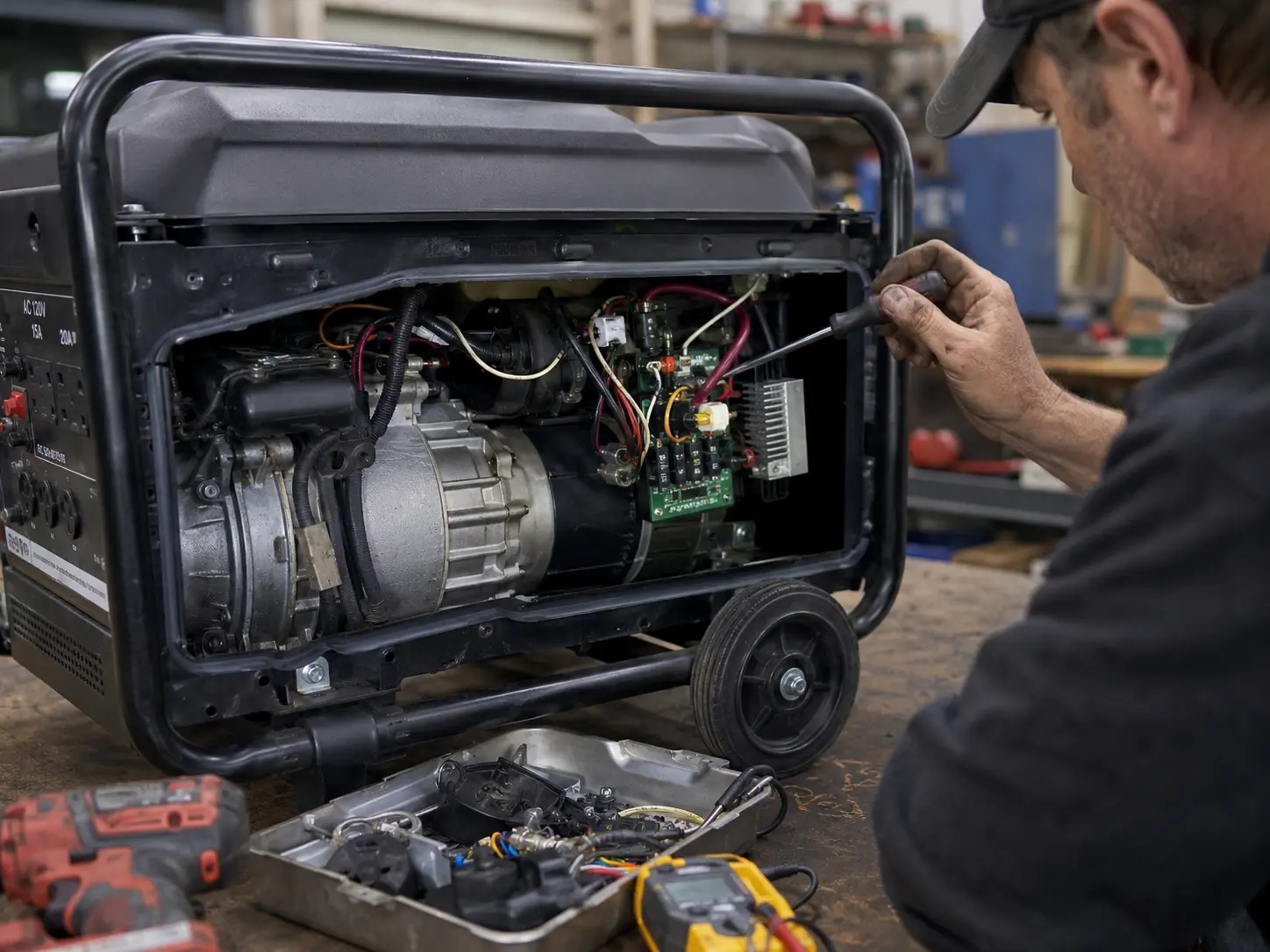
Generator Starts But Produces No Power: 6 Causes
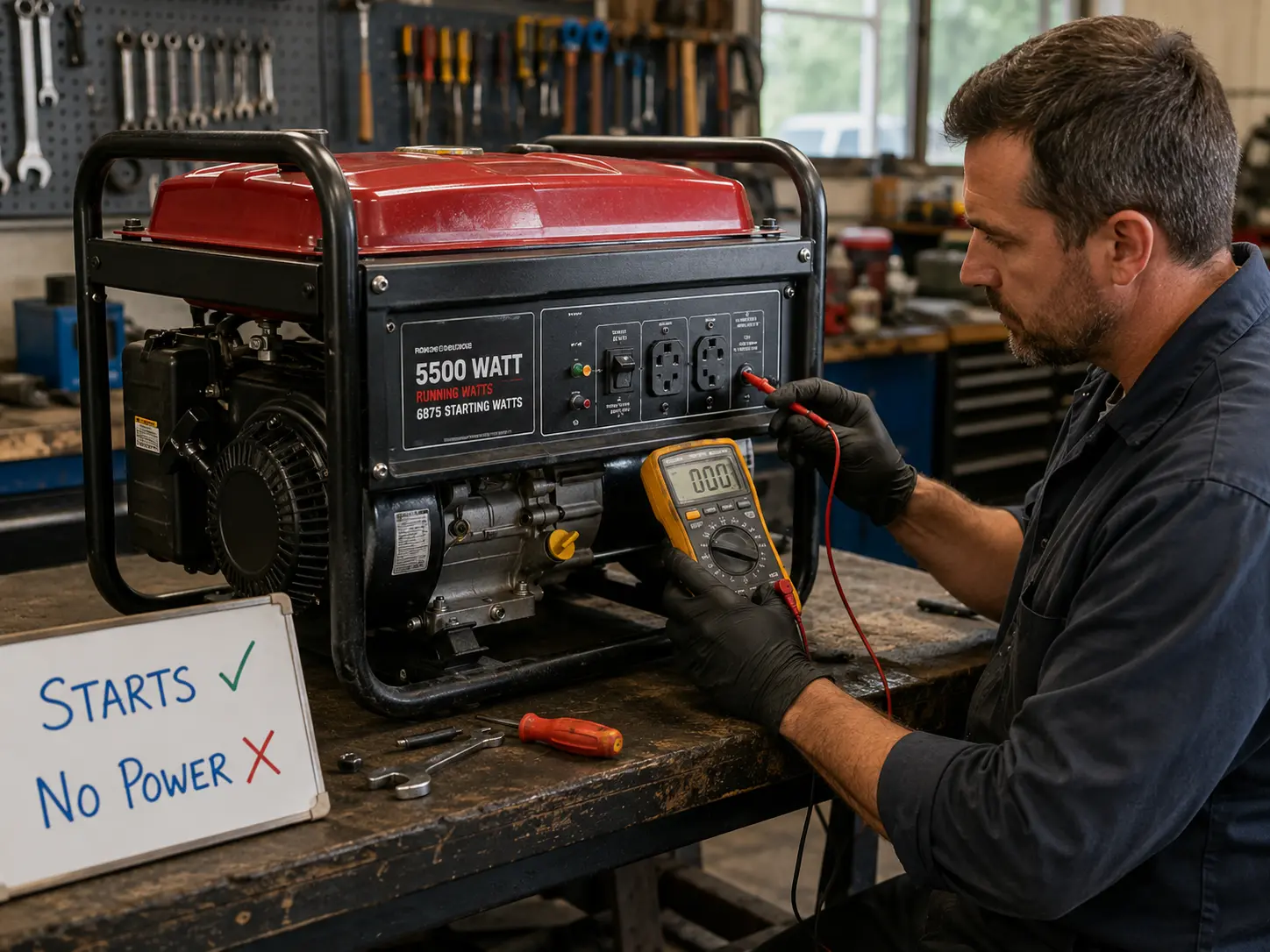
The engine runs. The generator sounds like it is working. But nothing plugged into the outlets does anything — or the lights flicker and then go dark.
This is a distinct problem from a generator that won't start. The engine side is functioning. Something in the electrical generation system has failed. The causes range from a simple tripped breaker (a five-second fix) to a failed alternator (a shop repair or replacement decision).
Work through these in order — the most common causes are first.
Use the interactive generator no-power diagnostic if you want to narrow the likely cause before working through the full guide.
1. Tripped reset breaker on the generator
Almost every portable generator has a circuit breaker on the control panel — separate from the GFCI outlets. This breaker protects the generator's alternator from overload. It trips when the total load exceeds the generator's rated output, or when a surge occurs at startup (large motors and compressors draw 2–3x their running wattage for the first second or two).
What to check: Look at the control panel. There is usually a rectangular button labeled "Circuit Breaker," "AC Breaker," or "Reset." If it has tripped, it will be in a middle position between ON and OFF, or feel soft and depressed rather than clicking firmly.
The fix: Remove all loads from the outlets. Push the breaker firmly to the OFF position, then back to ON. Reconnect loads one at a time, starting with the largest draw, to stay under rated capacity.
If the breaker trips again immediately or within a few seconds with no load, move to cause 3 (AVR).
2. GFCI outlet tripped
Most generators have at least one GFCI (ground fault circuit interrupter) outlet. GFCI outlets trip when they detect a ground fault — typically caused by moisture, a damaged power cord, or a faulty appliance. When a GFCI outlet trips, it cuts power to itself and sometimes to other outlets on the same circuit.
What to check: On the GFCI outlet itself, there will be TEST and RESET buttons. If the RESET button is popped out or the outlet feels "soft," it has tripped.
The fix: Press RESET firmly. If it won't reset, disconnect all loads and try again — an appliance with a ground fault is preventing the reset. Test each appliance individually to identify the faulty one.
3. Failed AVR (automatic voltage regulator)
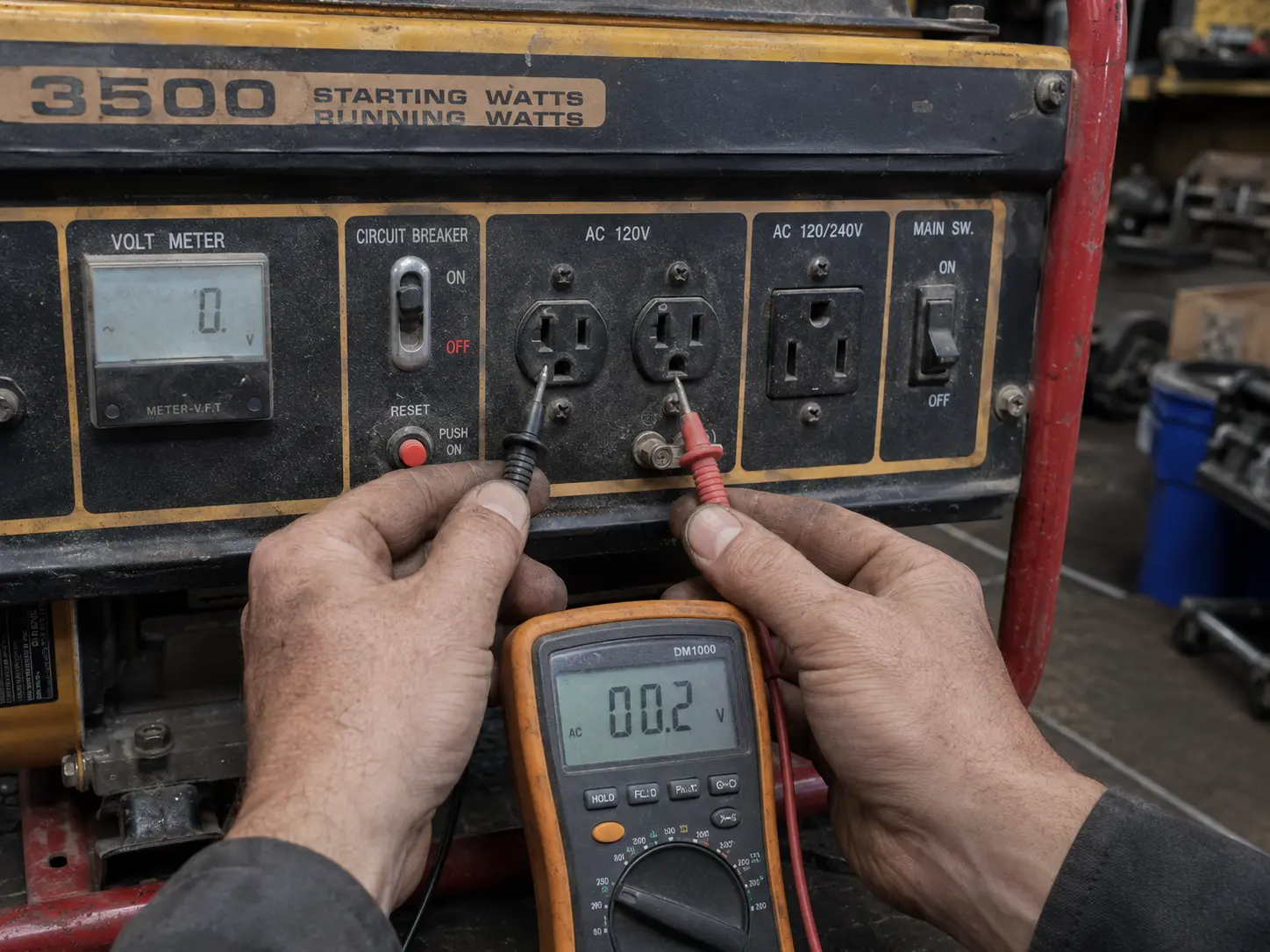
The AVR is the core electrical component that converts the alternator's raw output into stable, usable AC voltage. It also regulates voltage as the load changes. When an AVR fails, the generator engine runs normally but produces no regulated output — or produces output at the wrong voltage (often too low to power anything).
How it presents: The engine sounds and runs normally. A multimeter at the outlets reads zero volts, significantly below rated voltage (e.g., 60–80V on a 120V generator), or a wildly fluctuating reading.
The fix: AVR replacement. The part varies by generator brand and model. For most portable generators, the AVR is a small circuit board accessible by removing the generator's control panel or side cover. Replacement AVRs cost $15–$80 depending on the generator brand. This is a moderately involved repair that many generator shops handle in under an hour.
4. Worn or damaged rotor brushes
Some generators use brush-type alternators, where carbon brushes make electrical contact with the rotor (the spinning component inside the alternator). As brushes wear, they eventually lose contact — and with no rotor excitation, the alternator produces no output.
How it presents: Same as AVR failure — engine runs normally, no voltage output. Distinguishing AVR from brush failure typically requires a shop with a multimeter and generator-specific service experience.
The fix: Brush replacement is typically a $20–$60 parts cost. On many portable generators, the brushes are accessible through a small cover on the alternator housing. This is a shop repair for most owners.
5. Capacitor failure (on capacitor-excited generators)
Many consumer-grade generators — particularly those from Champion, WEN, and similar brands — use a capacitor to excite the alternator rather than brushes and an AVR. The capacitor stores the initial charge needed to "flash" the alternator into producing output.
When the capacitor fails (from age, heat, or a voltage spike), the generator engine runs but the alternator never produces voltage.
How it presents: This is nearly identical in presentation to AVR failure. The engine runs fine. No voltage output. The capacitor is usually a cylindrical component visible inside the generator's control panel housing.
The fix: Capacitor replacement. This is low-cost ($5–$25 for the part) but requires correctly sizing the replacement to the generator's specs (microfarad rating and voltage rating). A generator shop can identify and replace this in under an hour.
6. Loss of residual magnetism (field flash needed)
Generators work by spinning a magnetic rotor inside wire windings. The rotor must have some residual magnetism to "self-excite" and start generating voltage. When a generator sits for many years unused — or if it was used for an extended period after a fault — the residual magnetism in the rotor can be lost.
How it presents: Generator engine runs perfectly, but produces no output or very low output. The generator may have worked at some point in the past. This is different from AVR or brush failure — the generator physically cannot start producing voltage without a trigger.
The fix: "Field flashing" — briefly applying a DC voltage to the rotor through the brush terminals or AVR to restore residual magnetism. This is a well-known shop procedure for generator techs. A 12V battery is the typical tool. The generator immediately produces output once the field is flashed, which confirms this was the cause.
Repair vs replace: the generator no-power decision
| Fault | Parts cost | Shop labor | Worth repairing? |
|---|---|---|---|
| Tripped breaker or GFCI | $0 | $0 | Always — five-minute fix |
| AVR failure | $15–$80 | 1 hr | Yes, on any generator under 8–10 years |
| Capacitor failure | $5–$25 | 1 hr | Yes |
| Brush replacement | $20–$60 | 1–2 hr | Yes |
| Field flash needed | $0 | 0.5 hr | Yes |
| Rotor / stator winding damage | $200–$600+ | 3–6 hr | Often no — compare to new generator cost |
Winding damage — when the copper coils inside the alternator itself have shorted or burned — is the exception. The repair cost typically approaches or exceeds the cost of a comparable new generator. On a generator over 10 years old, replacement is almost always the right call.
Which shop to call
Standard electrical generation repairs (AVR, capacitor, brushes) can be done by any small engine shop that services generators. Not all do — call ahead and ask whether they service the generator's alternator, not just the engine.
Standby (whole-home) generators connect to your electrical panel and require certified installation and service. For standby units, use a Generac-certified dealer or licensed electrician.
Manufacturer note: Generator electrical system specifications and procedures vary by brand and model. Improper electrical repair can create shock or fire hazard. When in doubt, use a certified service dealer. smallengine.directory is an independent repair-shop directory and is not affiliated with Generac, Honda, Champion, Briggs & Stratton, or any other manufacturer.