How Much Does Small Engine Repair Cost? (2026 Price Guide)
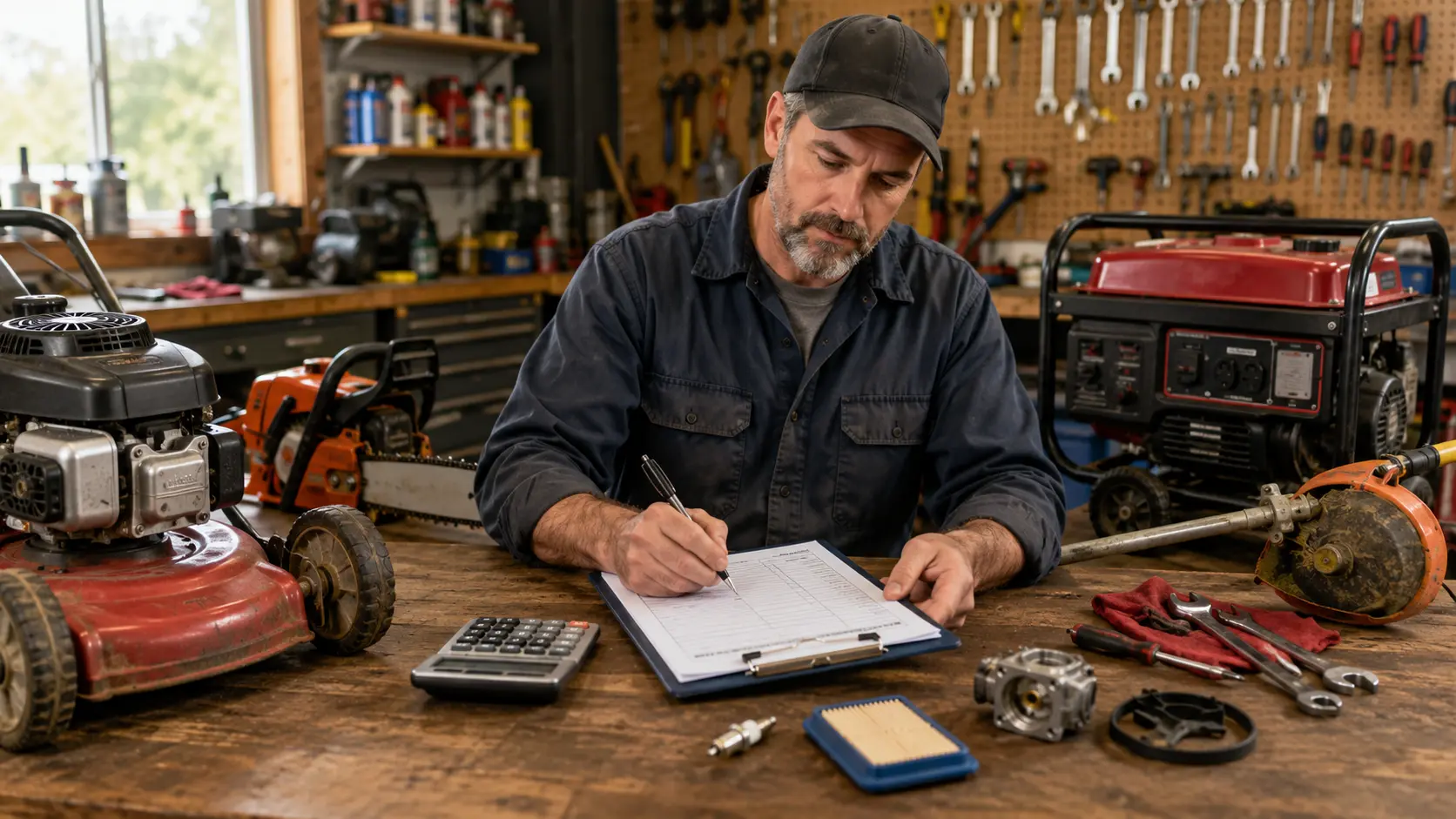
If your mower won't start or your snowblower died mid-storm, the first question is usually the same: what is this going to cost me? The honest answer is that small engine repair pricing is more predictable than most people think — once you understand the three things that actually drive the bill. This guide explains how shops price their work in 2026, what the common repairs run, and how to tell whether fixing your equipment is worth it or whether you're better off replacing it.
If you'd rather just get a number for your specific situation, our repair cost estimator gives you a price range and a repair-vs-replace verdict in a few clicks. For a full breakdown of prices by machine, see our companion guide, Small Engine Repair Costs by Equipment Type.
The three things that drive every repair bill
Almost every small engine repair invoice comes down to three components.
1. The diagnostic fee. Most independent shops charge a bench or diagnostic fee of $20 to $50 to figure out what's wrong. The good news: the majority of shops apply that fee toward the repair if you authorize the work. Always ask up front whether the diagnostic is separate or credited — it's the single most common source of surprise on a final bill.
2. Labor. This is where most of the cost lives. Independent small engine shops typically charge $45 to $95 per hour, though many price common jobs as flat rates rather than hourly. A carburetor cleaning is usually quoted as a flat fee because the shop knows roughly how long it takes; a tricky electrical fault on a riding mower is more likely to be billed by the hour.
3. Parts. A carburetor kit, a pull cord, a belt, or a blade is rarely the expensive part of the job — most common parts run $10 to $60. The exception is major components: a riding mower transmission, a generator's voltage regulator, or a pressure washer pump can each run well over $100 in parts alone.
Put together, that's why the same complaint — "it won't start" — can be a $40 fix or a $200 one. The diagnosis determines which.
What the common repairs actually cost
Here are realistic 2026 independent-shop ranges (parts and labor) for the repairs people ask about most:
- Won't start / hard starting: $40–$200, depending on whether it's stale fuel, a fouled plug, or a deeper fuel-system or electrical problem.
- Carburetor clean or rebuild: $40–$160. The most common small engine repair there is, and usually the cheapest path back to a running machine.
- Tune-up (oil, plug, air filter, basic adjustment): $50–$120 for handheld and push equipment; $120–$300 for riding mowers.
- Blade sharpening or replacement (mowers): $15–$60.
- Pull cord / recoil starter: $40–$90.
- Belts (mower deck, snowblower auger): $60–$280 installed, depending on the machine.
- Major work (transmission, pump rebuild, voltage regulator): $150–$600.
Authorized dealer service centers for a specific brand may price differently than independents, and they're often the right call for warranty work — but for out-of-warranty equipment, an independent shop is usually the more economical option.
How to decide: repair or replace?
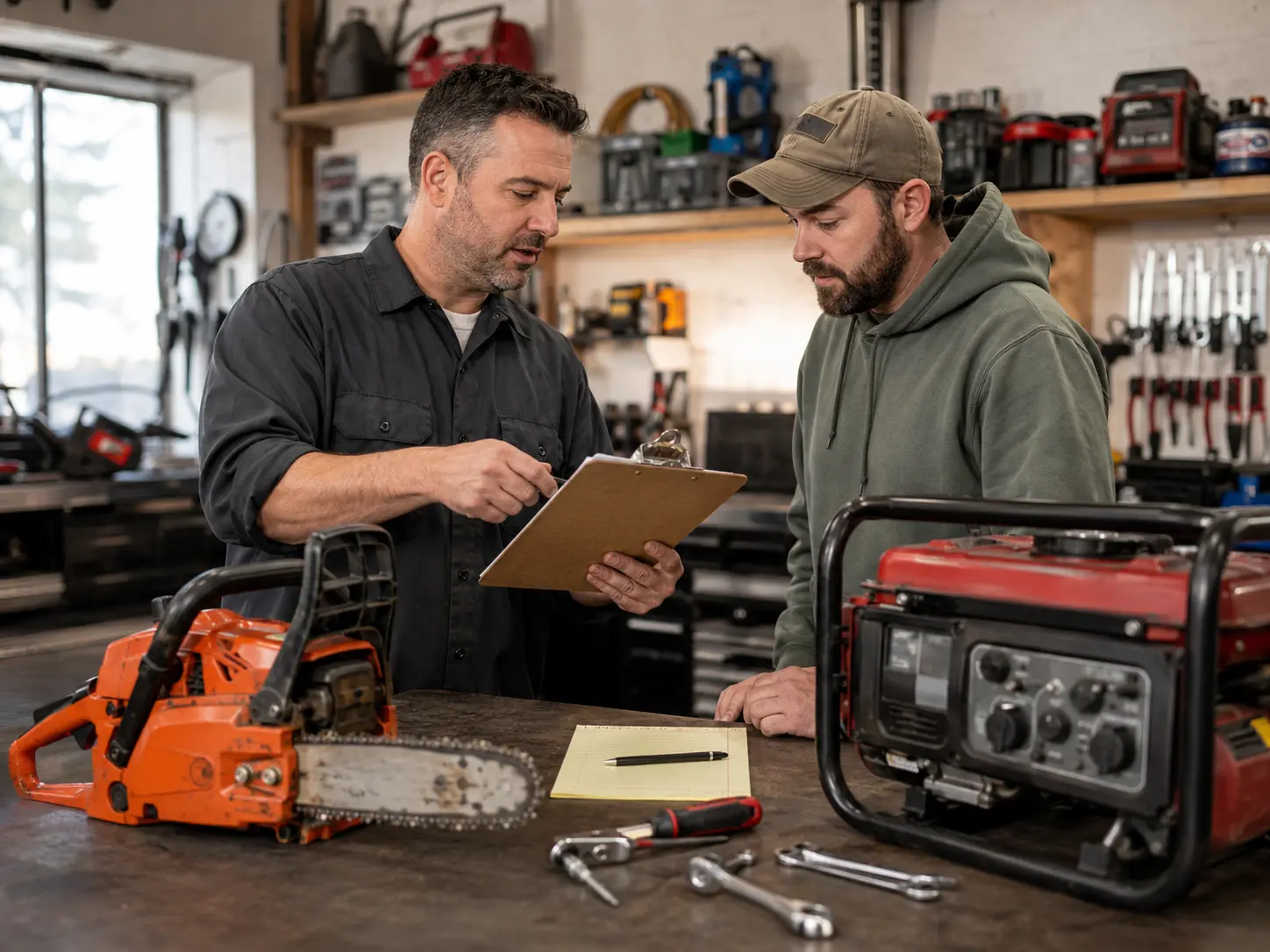
This is the question that actually saves you money, and there's a simple rule of thumb professionals use: the 50% rule.
If a repair will cost more than about half the price of a comparable new unit — especially on equipment more than 8 to 10 years old — replacement is usually the smarter buy. Below that threshold, repair almost always wins.
A few examples make it concrete:
- A $90 carburetor rebuild on a $300 push mower is 30% of replacement cost. Easy repair.
- A $250 transmission repair on a 12-year-old $1,800 riding mower is only ~14% of replacement — repair, without question, as long as the rest of the machine is sound.
- A $140 pump rebuild on a $200 entry-level pressure washer is 70% of replacement. On a cheap unit that age, replacing usually makes more sense.
Two factors tilt the math beyond the raw percentage. Age matters — an older machine with one failing part often has others not far behind. And quality matters — a premium, repairable unit (think a commercial-grade mower or a name-brand chainsaw) is worth repairing at a higher percentage than a bargain-bin model, because the replacement would cost far more and the build is meant to last.
Our repair cost estimator gives you a likely shop-price range. If you already have a written quote, the repair-vs-replace calculator compares that exact number with the equipment's age and replacement value.
Five questions to ask before you authorize a repair
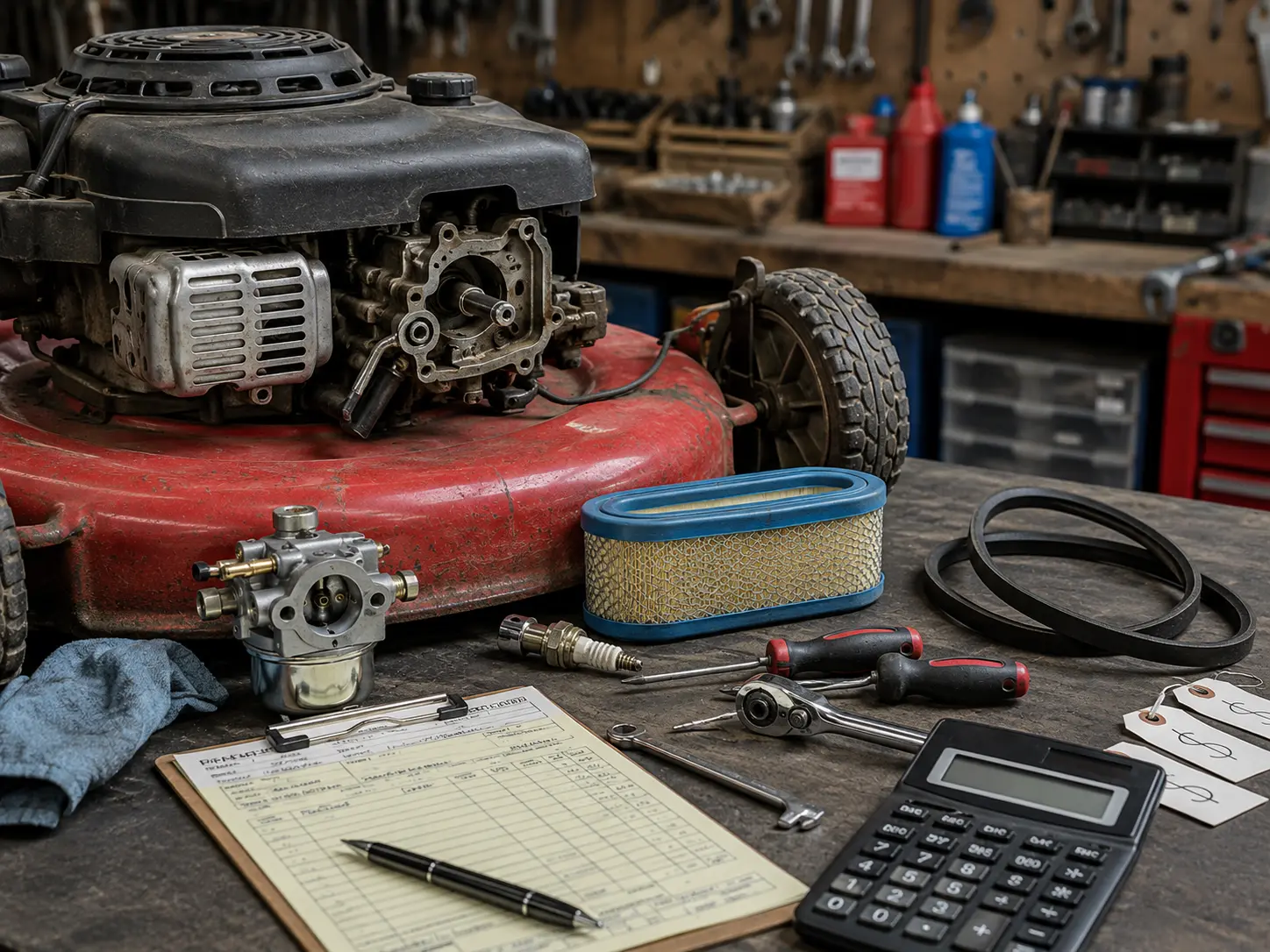
A short conversation up front prevents almost every billing surprise:
- Is there a diagnostic fee, and is it applied to the repair if I go ahead?
- Can you give me an estimate before doing the work? Reputable shops will.
- What's your current turnaround? In spring (mowers) and after the first snow (snowblowers), backlogs can stretch to a week or more.
- OEM or aftermarket parts — and can I choose? OEM costs more but matters on some repairs.
- Is this worth fixing, in your opinion? An honest shop will tell you when a machine isn't worth the repair.
How to keep repair costs down
Most expensive small engine repairs trace back to one cause: old fuel. Gasoline with ethanol absorbs water and gums up carburetors within a few months of sitting. The cheapest repair is the one you avoid — run the tank dry or add fuel stabilizer before storage, and you'll skip the single most common (and most billable) trip to the shop. Seasonal service before peak season — February–March for mowers, fall for snowblowers and generators — also costs less than an emergency repair when shops are slammed and you're stuck.
Find a shop and get a real quote
These ranges get you in the ballpark, but the only way to a firm price is a quick call to a shop. Every listing on smallengine.directory shows a real phone number and verified Google rating — no middleman, no lead fees. Find a verified small engine repair shop near you, or start with the repair cost estimator to know what to expect before you call.