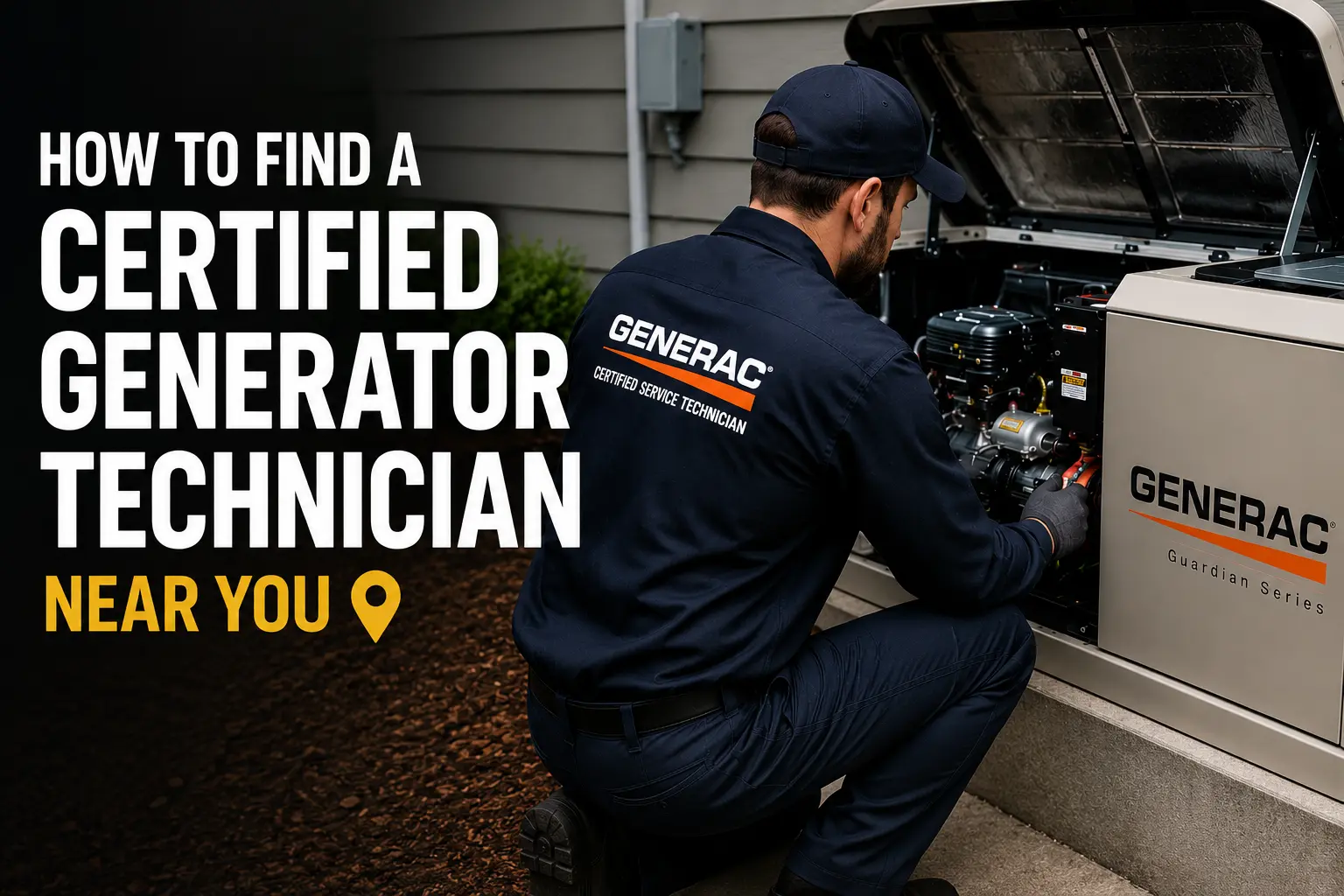
How to Find a Certified Generator Technician Near You
"Certified" is one of the most misused words in generator service. It can mean a technician completed a manufacturer's training program, holds an industry credential, has an electrician's license, or simply works at a shop that displays the manufacturer's logo on the wall. The category matters when you're choosing who to trust with your generator — particularly for warranty work, standby installation, and high-cost repairs.
This guide covers what "certified" actually means in different contexts, how to verify a technician's credentials, and what to ask before booking. If you're trying to decide whether to repair or replace, see DIY vs professional generator repair. For brand-specific guidance, see Generac vs. Champion vs. Honda: Generator Service Reputations Compared.
What "certified" actually means
Three distinct categories get lumped under the "certified" label in generator service:
1. Manufacturer-certified technicians. Trained and credentialed by the generator brand. Required for warranty work. The credential is brand-specific: a Generac-certified tech is not necessarily Honda-certified, and vice versa.
2. Industry-certified technicians. Hold credentials from independent professional associations like EGSA (Electrical Generating Systems Association) or have ASE-equivalent small-engine certifications. These signal broad competence beyond a single brand.
3. Licensed for standby installation. State-issued electrician licenses required to perform the electrical-panel work that standby generator installation entails. This is a legal requirement, not a marketing claim — work performed without it can void homeowner's insurance and violate code.
A technician can hold all three, one, or none, and any combination is legitimate for the appropriate work. The question is whether the credentials match what your generator actually needs.
Brand-specific certifications
The major U.S. generator brands run their own technician training and certification programs:
Generac: The largest brand-certified network in the U.S. for both portable and standby. Generac runs the IASCO Tech School and an internal training curriculum. Certified Generac technicians have completed a multi-day program covering Generac's air-cooled engine line, the Mobile Link remote monitoring system, and standby-specific diagnostics. Required for warranty work on Generac Guardian, Protector, and PowerPact series. Find them via Generac's "Find a Dealer" tool on generac.com.
Honda Power Equipment: Honda's certification program covers both the engine side (GC/GX engine families) and the electrical side (EU inverter series). Honda authorized service centers must have at least one Honda-trained tech on staff. Required for warranty on all Honda Power Equipment generators. Find them via the dealer locator on Honda's power equipment site.
Champion Power Equipment: Champion runs a smaller certified network — there are fewer "Champion-certified" technicians compared to Generac or Honda, but Champion has agreements with many independent shops to act as authorized service centers without formal certification. Warranty work goes through these authorized shops; identify them via Champion's service locator.
Briggs & Stratton: Brand-trained technicians service both Briggs-engined portable generators and Briggs-branded standby units. The Briggs Service Center designation requires demonstrated competency on Briggs engines and access to Briggs parts distribution.
Kohler: Kohler's authorized service for residential standby is concentrated through a smaller dealer network than Generac. Kohler-certified techs have completed factory training on the Resi-Series and 7000-series generators.
For brand certification, the rule is simple: if your generator is under warranty, the work must be done by a brand-certified technician at an authorized dealer to keep the warranty valid. Out of warranty, brand certification is one signal of competence but isn't required.
Industry certifications
Two industry credentials matter for generator service:
EGSA Certified Technician (CT) and Certified Generator Technician (CGT). The Electrical Generating Systems Association is the trade association for the on-site power industry. EGSA certifications cover engine systems, electrical generation systems, and (for the CGT) full-system diagnostics. EGSA-certified technicians are common in commercial standby service and increasingly seen in residential service as well. EGSA maintains a public technician directory at egsa.org.
ASE-equivalent small engine certifications. Some technicians hold credentials from the EETC (Equipment & Engine Training Council), which provides certifications for outdoor power equipment including generators. EETC certifications signal broad small-engine competency, including generators alongside chainsaws, mowers, and similar equipment.
Industry certifications are particularly valuable when:
- Your generator is out of warranty (brand certification matters less)
- You want a second opinion on a major repair quote
- You're considering buying a used generator and want a pre-purchase inspection
- You have a non-mainstream brand without a strong U.S. service network
Licensing requirements for standby installation
Standby generator installation involves electrical work that requires a licensed electrician in every U.S. state. Specifically:
- Connection to the home's main electrical panel
- Installation of the automatic transfer switch (ATS)
- Fuel line connection to natural gas or propane supply
- Permitting and inspection coordination with local jurisdiction
A "Generac-certified technician" who isn't a licensed electrician cannot legally do the standby installation work on their own. Most reputable standby installations are done by a licensed electrician with Generac (or equivalent brand) certification — both credentials in one person, or a small team that combines them.
Warning signs that suggest unlicensed work:
- The installer doesn't pull a permit
- No mention of inspection by the local code authority
- The quote is significantly below other quotes (often $1,000-3,000 less for a similar standby install)
- The installer can't provide a current electrician's license number
Standby installation without proper permits can void your homeowner's insurance, fail at resale inspection, and create real safety risks. The legitimate cost premium for licensed installation is worth paying.
How to verify a technician is what they claim
Before booking work, verify credentials through these methods:
1. Ask for specific certification numbers. A Generac-certified tech can produce their certification ID; an EGSA-certified tech has a credential number; a licensed electrician has a state-issued license number. Reputable technicians will share these without hesitation.
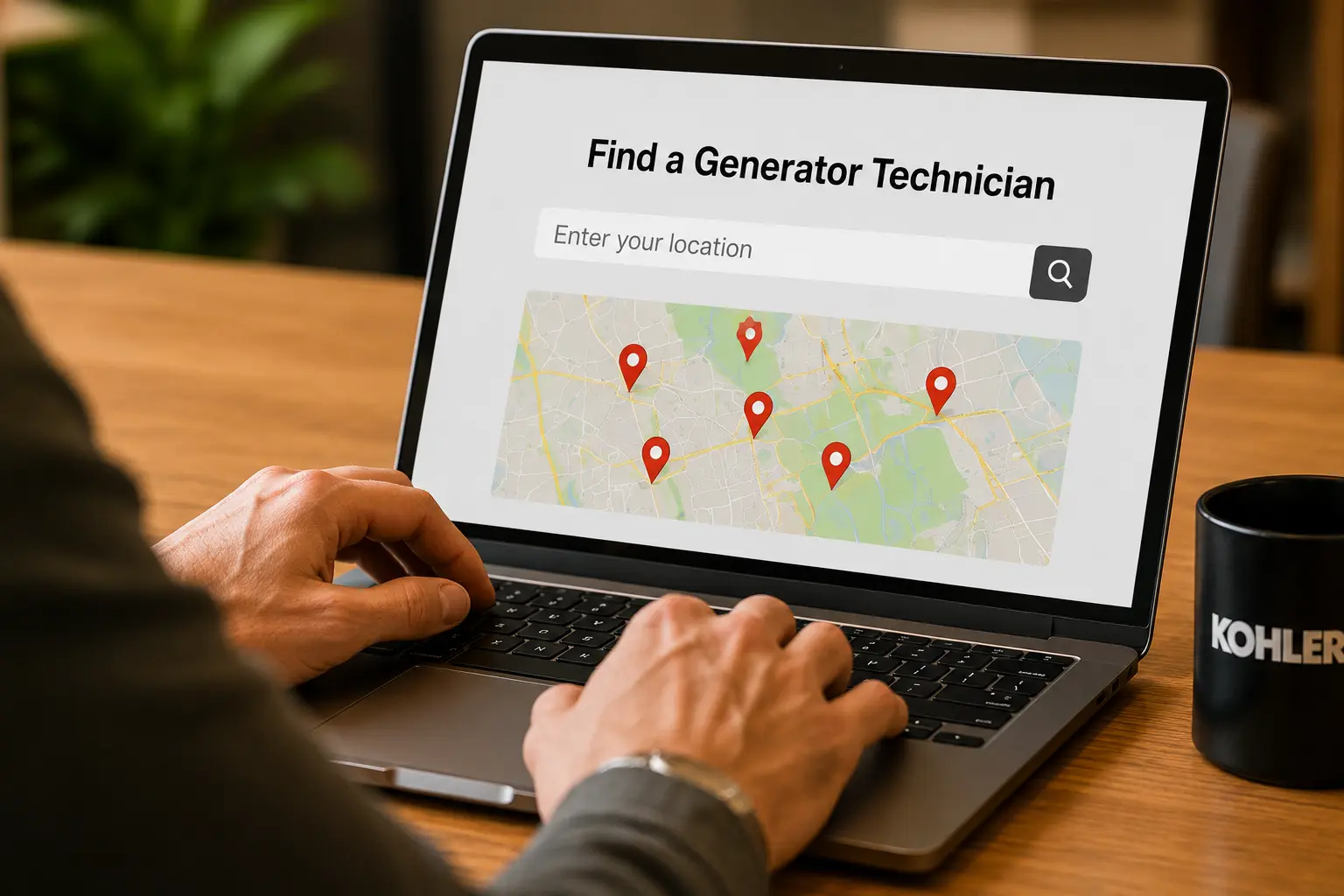
2. Check the manufacturer's dealer locator. Brand-certified status is published on the manufacturer's website. If a shop claims Generac certification, find them in Generac's official locator. Not listed = not currently certified, regardless of what the wall plaque says.
3. Check the state contractor licensing database. For standby installation, every state's contractor licensing board has a searchable database. Search the company name or the individual's name.
4. Ask about training currency. Manufacturer certifications expire if the technician doesn't complete annual continuing education. Ask when they last completed Generac (or whichever brand) refresher training. "Three years ago" is a yellow flag — the curriculum may have changed since.
5. Read recent Google reviews. Pay attention to reviews mentioning specific repair types similar to what you need. A shop that does great oil changes may be unfamiliar with the AVR replacement your generator needs.
What to expect from a quality service visit
A certified technician's service visit should include:
- Written estimate before any work begins. Includes parts cost, labor hours, and total. Most shops provide this within 30 minutes of intake.
- Specific diagnostic results. Not "carb is bad" but "main jet partially blocked, idle circuit clear, float bowl varnished — recommend full carb service." Specificity signals competence.
- OEM parts unless you specifically authorize aftermarket. Authorized dealers should default to OEM; independent shops should ask before substituting.
- 30-90 day warranty on the work. Get this in writing.
- A demonstration of working operation at pickup. The tech starts the generator in front of you and confirms the symptom is resolved.
What a quality service visit should NOT include:
- Pressure to authorize additional work beyond what you came in for
- "Diagnostic" fees that aren't credited toward the repair
- Vague time estimates ("Should be done sometime next week")
- Refusal to provide written warranty terms
Red flags
Some patterns reliably signal poor service. Avoid technicians or shops that:
- Won't share their certification numbers when asked directly
- Quote a price without seeing the generator
- Recommend major repairs (carb rebuild, ignition coil) without specific symptoms supporting the need
- Don't ask about your symptoms before quoting work
- Quote significantly higher than 2-3 other shops for the same described work
- Quote significantly lower than 2-3 other shops for the same described work (often signals aftermarket parts on warranty work or skipped steps)
- Don't have a physical service location you can visit
What to ask before booking
A 5-minute phone call before bringing your generator in saves time and surfaces shop quality:
- "Are you currently certified by [brand] to service my generator?"
- "What's your standard diagnostic fee, and is it credited toward repair?"
- "What's your current turnaround time for a [your symptom] repair?"
- "Do you use OEM parts, and what's the cost difference if I want aftermarket?"
- "What's your warranty period on this type of repair?"
Reputable shops answer these clearly and patiently. Shops that get defensive about basic questions are probably not the right fit.
Find a certified generator technician near you
The directory below lists verified small engine repair shops across the U.S., filterable by brand expertise. Shop listings include Google reviews, hours, brand specializations, and contact information. For standby generators specifically, look for shops that hold authorized status with your generator's manufacturer — this is typically noted in the shop's listing or available via the manufacturer's official dealer locator linked from this site.
Most shops will give a phone diagnosis before you bring the unit in. A 5-minute conversation often reveals whether the work is a fit for the shop's expertise and current capacity.
Installing a new standby unit rather than servicing one? See our local installer + cost breakdowns for Norman, OK and Cincinnati, OH.
This guide covers gas-powered portable and standby generators (Generac, Honda, Champion, Briggs & Stratton, Kohler, and similar brands). Diesel generators and large commercial units have different certification ecosystems (often EGSA-centric) and aren't fully covered here. Certification programs and their current status change periodically — verify directly with the manufacturer or industry association before relying on a credential.