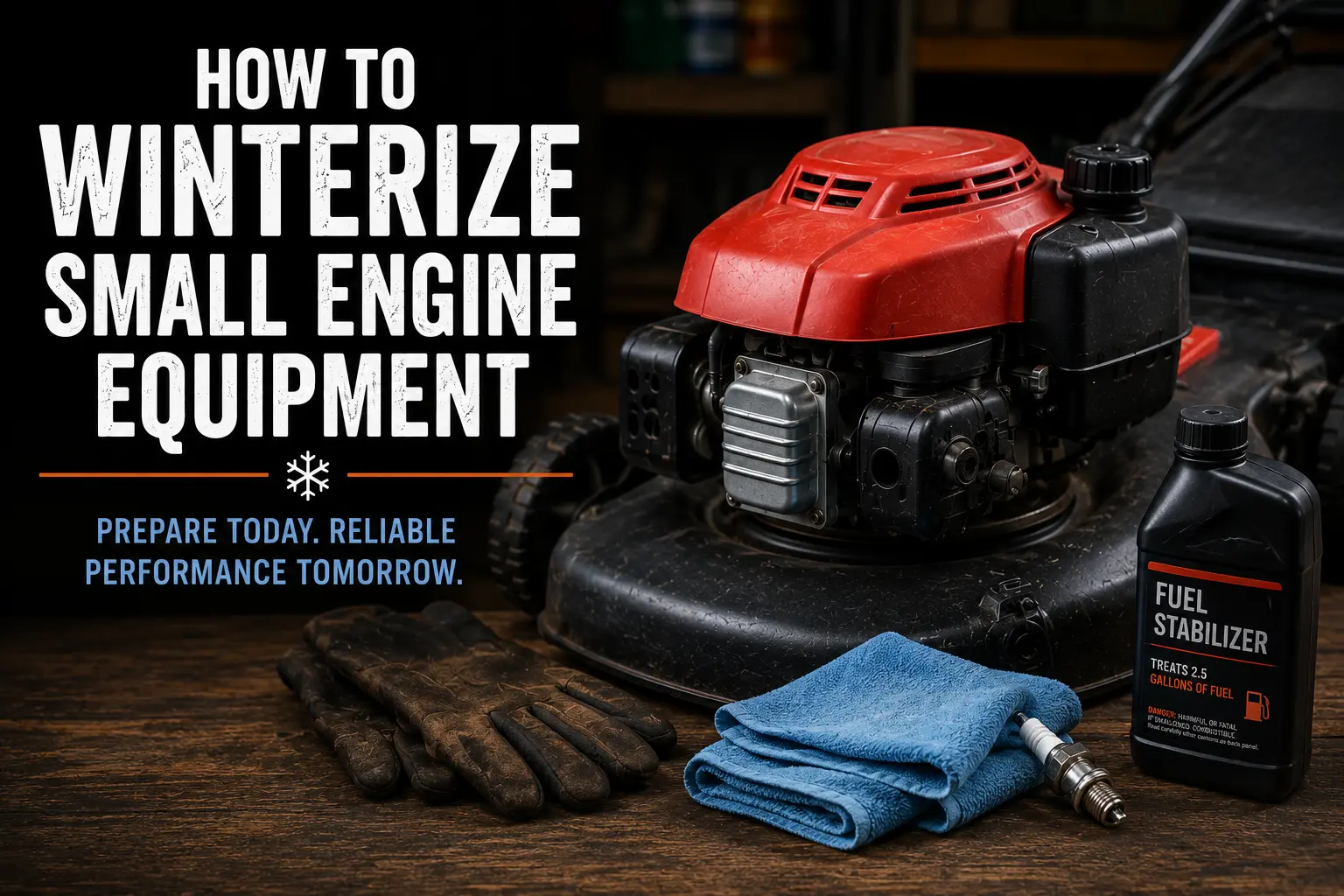
How to Winterize Small Engine Equipment
Winterizing isn't a single procedure — it's a different checklist depending on what you're putting away and how long it'll sit. A lawn mower going into storage from October to April needs different preparation than a pressure washer that could freeze, or a generator that might be needed on two hours' notice during a winter storm.
This guide covers the essential steps for each major equipment type. The underlying goal is the same for all of them: prevent fuel system damage, protect internal engine surfaces, and ensure the machine is ready to start when you need it next.
Why winterizing matters
The majority of small engine repairs shops see in the spring are directly caused by improper — or nonexistent — storage preparation. The specific failure modes vary by equipment type, but they share a common thread: ethanol-blended fuel degrading during storage, leaving varnish deposits in carburetors and corroding fuel system components.
Gasoline starts degrading within 30 days. By the time most equipment comes out of storage 4-8 months later, the fuel in the tank and carburetor has separated, thickened, and left residue behind. A $10 bottle of stabilizer and 20 minutes of prep prevents a $100-200 carburetor service.
Lawn mowers
Timing: Do this when you've mowed for the last time in the season — typically October or November depending on your climate.
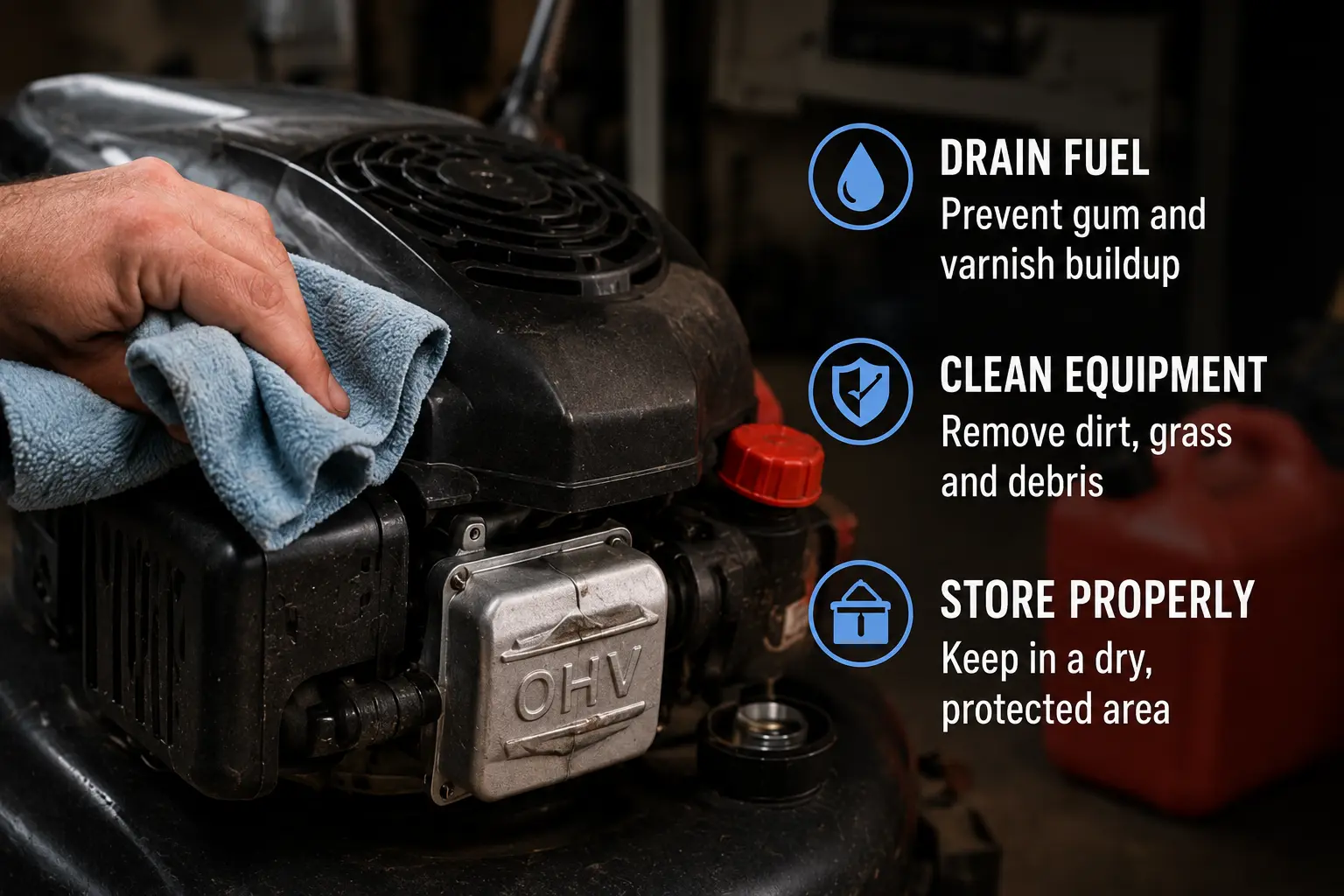
Fuel: Either run the tank dry (run the engine until it stalls from fuel starvation), or fill with fresh fuel and add stabilizer at the recommended dose. If you fill and stabilize, run the engine for 10 minutes afterward to circulate treated fuel through the carburetor. Don't leave untreated old fuel in the tank.
Oil change: Change the oil while the engine is warm from that last run. Used oil contains combustion acids that corrode internal surfaces over a long storage period. Drain, refill with the correct grade (SAE 30 or 10W-30 for most four-cycle mower engines — check the cap or manual).
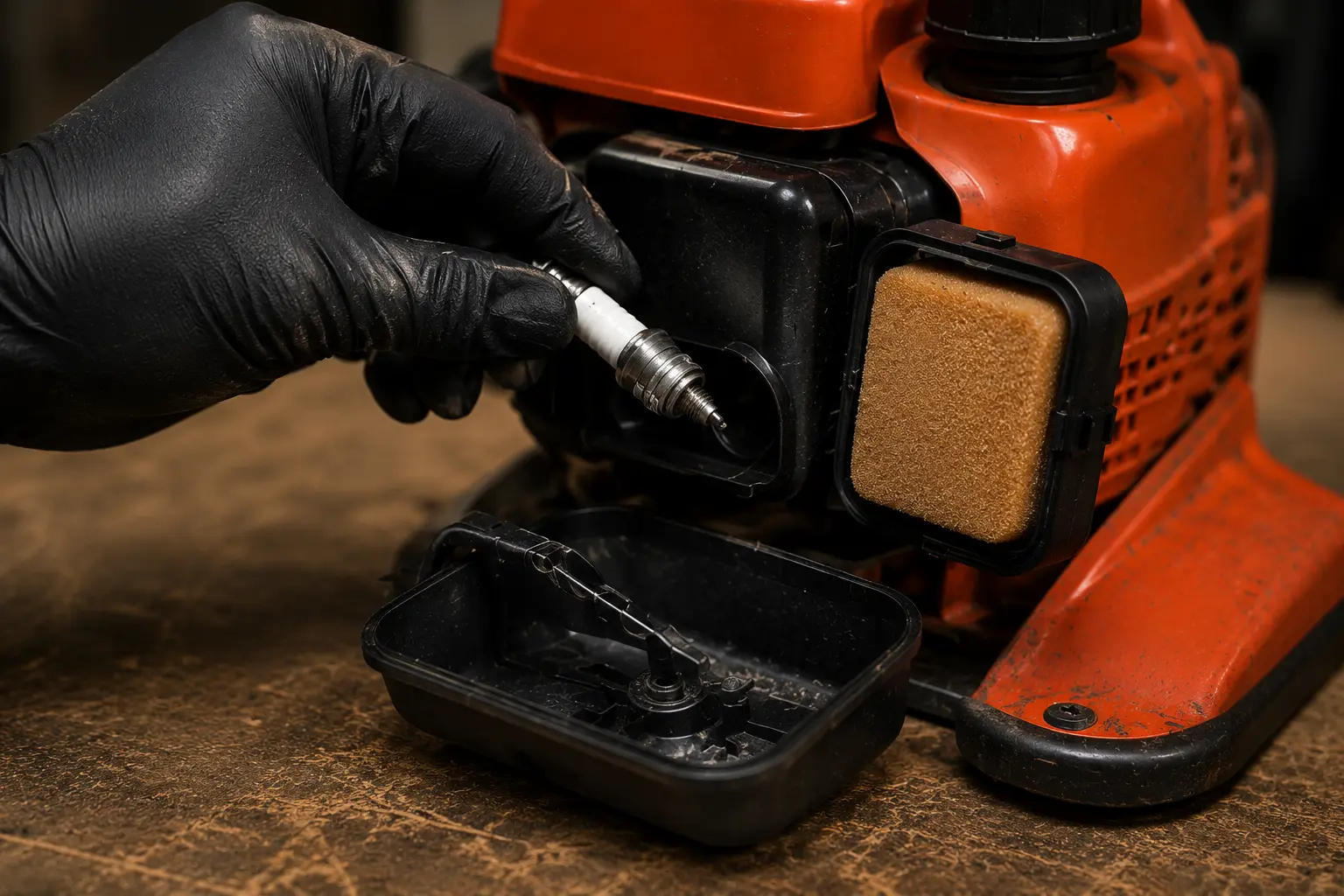
Spark plug: Remove the plug, check its condition, and squirt a teaspoon of fresh engine oil into the plug hole. Pull the starter cord two or three times slowly to distribute oil on the cylinder walls. This prevents surface rust inside the cylinder during storage. Reinstall the plug.
Air filter: Inspect and replace if dirty. A fresh filter going into storage means you start next spring with a clean filter already in place.
Blade: Sharpen and balance before storage so the mower is ready to go in spring. A blade that's sharp at the start of the season makes a visible difference in cut quality.
Underside of deck: Scrape off accumulated grass and debris. Dried grass holds moisture against the deck metal and accelerates rust.
Storage: Store indoors if possible — garage, shed, or basement. If storing outdoors, use a breathable cover (not plastic, which traps moisture) and keep the mower off bare concrete if possible.
Pressure washers
Pressure washers require more careful winterization than most equipment because the pump is vulnerable to freeze damage. Water left inside the pump will expand when it freezes and crack the pump housing — a repair that often costs more than the machine is worth.
Fuel system: Same as a lawn mower — drain the tank or stabilize and run through. Don't leave untreated fuel in the carburetor.
Pump: This is the critical step. After your last use of the season:
- Disconnect the water supply hose and the spray gun/wand
- Start the engine and run it briefly — 15-20 seconds — with no water connected. This blows residual water out of the pump and hoses through the spray outlet
- Alternatively (and more reliably), use a pump saver product — a pressurized can of pump-protecting lubricant that's injected into the water inlet. Products like Briggs & Stratton Pump Saver or Simpson's equivalent fill the pump with an antifreeze-lubricant mixture that prevents freeze damage and protects seals during storage. Connect the can to the water inlet, pull the trigger on the spray gun, and discharge the product until it comes out the gun. This is the most reliable freeze protection method
Hoses: Drain all water from the high-pressure hose and any extension wands. Water trapped in kinked sections will freeze and can crack the hose fittings.
Storage: Store in a temperature-controlled space if possible, or at minimum above freezing. If your garage dips below freezing regularly in your climate, bring the pressure washer indoors.
String trimmers and leaf blowers (two-cycle)
Two-cycle equipment runs on a fuel-oil mixture. The carburetor design (diaphragm-style rather than float bowl) makes it particularly susceptible to diaphragm hardening from ethanol exposure.
Fuel: Run the tank completely dry — don't leave any premixed fuel in the machine. Two-cycle premix goes stale faster than straight gasoline because the oil in the mix can separate and cause deposits. Run until the engine stalls, then pull the cord several more times to clear any remaining fuel from the carburetor.
If you use pre-mixed commercial fuel (TruFuel, Husqvarna XP+), it has a 2-year shelf life in a sealed container — but still drain the equipment before storage.
Air filter: Remove, clean or replace, reinstall.
Spark plug: Inspect and replace if fouled. These engines run their plugs hard; if it's been more than 50 hours since the last plug change, replace it before storage.
Exterior: Clean off grass, resin from cutting brush, and debris. Resin buildup on the cutting head and guard can harden over winter and be difficult to remove in spring.
Generators
Generators deserve special attention because they're often needed urgently during winter storms — and a generator that won't start when the power goes out is worse than not having one at all.
Decision point: Do you want the generator ready to start on demand (storm readiness), or is it going into long-term storage?
Storm readiness storage: Keep the tank full of fresh fuel with stabilizer. Run the generator under load for 30 minutes every 30 days to keep the fuel system exercised, the battery charged (on electric-start models), and the engine lubricated through full temperature cycles. Full tank prevents condensation inside the tank. Monthly run cycles prevent carburetor varnishing and keep everything ready.
Long-term storage (not expecting to use until spring): Drain the fuel completely and run until the engine stalls. Change the oil. Remove the spark plug, add fogging oil, reinstall. Disconnect or remove the battery (on electric-start models) and store it in a warm location on a trickle charger.
Battery (electric-start generators): Generator batteries are small and lose charge quickly during storage. A battery that sat discharged for 6 months is often damaged beyond recovery. Either run the generator monthly to keep it charged, or remove and trickle-charge separately.
Transfer switch / connection points: If you have a transfer switch installed, confirm it's in the correct position (utility power, not generator) during storage.
Snow blowers
See snowblower storage mistakes that destroy engines for the full checklist. The short version: drain or stabilize the fuel, change the oil, fog the cylinder, check shear bolts, and store with belt tension released if your manual specifies it.
A note on storage location
All equipment lasts longer stored indoors than outdoors. A heated garage is ideal. An unheated but enclosed shed is acceptable for most equipment except pressure washers in freeze climates. Outdoors under a tarp is the worst option — tarps trap moisture underneath and temperature cycling accelerates rubber degradation.
If you're storing multiple pieces of equipment and space is limited, prioritize: pressure washer indoors first (freeze risk), generator second (battery and fuel system), then mowers and seasonal tools.
Winterization procedures in this guide apply to standard gasoline-powered equipment. Battery-powered electric tools have different storage requirements — consult the manufacturer's documentation for battery storage temperature guidelines.