Small Engine Carburetor Repair Cost: What to Expect
Carburetor problems are the most common reason small engines end up in a repair shop. Stale fuel, ethanol degradation, and long storage periods leave varnish deposits in the carburetor's tiny fuel passages — and a clogged carburetor is a mower, snowblower, generator, or chainsaw that won't start or won't run right.
Understanding what the different levels of carburetor service actually involve helps you evaluate whether the quote you're getting is appropriate — and whether you're being charged for a rebuild when a cleaning would have done the job.
If you are not sure whether the quote is worth approving, compare it against the equipment's age and replacement value in the repair-vs-replace calculator. If you are ordering parts yourself, verify the engine code first with the small-engine model-number guide.
The three levels of carburetor service
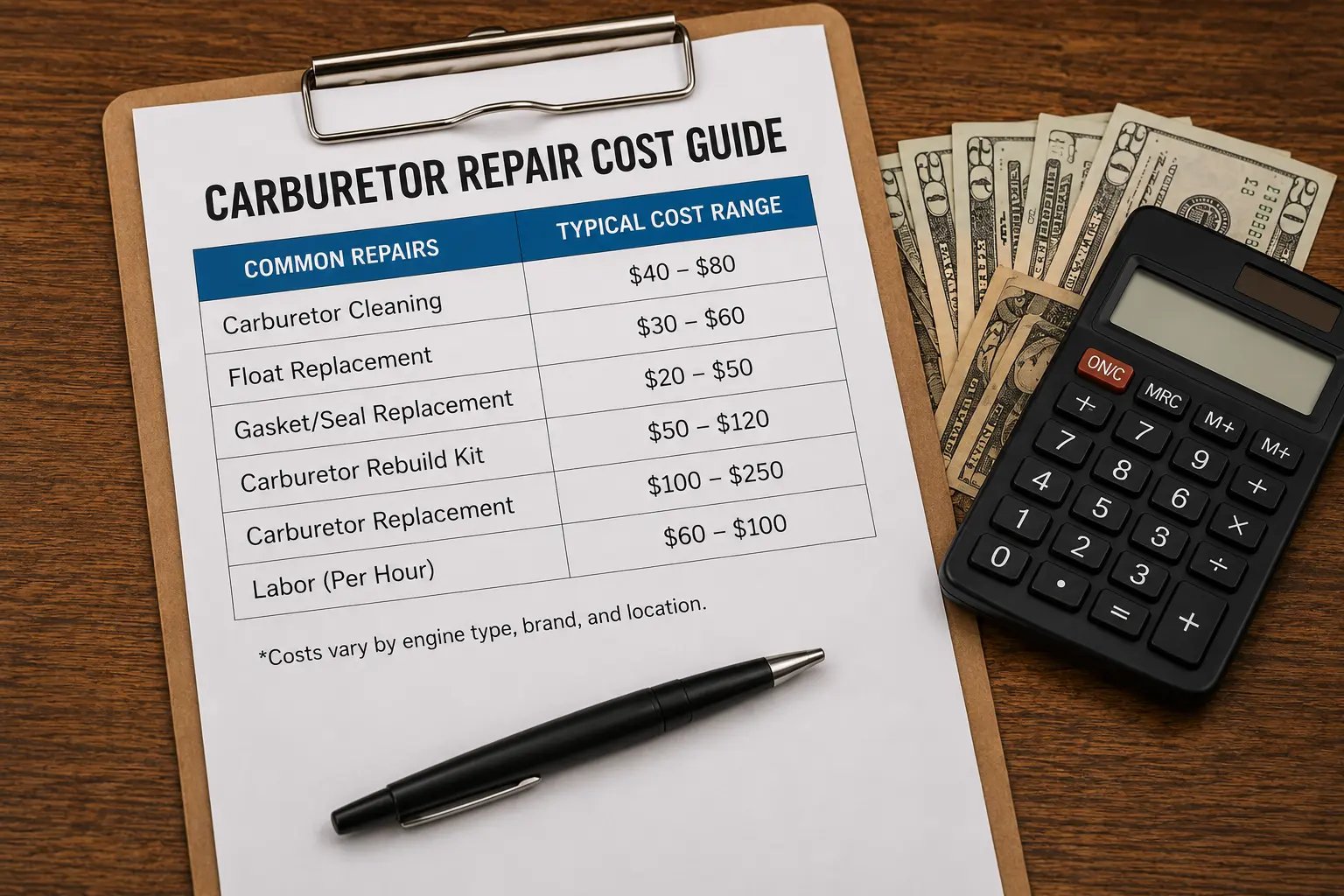
Carburetor cleaning: $60–$120
A cleaning addresses mild to moderate varnish buildup. The carburetor is removed from the engine, disassembled, sprayed with carburetor cleaner to dissolve varnish deposits, and the jets and passages are cleared with fine wire or compressed air. The original components are reused. The carburetor is reassembled and reinstalled.
This is the right service for engines that have been sitting for one season with untreated fuel — the kind of varnish that's brown and sticky but hasn't hardened into lacquer. It's also appropriate for engines that run but idle roughly or surge, where the passages are partially blocked rather than fully clogged.
Carburetor rebuild: $100–$200
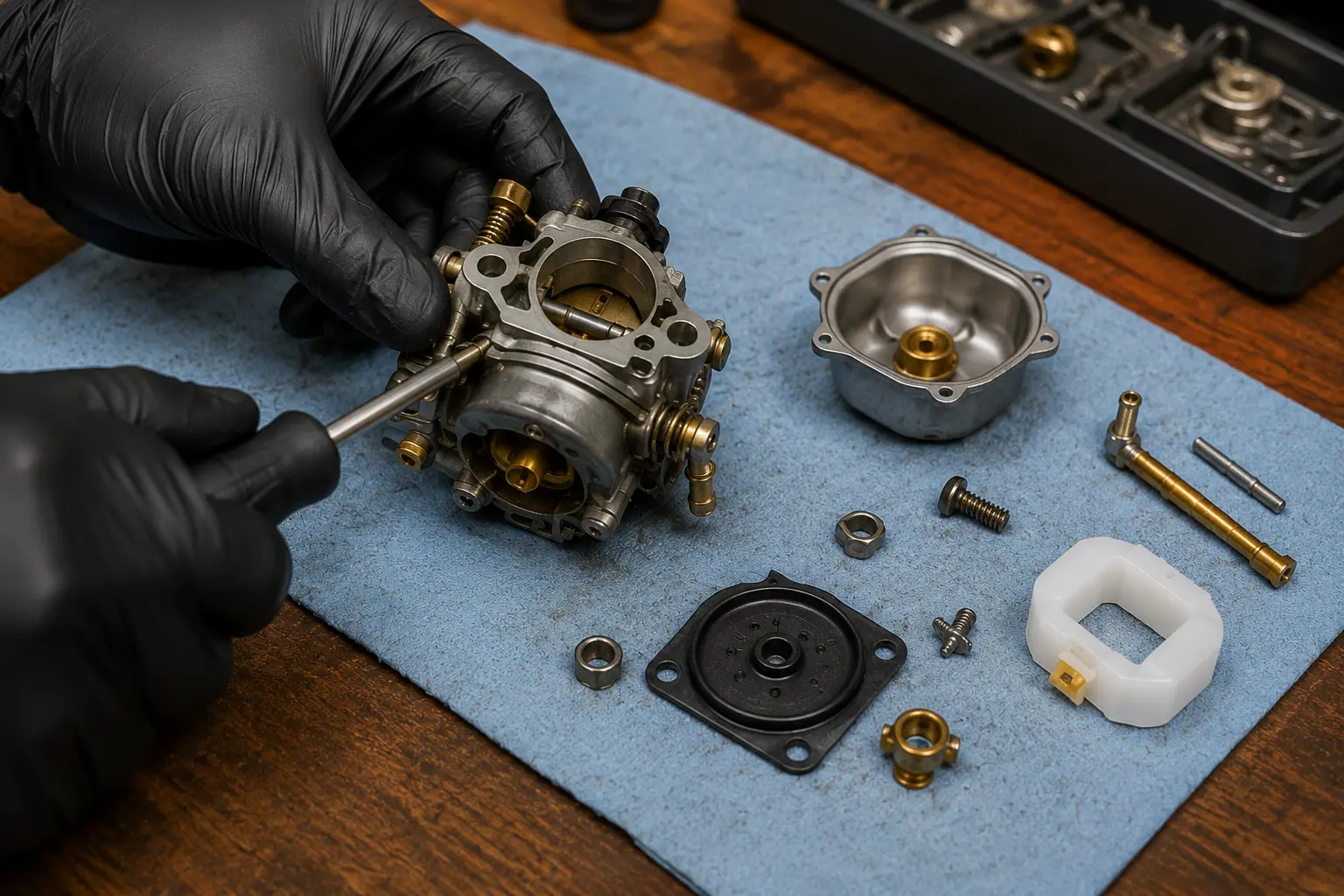
A rebuild replaces the rubber and soft components inside the carburetor — the float needle and seat, the fuel inlet needle, the bowl gasket, and on diaphragm-style carburetors (common on two-cycle engines and many walk-behind mowers), the diaphragm itself. These components degrade from ethanol exposure and age even when the carburetor passages are clean.
Rebuild kits for common engines are available for $8–$25 and contain the full set of replacement parts. Labor accounts for most of the cost. A rebuild is appropriate when the cleaning alone doesn't resolve the problem, or when rubber components are visibly hardened, cracked, or swollen.
Carburetor replacement: $150–$300+
When the carburetor body itself is damaged — corroded beyond cleaning, cracked, or with internal passages that are etched or pitted from extended ethanol exposure — replacement is the right call. Replacement carburetors for common engines (Briggs & Stratton, Honda GCV series, Kohler) run $25–$80 for aftermarket, $60–$150 for OEM. Labor adds $60–$120 depending on the engine and shop rate.
Some shops replace rather than rebuild as a matter of policy, particularly on high-volume consumer engines where a new carburetor is inexpensive and available same-day. This isn't automatically wrong — a new carburetor often comes with an implicit warranty on the components — but it's worth asking whether a rebuild was attempted first if the replacement quote seems high.
Cost by equipment type
Carburetor service costs vary because carburetors vary significantly in complexity, accessibility, and parts cost across equipment types.
Walk-behind lawn mower: $70–$150 Most walk-behind mowers use straightforward float-bowl carburetors with good parts availability. Service is fast and parts are inexpensive.
Self-propelled mower (same engine, more disassembly): $80–$160 The engine is the same but accessing the carburetor sometimes requires more disassembly on self-propelled models.
Riding mower (single-cylinder): $100–$180 Similar carburetor design but typically mounted in a more confined engine bay, increasing labor time.
Riding mower (V-twin engine): $150–$280 V-twin engines have more complex carburetion. Some use a single two-throat carburetor; others have two carburetors. Service time is longer and parts cost more.
Snowblower: $80–$160 Snowblower carburetors are often heavily varnished from seasonal storage. Cleaning or rebuild, same price range as a mower.
Generator (portable): $100–$200 Generators sit for long periods and are particularly prone to severe varnishing. Carburetors on larger generator engines have more components and can be more involved to service.
Chainsaw (two-cycle): $80–$150 Two-cycle chainsaw carburetors use a diaphragm design rather than a float bowl. Rebuilds are common and the diaphragm kit is the primary part.
String trimmer / leaf blower (two-cycle): $60–$120 Smaller two-cycle engines with simpler carburetor designs. Parts are inexpensive.
Pressure washer: $80–$160 Similar to a mower or generator depending on engine size.
What affects whether cleaning, rebuild, or replacement is needed
The severity of the varnish problem, the age of the carburetor's rubber components, and the condition of the carburetor body all factor in. A technician should assess these before recommending a service level.
Varnish severity: Fuel that sat for one season produces soft, removable deposits. Fuel that sat for multiple seasons hardens into a lacquer that requires more aggressive cleaning and may not come fully clean. If the engine has been sitting for two or more years with fuel in the tank, assume rebuild-level service will be needed.
Rubber component condition: Even without visible varnish, rubber diaphragms and gaskets degrade from ethanol exposure over time. If the carburetor is from an engine that's been on the shelf for five or more years, rebuilt rubber components are advisable regardless of how clean the passages look.
Carburetor body condition: Aluminum carburetor bodies can pit and corrode from prolonged contact with ethanol-water mixture. If the casting shows visible corrosion or the internal surfaces are etched, cleaning won't help — the surface roughness will catch new deposits quickly. Replacement is the right answer.
How to get a fair assessment
Ask the shop which level of service they're recommending and why. "The passages were blocked from old fuel and we cleaned them — here's what it looks like now" is a different conversation from "we cleaned it, it's still running rough, the diaphragm is hardened so we recommend a rebuild."
A shop that explains the finding is a shop worth trusting. A shop that quotes carburetor replacement as the first option without attempting a cleaning should at minimum be able to explain why cleaning wasn't appropriate.
For engines with a long storage history or multiple seasons of problem-free service followed by sudden issues, a rebuild is usually the right call and a reasonable recommendation on the first visit.
Preventing carburetor problems
Most carburetor problems are preventable with two habits: using fresh fuel (or ethanol-free fuel), and either draining the fuel system before storage or treating it with fuel stabilizer. See ethanol damage in small engines for the full rundown on prevention.
A $10 bottle of stabilizer used consistently prevents the majority of carburetor services. For equipment that sits for months at a time — generators, snowblowers, seasonal mowers — it's among the best maintenance investments available.
To find a small engine repair shop near you, use the directory search below.
Prices in this guide reflect typical independent shop rates across the United States as of 2026. Rates vary significantly by region and shop. Get a written estimate before authorizing any work.