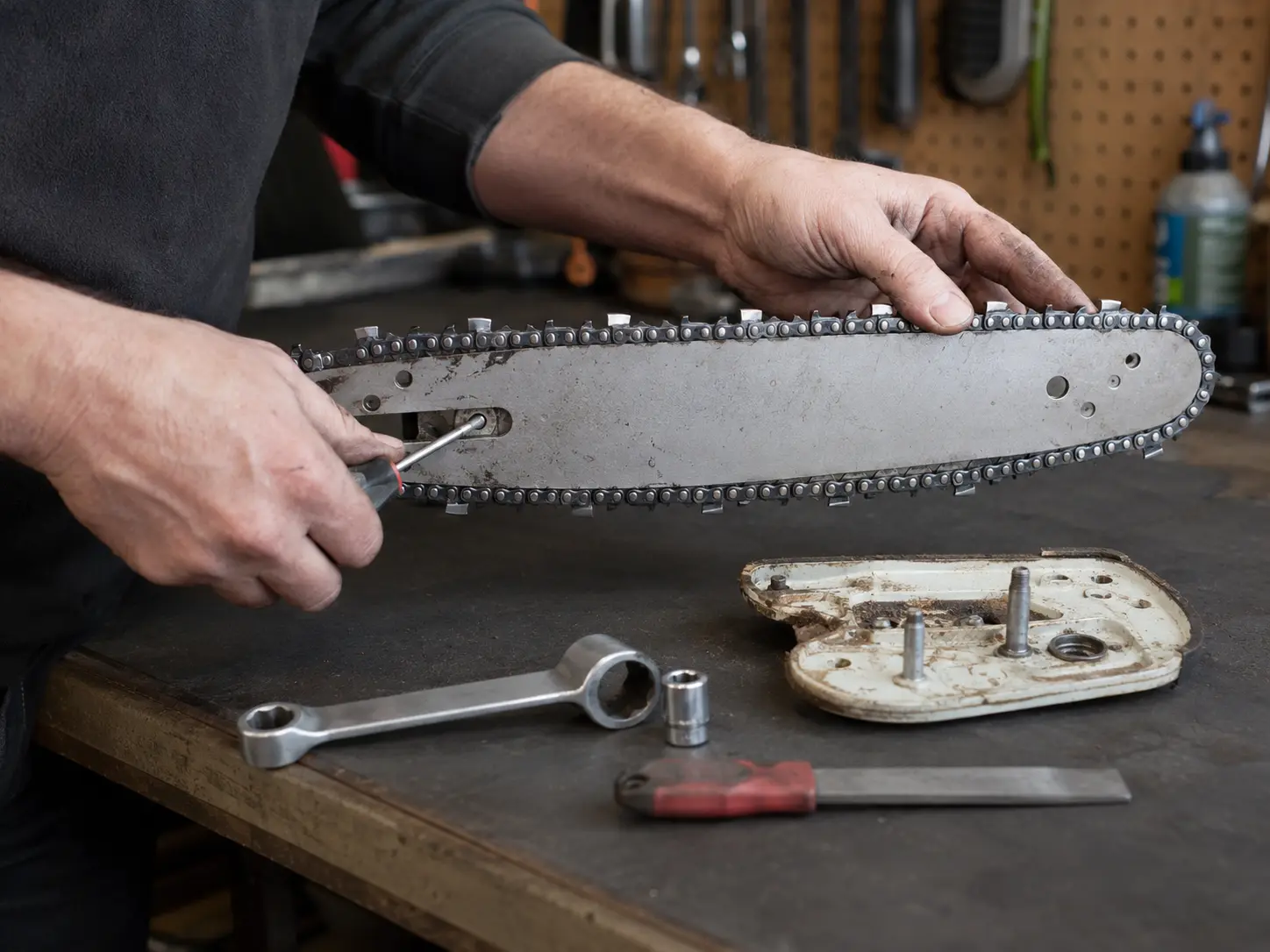
Chainsaw Starts But Chain Won't Move: 6 Causes
The engine starts and idles. You squeeze the throttle — and the chain does nothing.
This is a different problem from a chainsaw that won't start. The engine is working. The problem is in the drive system between the engine and the chain. Most causes are diagnosable without tools, and several are fixable at home.
Use the interactive chainsaw chain diagnostic to narrow the likely cause while keeping the saw shut down for every inspection.
If the fix points to clutch, sprocket, bar, or replacement chain parts, confirm the saw model plus bar length and chain pitch first. The small-engine model-number guide explains what numbers to collect before you call a shop or order parts.
1. Chain brake is engaged
This is the most common cause — and the most overlooked. Almost every chainsaw built after the 1990s has a chain brake, a safety device that stops the chain instantly in the event of kickback. When engaged, the chain will not move no matter how high you rev the engine.
What to check: The chain brake is activated by the front hand guard — the curved plastic piece between the bar and the front handle. If the hand guard is pushed forward (toward the bar), the brake is engaged. The brake can engage accidentally from a bump, from setting the saw down on an angled surface, or from not resetting it after it was triggered.
The fix: Pull the front hand guard back toward the front handle until you feel it click into the released position. Then try the chain. On most saws, the released position has the hand guard parallel to (or angled slightly away from) the bar.
If the chain brake releases and the chain moves normally, you are done. If the brake seems to be releasing but the chain still will not move, the brake mechanism itself may be worn or the brake band may need replacement — a shop repair.
2. Worn or glazed clutch drum
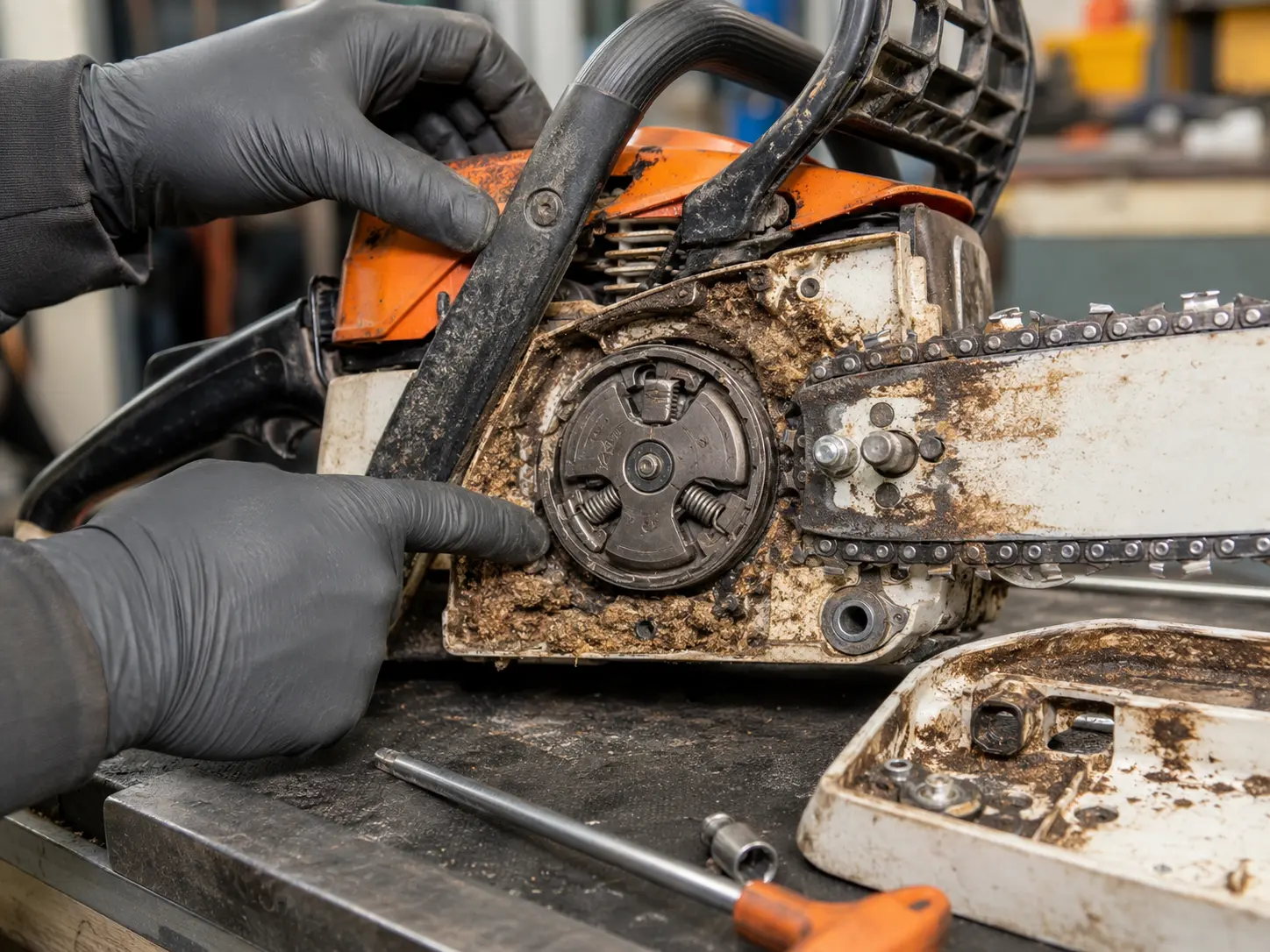
The clutch is a centrifugal mechanism: when engine speed (RPM) drops below idle, the clutch shoes retract and the chain stops. When you throttle up, the shoes expand outward, engage the clutch drum, and drive the chain.
If the clutch shoes or drum are worn smooth (glazed), they may spin without fully engaging — the engine revs, the drum rotates, but not enough friction transfers to drive the chain.
How it presents: The chain moves slowly at high throttle, or moves intermittently. You may smell a faint burning or scorched smell from the clutch area. The symptom is usually worse when the saw is warm.
The fix: A glazed clutch drum or worn clutch shoes require replacement. This is a moderate shop repair — it requires a clutch removal tool specific to the saw brand. Stihl and Husqvarna clutch drums are brand-specific parts.
3. Damaged or stuck sprocket
The drive sprocket transfers rotation from the clutch drum to the chain. Sprockets wear with use — a worn or damaged sprocket can skip, slip, or bind the chain drive.
What to check: With the saw off and the chain brake released, try to rotate the chain by hand. It should move smoothly around the bar with moderate resistance. If it feels rough, catches, or won't move at all, inspect the sprocket (visible at the base of the bar, where the chain wraps around).
A worn sprocket shows pointed, sharp, or uneven drive teeth. Sprocket replacement is typically done at the same time as chain replacement — running a new chain on a worn sprocket accelerates chain wear and can cause the chain to jump.
The fix: Sprocket replacement is a shop or experienced-DIY repair. The sprocket is behind the clutch drum and requires clutch removal to access.
4. Chain tension too tight
A chain tensioned too tight creates excessive friction against the bar rails. At idle, the chain may not move at all. At throttle, it moves sluggishly and cuts slowly.
What to check: With the saw off, the chain should have a small amount of slack — enough to pull down slightly from the bar (about 1/8–1/4 inch on most saws) while still snapping back into position. A properly tensioned chain should rotate around the bar by hand with moderate effort.
The fix: Loosen the bar-retaining nuts (or side cover) and back off the tension adjustment until correct tension is achieved. Retighten the bar nuts. Never run a chain that is so tight you cannot rotate it by hand — this burns out the bar groove and accelerates clutch wear.
5. Bar groove clogged with debris
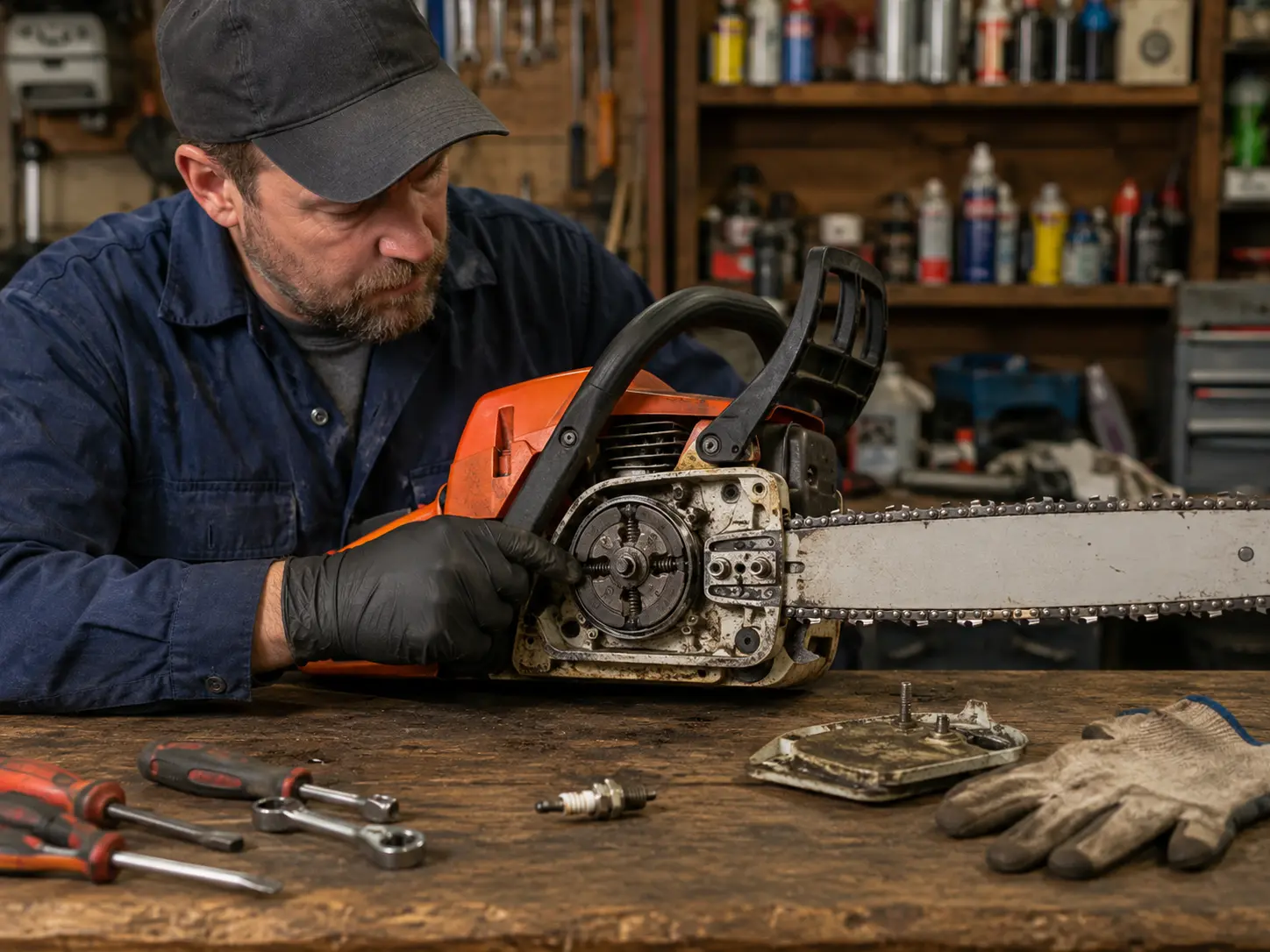
The bar has a groove that the chain's drive links ride in. Sawdust, pitch (tree sap), and debris pack into the groove during normal use. A heavily clogged groove creates enough resistance to prevent chain movement at idle and causes binding at any speed.
What to check: Remove the bar and inspect the groove. Press a thin flat-blade screwdriver into the groove and run it along the bar — you will likely push out a significant amount of compressed sawdust and pitch.
The fix: Clean the groove with a bar groove cleaning tool or a thin flathead screwdriver. Flush with compressed air. Clean the oil hole at the bar base (the small hole that lubricates the groove) — it can plug with the same debris. Reinstall with fresh bar oil.
Bar groove maintenance is a standard part of every season's chainsaw service. If the groove is worn asymmetrically or the chain rides unevenly, the bar needs replacement.
6. Drive link damage or chain binding
A damaged drive link — one that is bent, cracked, or has a side plate separating — can bind in the bar groove and prevent chain movement. This often happens after a chain has hit a rock, metal fence post, or other hard object, which bends one or more drive links.
What to check: Lay the chain out straight on a flat surface (with the saw off and disconnected) and inspect each drive link. Look for any link that does not lie flat, appears kinked, or has a side plate that is separating from the main body.
The fix: A chain with damaged links cannot be repaired — it needs replacement. Never run a damaged chain. A chain that binds and breaks during operation is a serious safety risk.
When to take it to a shop
If you have confirmed:
- Chain brake is released
- Chain tension is correct
- Bar groove is clean
- No visible chain damage
...and the chain still will not move or moves sluggishly, the issue is most likely in the clutch or sprocket — internal components that require partial disassembly and brand-specific tools.
For Stihl and Husqvarna chainsaws, authorized servicing dealers have the factory tools and OEM parts. Independent small engine shops that work on chainsaws can typically handle this repair as well.
If the quote is high because the saw needs clutch, sprocket, bar, and chain work together, compare the estimate in the repair-vs-replace calculator before authorizing the repair.
Manufacturer note: Chain brake testing and clutch service procedures vary by model. Always refer to your chainsaw manufacturer's service manual. Never operate a chainsaw with a malfunctioning chain brake. smallengine.directory is an independent repair-shop directory and is not affiliated with Stihl, Husqvarna, Oregon, or any other manufacturer.