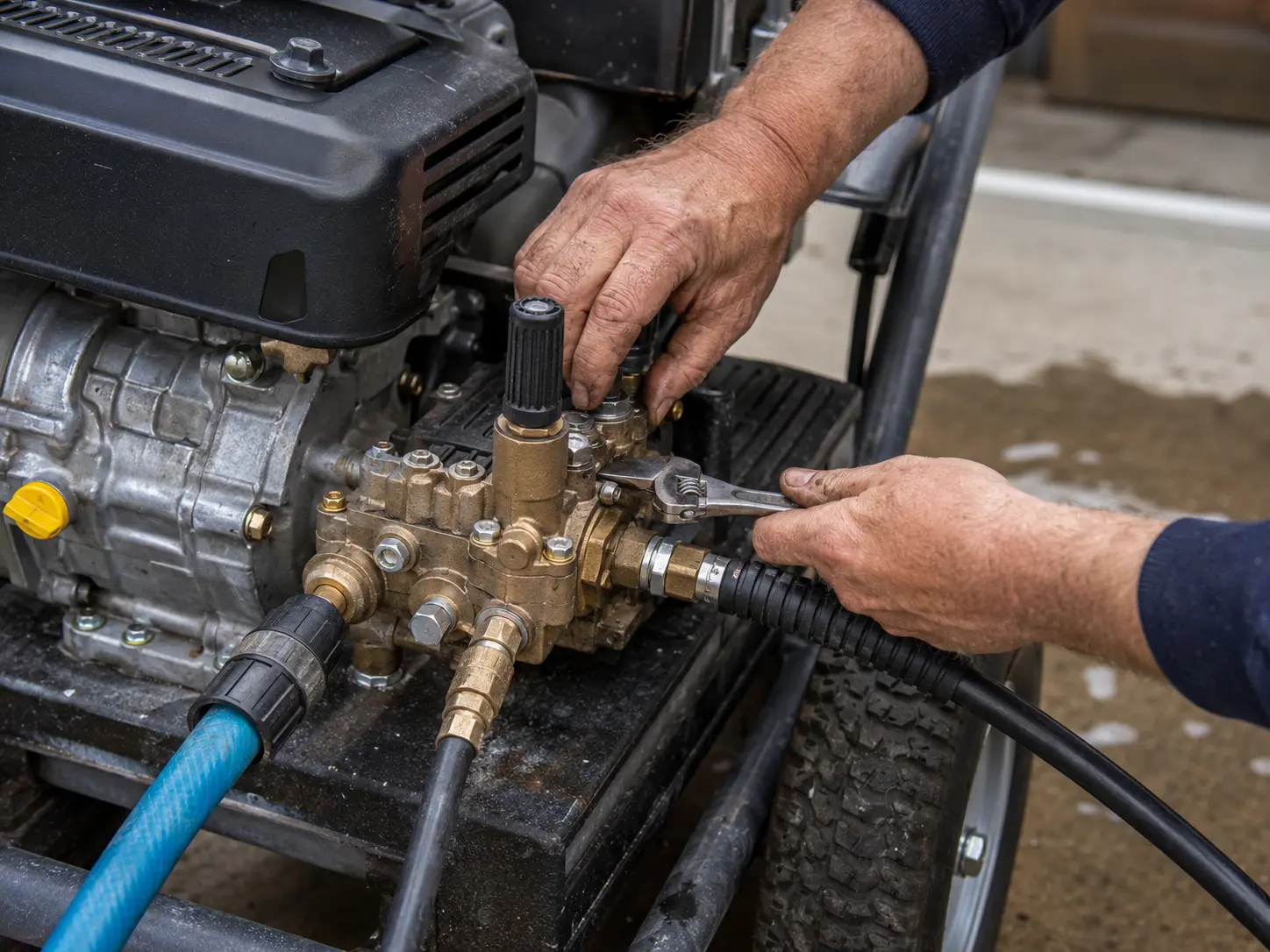
Pressure Washer Engine Runs But No Pressure: 7 Causes
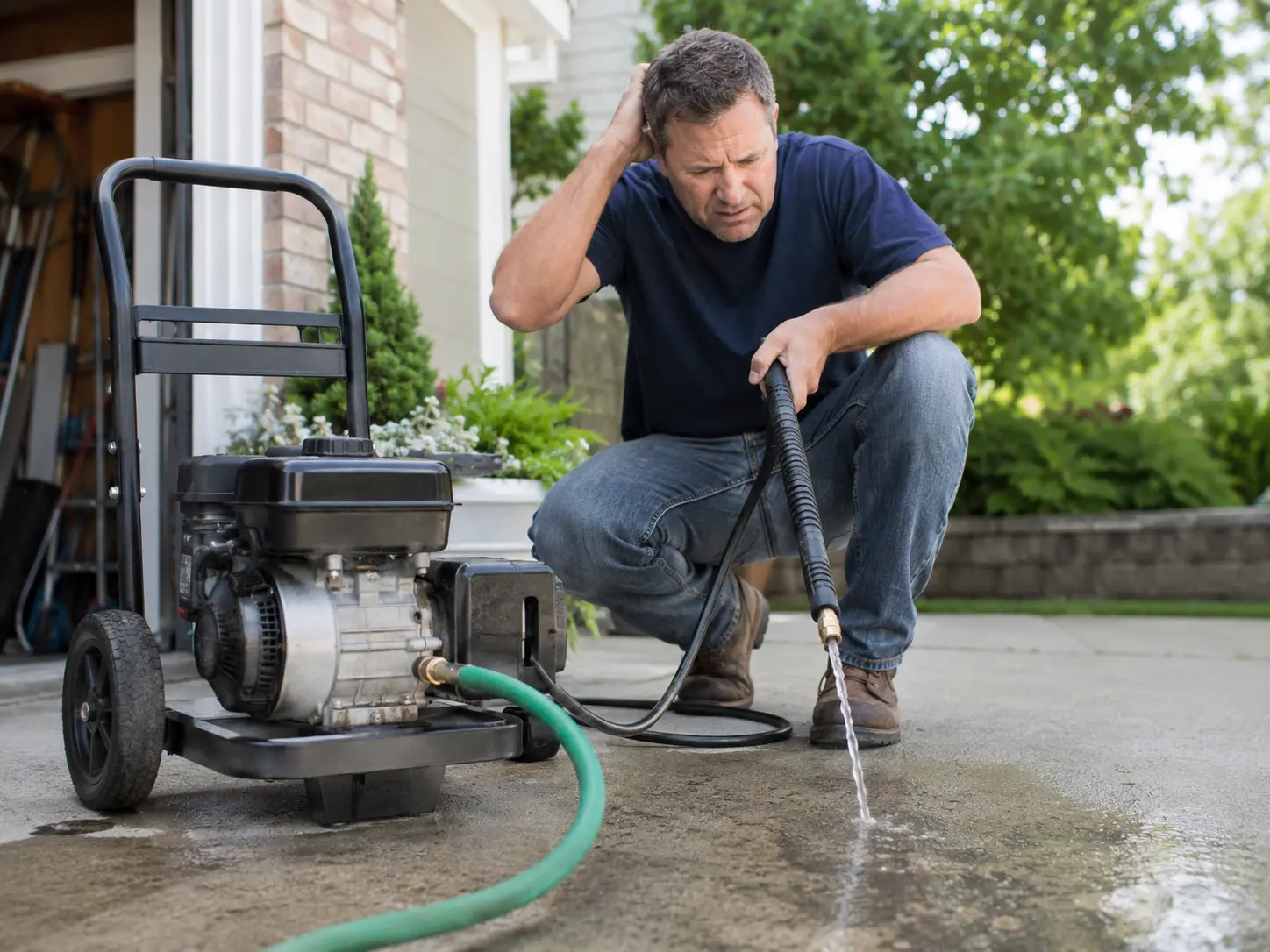
The engine starts and runs normally. The trigger gun feels like it is doing something. But the spray is barely more than garden-hose pressure — or nothing comes out at all.
This symptom is almost always a pump or flow issue, not an engine issue. The engine is fine. The problem is between the pump and the nozzle.
Most of these causes are diagnosable at home in under 30 minutes. A few require a shop that specifically services pressure washer pumps — not just any small engine shop.
For a faster answer, use the interactive pressure-washer no-pressure diagnostic to narrow the cause from what your machine is doing.
This guide includes some Amazon Associate links. We earn a small commission on qualifying purchases at no extra cost to you, and we only link products we'd recommend to a neighbor.
Quick pump-repair boxes
1. Clogged or wrong nozzle
The single most common cause of "no pressure" on an otherwise working pressure washer is a plugged or incorrect nozzle — and it is the first thing to check because it takes 30 seconds.
Nozzles are color-coded by spray angle: 0° (red), 15° (yellow), 25° (green), 40° (white), and soap nozzle (black, very low pressure). If the wrong nozzle is installed — particularly the black soap nozzle — the machine will run but spray barely any pressure at all. This is by design for the soap nozzle.
What to check: Remove the nozzle and run the machine briefly without it. A strong stream of water with no nozzle confirms the pump is working and the issue is downstream. A clogged nozzle can usually be cleared with a thin wire or the nozzle-cleaning tool included with most machines.
2. Trapped air in the pump
Pressure washer pumps do not like air. If the machine sat unused or was stored dry, air pockets in the pump prevent it from building pressure even though the engine runs fine.
What to check: Squeeze the trigger with the engine off, and hold it while turning the engine on. Keep the trigger pulled for the first 20–30 seconds of running. This purges air from the system.
Alternatively: connect the inlet hose to a water supply and let water run through the pump (engine off) for 30 seconds before starting. This manually primes the pump and expels air before start.
3. Worn pump seals
The internal seals in a pressure washer pump — o-rings, valve seals, and piston seals — wear with normal use. When they wear or crack, the pump cannot hold pressure. The engine runs but the pump bypass internally, circulating water without building output pressure.
How it presents: Pressure that is significantly lower than spec (for example, a 3,000 PSI unit running at 400–600 PSI), pressure that fades after a few minutes of use, or a pump that makes normal noise but produces weak spray.
The fix: A pump seal kit replaces the internal o-rings, valve seals, and piston seals. For AR pumps (a very common brand on mid-range pressure washers), a seal kit typically runs $15–$35 and covers the full internal service. This is a moderately involved repair — you need to disassemble the pump head — but it is within range for a mechanically inclined owner with the right seal kit for their specific pump model.
To find your pump model: it is usually stamped or printed on the pump body itself, not the pressure washer label.
4. Faulty unloader valve
The unloader valve is a spring-loaded bypass valve that diverts water flow when the trigger is released. When the trigger is squeezed, the unloader valve closes and pressure builds. If the unloader is stuck open, or the spring is worn, the pump circulates water in bypass mode even when the trigger is pulled — and no pressure builds.
How it presents: No pressure when trigger is pulled, but water is clearly moving. The pump may sound slightly different from normal (some describe it as a "chattering" or irregular pulse). The pump and pump housing may run warmer than usual because water is being circulated without doing work.
The fix: The unloader valve can sometimes be adjusted — there is usually an adjustment knob or nut on the valve body. On older pumps, replacement is often the right call. Unloader valves run $15–$40 depending on pump brand. This is a shop repair for most owners.
5. Low pump oil
AR, Cat, General Pump, and other triplex pump brands require pump oil — a non-detergent SAE 30 oil in the crankcase that lubricates the pistons and connecting rods. When pump oil runs low, the pump loses efficiency and can eventually fail to build pressure.
What to check: Most triplex pumps have a sight glass or dipstick on the crankcase. Check the level before running. Pump oil should be changed every 50 hours of use (or annually).
The fix: Top off or replace with non-detergent SAE 30 pump oil. Do not use automotive engine oil — it contains detergent additives that foam inside pressure washer pump crankcases and accelerate seal wear.
6. Damaged pump pistons or cracked pump head
If the pressure washer was run without water (even briefly), the pump pistons and seals can overheat and fail. Running the machine with a fully kinked hose has a similar effect — the pump pressurizes against a closed system and overheats rapidly.
How it presents: No pressure at all, or pressure that builds for a second and then drops to zero. Sometimes accompanied by water leaking from the pump head itself (cracked housing).
The fix: A cracked pump head is generally not repairable. At this point, the options are pump replacement (the pump alone, leaving the engine) or machine replacement. For mid-range consumer pressure washers ($250–$500 new), pump replacement is borderline — the pump may cost $80–$200, which is often 30–60% of a new machine's value.
For a machine under 3 years old or a commercial-grade unit, pump replacement makes economic sense. For an older consumer machine with a cracked pump head, replacement is usually the right call.
7. Inlet screen or filter blocked
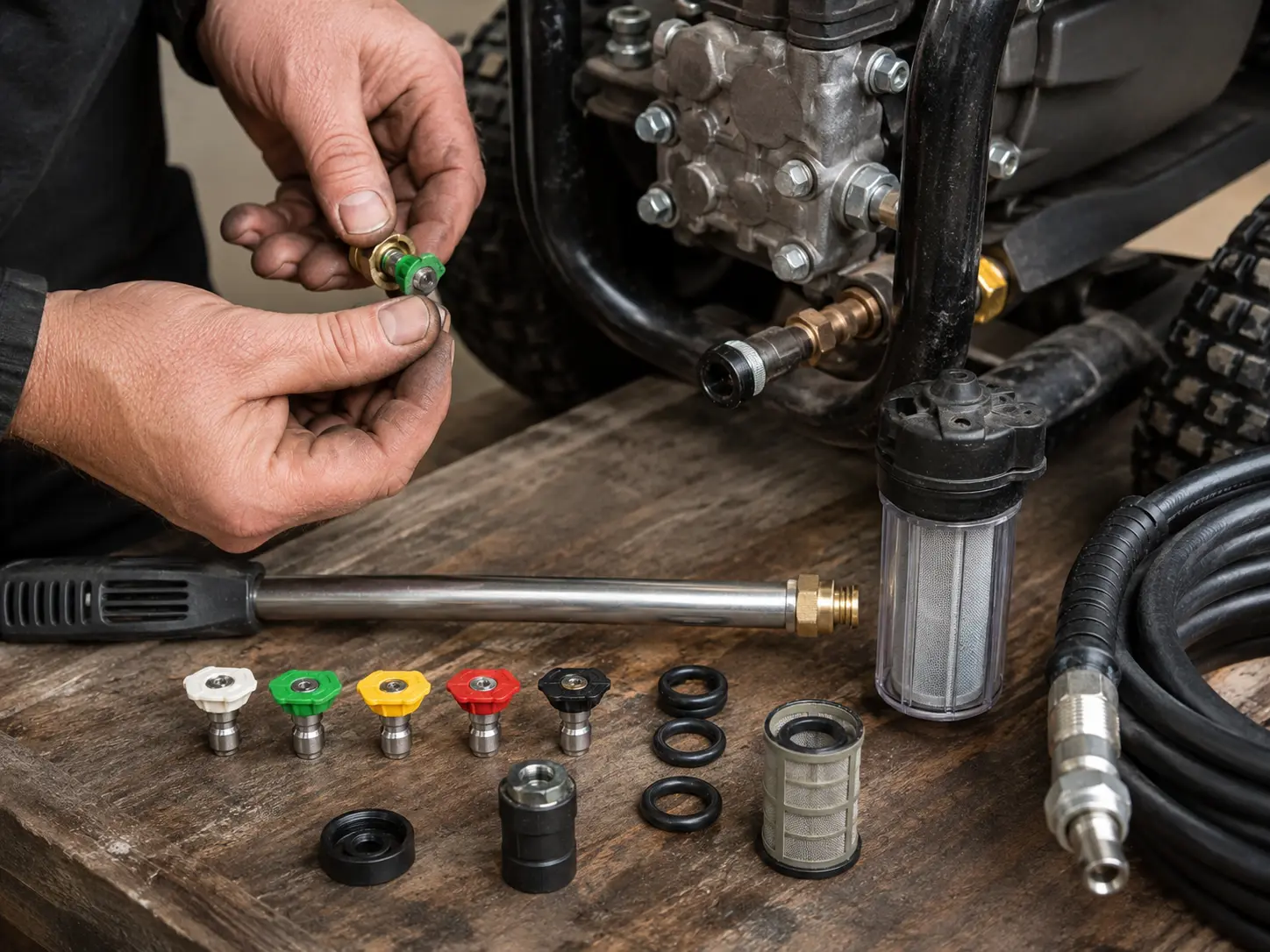
The pump inlet (the connection from your garden hose to the machine) has a small mesh screen that filters debris. If the screen is clogged, the pump is starved of water and cannot build pressure.
What to check: Disconnect the inlet hose from the machine. Look into the inlet fitting with a flashlight. There is usually a small mesh filter inside. Remove it and hold it up to light — it should be clear. Rinse it under running water if clogged.
The fix: Clean or replace the inlet screen. This is a 5-minute job and a common cause of sudden pressure loss on an otherwise working machine, especially if the water source has any sediment.
Engine vs pump: how to tell them apart
A quick diagnostic to confirm the engine is not the issue:
- Engine runs and governor responds normally: Engine side is fine.
- Water flows through the machine (you can hear/feel it at the trigger): Pump is turning.
- No or low pressure at the nozzle: Pump is the problem.
If the engine runs rough, surges, or cuts out — that is a separate engine issue. See the guide on why your pressure washer won't start for engine-side diagnosis.
Pump repair: which shops to call
Not every small engine shop services pressure washer pumps. Before driving across town, call ahead and ask: "Do you service pressure washer pump heads and unloader valves?" Many shops handle the engine but send out or decline pump work.
Shops that specialize in outdoor power equipment or pressure washers are the right call for pump seal replacement, unloader valve work, and pump head inspection.
Manufacturer note: Pump specifications and service procedures vary by brand and model. Always refer to your pressure washer's service manual for model-specific guidance. smallengine.directory is an independent repair-shop directory and is not affiliated with AR, Cat Pumps, General Pump, Honda, Generac, Simpson, or any other manufacturer.